

Why the Kitchen Gets Messy So Fast (And Why Daily Cleaning Matters)
The kitchen is the room that gets messy the fastest in almost every home. Even when you clean it thoroughly, it can look cluttered again within hours. This isn’t because you’re doing something wrong—it’s because the kitchen is used constantly, often by multiple people, throughout the entire day.
Every meal creates small messes. Cooking leaves crumbs, grease splashes, and utensils in the sink. Eating adds dishes, cups, and food residue. Snacks, coffee, and quick bites throughout the day multiply that mess little by little. When these small messes are ignored, they don’t stay small for long. They stack up, blend together, and suddenly the kitchen feels overwhelming.
This is where many people fall into the same trap: they wait. They tell themselves they’ll clean everything later, when they have more time or energy. But by the time “later” comes, the kitchen needs a full reset. Counters are crowded, the sink is full, the floor feels sticky, and cleaning turns into a long, tiring job.
Daily kitchen cleaning exists to break that cycle.
A daily routine isn’t about scrubbing appliances or deep-cleaning cabinets. It’s about preventing buildup before it becomes visible stress. When the kitchen is lightly cleaned every day, mess never reaches the point where it feels out of control. That’s why daily cleaning actually saves time—it reduces how often you need long, exhausting cleaning sessions.
Another reason daily kitchen cleaning matters is mental clarity. The kitchen is often the center of the home. When it’s messy, it affects how the whole space feels. A cluttered kitchen can make cooking feel harder, discourage meal prep, and even affect motivation in other areas of the house. On the other hand, a kitchen that’s reset daily feels usable, calm, and welcoming.
It’s also important to understand that daily kitchen cleaning is not about perfection. Many people resist the idea because they imagine it means wiping every surface perfectly every single day. That’s not realistic, and it’s not necessary. A daily routine focuses only on what actually needs attention to keep the space functional and clean enough.
When daily cleaning becomes a habit, it stops feeling like cleaning. It becomes part of closing the kitchen for the day, just like turning off lights or locking doors. The routine removes decision-making: you know exactly what needs to be done and what can wait.
Most importantly, daily kitchen cleaning changes your relationship with the space. Instead of feeling like the kitchen is always one step away from chaos, it feels manageable. You’re no longer reacting to mess—you’re staying ahead of it.
In the next sections, you’ll see what a realistic daily kitchen cleaning routine really looks like, what to focus on, and how to keep it fast enough to fit into everyday life without stress.
You have not enough Humanizer words left. Upgrade your Surfer plan.

What a “Daily Kitchen Cleaning Routine” Really Means
When people hear the phrase “daily kitchen cleaning routine,” many imagine something intense and time-consuming. They picture scrubbing appliances, wiping every cabinet, and doing a full reset every single day. That misunderstanding is exactly why daily routines often fail—they feel unrealistic from the start.
A daily kitchen cleaning routine is not a deep clean. It’s a maintenance reset designed to keep the kitchen functional and prevent mess from piling up. The focus is not on perfection, but on control.
At its core, a daily routine means handling the mess that was created that same day. Nothing more. It’s about cleaning what you touched, used, or dirtied—so tomorrow doesn’t start with yesterday’s leftovers.
This usually includes a few key actions:
- Clearing and wiping the main work surfaces
- Managing dishes so they don’t sit overnight
- Resetting the sink area
- Handling visible crumbs or spills on the floor
That’s it. Anything beyond that belongs in a weekly or monthly routine.
Another important part of a daily routine is timing. Daily kitchen cleaning works best when it’s tied to an existing habit, not treated as a separate chore. For many people, this means cleaning as they cook, or doing a quick reset after dinner. When cleaning is attached to something you already do, it feels automatic instead of forced.
A realistic daily routine also adapts to real life. Some days are busier than others. On hectic days, the routine might be very short—just dishes, counters, and the sink. On calmer days, you might do a little extra. Both are valid. Consistency matters more than intensity.
It’s also important to understand what daily cleaning is not. It’s not reorganizing drawers, washing walls, or scrubbing the oven. Those tasks add pressure and make routines unsustainable. When daily cleaning stays simple, it’s much easier to maintain long-term.
Ultimately, a daily kitchen cleaning routine is about creating a habit that protects your time and energy. Instead of letting mess accumulate and steal your weekend, you invest a few minutes each day to keep things under control.
Once this definition is clear, daily kitchen cleaning stops feeling overwhelming—and starts feeling like a small, manageable reset that makes everyday life easier.
The Biggest Mistake People Make When Cleaning the Kitchen Daily
The biggest mistake people make with daily kitchen cleaning is trying to do too much. Instead of keeping the routine light and focused, they turn it into a mini deep clean. This usually happens with good intentions, but it quickly leads to burnout and inconsistency.
When daily cleaning feels heavy, it stops being daily.
Many people start by wiping counters, then notice the stove needs scrubbing, then see fingerprints on cabinets, then remember the fridge shelf that should be cleaned. Before they realize it, 10 minutes turns into 40, and the routine feels exhausting. After a few days of this, motivation drops—and the routine gets abandoned completely.
Another common mistake is waiting for the “right time.” People tell themselves they’ll clean the kitchen later in the evening or after they relax. But the later it gets, the less energy they have. Mess stays overnight, and the next day starts with clutter already in place.
There’s also the habit of skipping small messes because they don’t seem important. One cup in the sink, a few crumbs on the counter, a spill left to dry. These small things don’t feel urgent, but they add up fast. By the end of the day, the kitchen feels overwhelming again—even though nothing major happened.
Some people make the opposite mistake: they clean perfectly one day, then skip several days after. This all-or-nothing approach creates a cycle of intense cleaning followed by avoidance. Daily kitchen cleaning works best when it’s steady and imperfect, not extreme.
The solution is redefining success. A successful daily kitchen clean means:
- Dishes are handled
- Counters are usable
- The sink is clear
- The floor isn’t visibly dirty
That’s enough.
Once daily kitchen cleaning is kept small and realistic, it becomes sustainable. The routine stops feeling like a chore and starts feeling like a simple reset—one that protects your time instead of consuming it.
In the next section, you’ll learn exactly what should be cleaned every day in the kitchen—and what can safely wait.

What to Clean in the Kitchen Every Single Day (And What to Skip)
A daily kitchen cleaning routine only works when it’s clear and limited. If everything feels important, the routine becomes overwhelming. The key is knowing exactly what deserves daily attention—and what can wait without causing problems.
What to clean every day should be tied to hygiene, function, and visible mess.
Start with dishes. Whether you wash them by hand or use a dishwasher, dishes should be handled daily. Leaving them overnight creates odors, attracts pests, and makes the next day feel heavier. A clear sink is one of the fastest ways to make the kitchen feel under control.
Next, focus on kitchen counters. These surfaces are used constantly for food prep, coffee, and snacks. Wiping them once a day removes crumbs, spills, and grease before they harden. This step doesn’t need to be perfect—just clean enough to reset the space.
The sink area also deserves daily attention. Rinse food residue, wipe the basin, and clear the drain if needed. A dirty sink can make the whole kitchen feel unclean, even if everything else looks fine.
Pay attention to obvious floor messes. You don’t need to mop daily, but visible crumbs or sticky spots should be handled quickly. A quick sweep or spot clean prevents dirt from spreading through the house.
Now, just as important is knowing what to skip daily.
You don’t need to scrub appliances, clean inside the fridge, wash cabinet fronts, or disinfect every surface every day. These tasks take time and belong in weekly or monthly routines. Trying to include them daily is what makes routines fail.
Daily kitchen cleaning is about maintenance, not perfection. When you focus only on the essentials, the routine stays fast, realistic, and easy to repeat—exactly what keeps the kitchen clean long-term.
A Simple Step-by-Step Daily Kitchen Cleaning Order
Having a clear order is what makes a daily kitchen cleaning routine fast and repeatable. Without an order, people jump between tasks, lose focus, and spend more time than necessary. A simple sequence removes decision-making and helps you finish quickly—even on busy days.
The first step is dishes. Always start here. If you use a dishwasher, load it or unload it as needed. If you wash by hand, clean what’s in the sink or at least rinse and stack items neatly. Handling dishes first clears the biggest visual mess and makes the rest of the kitchen easier to manage.
Next, move to clearing the counters. Put away food, appliances, and items that don’t belong there. This step takes only a minute but creates instant order. Once counters are clear, wipe them down with a damp cloth or all-purpose cleaner. Focus on food prep areas and spots where crumbs or spills are visible.
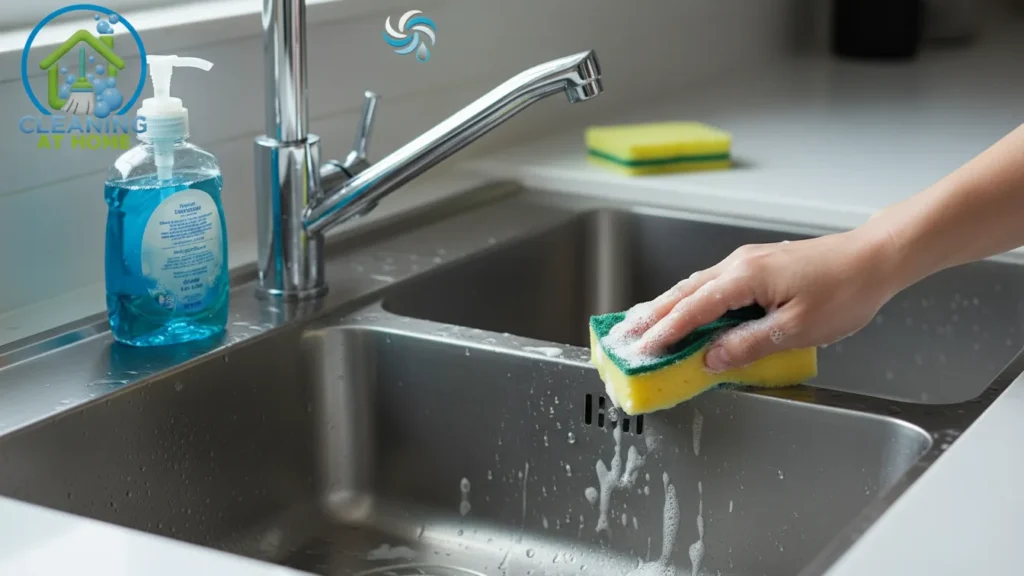
After the counters, reset the sink area. Rinse the sink, wipe around the drain, and clean the faucet if needed. A clean sink signals that the kitchen is “closed” for the day and prevents odors from developing overnight.
Then check the stove and nearby surfaces. You don’t need to scrub daily, but wipe away fresh grease splatters or spills while they’re easy to remove. This prevents buildup that would later require heavy cleaning.
Finish with a quick floor check. Look for visible crumbs or sticky spots, especially near high-traffic areas. A fast sweep or spot clean is enough. Full mopping can wait for a weekly routine.
This order works because it flows naturally and covers the most important areas without overdoing it. When you follow the same steps every day, daily kitchen cleaning becomes automatic—and takes far less time than you expect.
👉 Living Room Cleaning Checklist for Busy People
How to Clean Kitchen Counters Quickly After Every Meal
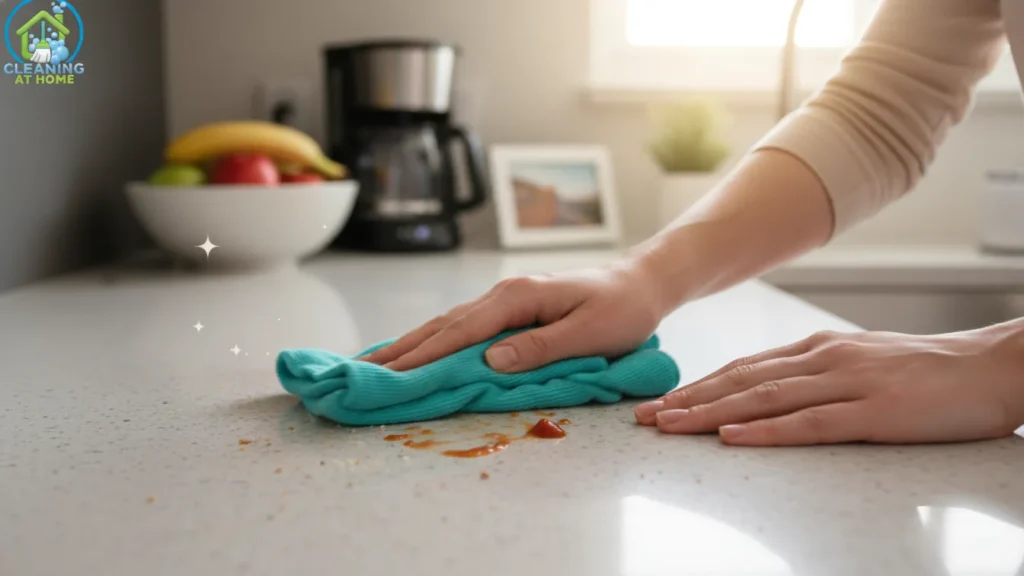
Kitchen counters take the most abuse throughout the day. Every meal, snack, and cup of coffee leaves something behind—crumbs, spills, grease, or sticky spots. If counters aren’t handled consistently, they become the main source of kitchen clutter and frustration. The goal isn’t to deep clean them after every meal, but to reset them fast and move on.
Start by clearing only what was just used. Put away food, return utensils to the sink or dishwasher, and throw away packaging. You don’t need to reorganize the entire counter—just remove items related to that meal.
Next, wipe the surface immediately. A damp cloth or a quick spray of all-purpose cleaner is enough. Fresh mess comes off easily, often in one pass. Waiting even an hour can make spills harder to remove and turn a quick wipe into a bigger job.
Focus on high-use zones first. These include areas near the stove, sink, and food prep space. If time is limited, it’s okay to clean only these spots. The rest of the counter can wait until the end-of-day reset.
Use simple, efficient motions. Wipe in smooth strokes, pushing crumbs toward one area before picking them up. Avoid going back and forth unnecessarily. Speed comes from intention, not rushing.
If you’re short on time, pair counter cleaning with another habit. Wipe counters while waiting for food to cook, coffee to brew, or water to boil. This turns cleaning into a background task instead of a separate chore.
By cleaning counters right after meals, you prevent buildup, keep the kitchen usable throughout the day, and make the final daily reset much faster and easier.
How to Handle Dishes Without Letting Them Pile Up
Dishes are usually the biggest source of kitchen clutter. When they pile up, the entire space feels messy—even if everything else is clean. The key to managing dishes daily isn’t washing constantly, but creating a simple system that prevents backlog.
The first rule is to never leave dishes “for later” without a plan. Later often turns into overnight, and overnight turns into stress the next day. If you use a dishwasher, make it part of your routine to load dishes as soon as they’re used. This keeps the sink clear and reduces visual mess immediately.
If you wash dishes by hand, aim for short, frequent sessions instead of one big wash. Washing a few items right after a meal takes far less effort than facing a full sink at the end of the day. Even a quick rinse and stack can make the task feel manageable until you’re ready to wash properly.
Another helpful habit is resetting the sink before bed. Whether dishes are washed, loaded, or neatly stacked, the goal is to wake up to an empty or organized sink. Starting the day with a clear sink sets a positive tone and makes daily cleaning easier.
Avoid using the sink as storage. When dishes sit in the sink all day, they block the space, trap food residue, and create odors. Keeping the sink clear encourages faster cleanup and keeps the kitchen functional throughout the day.
Finally, keep dishwashing supplies easy to reach. When sponges, soap, and towels are accessible, there’s less resistance to handling dishes right away.
Managing dishes daily isn’t about perfection. It’s about preventing buildup so the kitchen never reaches a point where cleaning feels overwhelming. When dishes are under control, everything else feels easier.
👉 How to Clean a Bedroom Without Getting Overwhelmed

Keeping the Sink Clean Without Scrubbing It All the Time
The kitchen sink can look dirty very quickly, even on days when you’re cleaning regularly. Water spots, food residue, and soap buildup make it feel like something that always needs attention. The good news is that a clean sink doesn’t require constant scrubbing—it requires consistent, light resets.
The simplest habit is rinsing the sink after each use. After washing dishes or pouring out leftovers, rinse away food bits immediately. This prevents residue from drying and sticking to the surface, which is what usually leads to heavy scrubbing later.
At least once a day, wipe the sink with a cloth or sponge. This takes less than a minute and removes water marks and soap film. You don’t need a strong cleaner every time—warm water and a quick wipe are enough for daily maintenance.
Pay attention to the drain area. Food particles tend to collect there and can cause odors. Clearing the drain daily, even briefly, keeps the sink smelling fresh and working properly.
Another important step is drying the sink when possible. Letting water sit creates spots and dullness, especially on stainless steel sinks. A quick dry after the final use of the day keeps it looking clean longer.
Avoid using the sink as a holding space. Leaving dishes, sponges, or food scraps in the sink makes it feel dirty even when it’s technically clean. Keeping the sink clear helps maintain the overall order of the kitchen.
By treating the sink as something you reset daily instead of scrub occasionally, you reduce effort, save time, and keep the kitchen feeling clean without adding extra work.
How to Manage Kitchen Floors in a Daily Routine
Kitchen floors get dirty faster than any other floor in the house. Crumbs fall while cooking, spills happen without notice, and foot traffic spreads dirt throughout the day. Because of this, many people assume kitchen floors need constant mopping—but that’s not realistic or necessary for a daily routine.
Daily floor care is about control, not deep cleaning.
The first step is awareness. Pay attention to where mess actually happens. Most daily dirt is concentrated around the sink, stove, and main walking paths. You don’t need to clean the entire floor every day—only the areas that show visible mess.
Use a quick sweep or dry mop once a day, or even every other day, depending on how much the kitchen is used. This removes crumbs, dust, and food particles before they spread to other rooms. Dry cleaning is fast and prevents buildup without effort.
For spills or sticky spots, handle them immediately. A damp cloth or paper towel is enough when the mess is fresh. Waiting allows spills to harden, turning a small task into something that requires scrubbing later.
Avoid daily mopping unless there’s a clear reason. Excess water can damage flooring, leave streaks, and make the routine feel heavier than it needs to be. Full mopping fits better into a weekly cleaning schedule.
A helpful habit is doing a final floor check at the end of the day. It takes less than a minute and ensures the kitchen feels reset. When floors are kept under control daily, they never reach a point where cleaning feels overwhelming.
Managing kitchen floors this way keeps the routine realistic, fast, and easy to maintain—exactly what a daily kitchen cleaning routine should be.

How Long a Daily Kitchen Cleaning Should Take
A daily kitchen cleaning routine should never feel long or exhausting. If it does, something in the routine is too heavy. One of the biggest benefits of cleaning daily is that it dramatically reduces the time needed—as long as the routine stays focused on maintenance.
For most homes, a daily kitchen clean should take 10 to 20 minutes. On lighter days, it can be done in as little as 5 to 10 minutes. This includes handling dishes, wiping counters, resetting the sink, and checking the floor for visible mess.
If daily cleaning is taking longer than 20 minutes, it usually means one of three things:
- Tasks that belong to weekly cleaning are being added
- Mess is being allowed to build up for several days
- There’s no clear order, causing wasted time
Daily kitchen cleaning works because mess is still fresh. Fresh spills wipe away easily. Fresh crumbs sweep up quickly. There’s no heavy scrubbing, soaking, or repeating tasks.
Another helpful approach is time-boxing. Decide in advance how much time you’ll spend—10 or 15 minutes—and stop when that time is up. This keeps the routine from expanding unnecessarily and prevents burnout. On busy days, even a short reset is better than skipping completely.
It’s also important to remember that not every day looks the same. Some days the kitchen is barely used and needs only a quick wipe. Other days involve cooking and require a bit more attention. Both still count as daily cleaning.
When daily kitchen cleaning stays within a clear time limit, it feels manageable. Instead of being a chore you dread, it becomes a small habit that protects your evenings, your weekends, and your energy.
Small Daily Habits That Keep the Kitchen Under Control
What truly keeps a kitchen clean isn’t one perfect routine—it’s a handful of small habits repeated every day. These habits don’t feel like cleaning, but they quietly prevent mess from building up and turning into a bigger problem later.
One of the most effective habits is cleaning as you go. While food is cooking or water is boiling, use that waiting time to rinse utensils, wipe a small section of the counter, or put items back where they belong. These tiny actions reduce what’s left to do at the end of the day.
Another powerful habit is closing the kitchen each night. This doesn’t mean deep cleaning—it means resetting. Clear the counters, handle remaining dishes, wipe the sink, and check the floor for visible mess. Ending the day with a reset makes the next morning easier and less stressful.
Putting things away immediately also makes a big difference. Leaving items “for later” often leads to clutter. When everything has a place and is returned after use, the kitchen stays naturally cleaner without extra effort.
Managing trash daily is another simple habit. Emptying the trash before it overflows prevents odors and visual clutter. A clean trash area instantly improves how the kitchen feels.
Finally, keep your routine flexible and forgiving. Some days will be messier than others. The goal isn’t to maintain a perfect kitchen—it’s to stop small messes from becoming big ones.
When these habits become automatic, daily kitchen cleaning stops feeling like a task. It becomes part of how the kitchen functions, keeping the space under control with very little effort.

How a Daily Routine Makes Weekly Kitchen Cleaning Easier
One of the biggest hidden benefits of a daily kitchen cleaning routine is how much easier it makes weekly cleaning. When mess is handled a little every day, there’s far less buildup to deal with later. Weekly cleaning stops feeling like a reset and starts feeling like simple maintenance.
When dishes are managed daily, sinks don’t have hardened residue and counters don’t have layers of grease or crumbs. This means weekly cleaning doesn’t require soaking, heavy scrubbing, or repeating the same steps multiple times. Everything wipes down faster because it was never allowed to get bad in the first place.
Daily routines also reduce decision fatigue during weekly cleaning. Instead of walking into the kitchen and wondering where to start, you already know the space is mostly under control. Weekly tasks like wiping appliances, mopping floors, or cleaning the fridge become isolated tasks instead of part of a massive cleanup.
Another advantage is time savings. A kitchen that’s maintained daily might need only 20–30 minutes of weekly cleaning. Without a daily routine, that same kitchen could easily take an hour or more. The time you save adds up quickly over weeks and months.
Daily cleaning also helps you notice problems earlier. Spills, stains, or small messes don’t get hidden under clutter. This makes it easier to address issues before they turn into stubborn stains or unpleasant odors.
Most importantly, a daily routine protects your energy. Instead of spending weekends catching up on mess, you spread the effort gently across the week. Cleaning feels lighter, more predictable, and far less stressful.
When daily and weekly routines work together, the kitchen stays consistently clean—not because of effort, but because of smart habits repeated over time.