Why Entryways and Hallways Shape the First Impression of Your Home
The moment someone steps into your home, a judgment is formed—often without a single word being spoken. That judgment doesn’t start in the living room or the kitchen. It starts in the entryway and continues through the hallways. These are the spaces that quietly set expectations for everything that comes next.
Entryways and hallways act like a visual introduction to your home. Even if guests don’t consciously analyze them, their brains register what they see: shoes scattered near the door, dusty corners, fingerprints on walls, clutter lining the hallway floor. These details send a message before anyone reaches the main rooms. And that message isn’t about how clean your house really is—it’s about how it feels.
What makes these areas especially tricky is that they’re pass-through spaces. You don’t spend time there. You move through them. Because of that, they’re easy to ignore. Shoes get kicked off in a hurry. Bags are dropped “just for a second.” Mail lands on the nearest surface. Dirt from outside gets tracked in daily. Since no one stops to linger, the mess blends into the background.
There’s also a psychological factor at play. Most people prioritize cleaning rooms where they relax or spend time—like the living room or bedroom. Entryways and hallways feel secondary, even though they’re used constantly. That mismatch is why these areas often look worn, dusty, or cluttered even in otherwise clean homes.
Another reason these spaces matter so much is contrast. A clean living room feels less impressive if the hallway leading to it is messy. On the other hand, when the entryway and hallways are clean and calm, the entire home feels more put together—even if other rooms aren’t perfect. These areas quietly amplify or weaken the perception of cleanliness everywhere else.
For homeowners, there’s also an emotional side. Walking into a cluttered entryway after a long day can instantly add stress. It feels like coming home to unfinished business. A clean, simple entry space does the opposite—it creates a sense of arrival, relief, and order.
The good news is that entryways and hallways don’t require heavy cleaning to make a big impact. Because they’re small and linear, small improvements are very visible. A clear floor, clean walls, and a simple reset can completely change how your home is perceived.
Once you understand the role these spaces play, cleaning them no longer feels unnecessary or optional. It becomes a smart, high-impact habit. In the next sections, you’ll see why these areas get dirty so fast—and how to clean them efficiently without adding more work to your routine.
Why These Areas Get Dirty Faster Than Other Rooms
Entryways and hallways get dirty faster than almost any other part of the house because they sit at the crossroads of daily movement. Every time someone enters or leaves, these spaces absorb what comes with them—dirt from shoes, dust from outside, bags, coats, keys, and everything carried through the door.
Unlike other rooms, entryways connect the outdoors to the indoors. Shoes track in dust, sand, pollen, and moisture. Even on days when no one notices obvious dirt, tiny particles are being brought in and spread across floors and corners. Over time, this buildup becomes visible, especially along edges and high-traffic paths.
Hallways experience a different but equally constant form of wear. They’re used as transition zones, meaning people move through them quickly and often without awareness. Items get brushed against walls, doors get touched with dirty hands, and floors are walked over repeatedly. Because no one stops there, the mess isn’t addressed immediately—it just accumulates.
Another reason these areas get dirty quickly is habit-based clutter. Entryways become drop zones by default. Shoes are kicked off in a hurry. Bags are placed down temporarily. Mail and packages are set on the nearest surface. Each individual action seems small, but together they create visual clutter that builds daily.
There’s also less routine cleaning attention given to these spaces. People clean kitchens and bathrooms on schedules, but entryways and hallways rarely have a set routine. Without regular resets, dirt and clutter settle in and stay longer than they should.
Pets and children amplify this effect. Paw prints, toy traffic, backpacks, and sports gear often pass through these areas first, making them some of the busiest zones in the home.
Because entryways and hallways are narrow, even a small amount of mess feels more noticeable. Dirt, clutter, and wear have nowhere to hide. This is why these areas often look dirty before any other room—even if the rest of the house is fairly clean.
The Most Common Entryway and Hallway Cleaning Mistakes
One of the biggest reasons entryways and hallways never seem to stay clean is that people make the same mistakes over and over—usually without realizing it. These spaces aren’t difficult to clean, but they’re easy to clean inefficiently, which leads to quick re-mess and frustration.
The most common mistake is treating these areas as storage instead of transition zones. Shoes, bags, umbrellas, mail, and packages get left there “just for a moment,” but moments turn into days. When passage areas become holding areas, clutter builds faster than it can be cleared.
Another mistake is cleaning only the floor and ignoring everything else. While floors matter, scuffed walls, dusty baseboards, fingerprints on doors, and light switches all contribute to how dirty these spaces look. People often vacuum or sweep and assume the job is done, even though eye-level mess is still visible.
Many people also forget that walls and doors take a lot of abuse in hallways. Hands, bags, and shoulders brush against them daily. Over time, marks and smudges appear, but because they happen gradually, they’re rarely addressed until they’re very noticeable.
There’s also the mistake of skipping routine resets. Entryways and hallways need quick, frequent attention—not occasional deep cleaning. Waiting until they look bad usually means dirt and clutter have already built up, making cleaning feel heavier than it needs to be.
Another common issue is overcomplicating the process. People think cleaning these areas requires moving furniture, scrubbing walls, or reorganizing everything. That belief leads to procrastination. In reality, small, consistent actions are far more effective.
Finally, many people ignore preventive habits. Without a place for shoes, bags, or keys, clutter has nowhere to go but the floor or hallway surfaces. When systems aren’t in place, cleaning becomes a repetitive cycle instead of a lasting solution.
Recognizing these mistakes is the first step toward fixing them. In the next section, we’ll focus on what truly needs cleaning in entryways and hallways—and what can safely be ignored to save time.
What Really Needs Cleaning in Entryways and Hallways
When it comes to cleaning entryways and hallways, most people either do too little or try to do too much. Both approaches create frustration. The key is knowing exactly what actually impacts how these areas look and feel—and focusing only on that.
First, the floor matters most. Because these areas handle constant foot traffic, dirt and debris show up quickly. Shoes bring in dust, sand, and small particles that settle along walking paths and edges. Keeping the floor reasonably clean instantly improves the entire space, even if nothing else is touched.
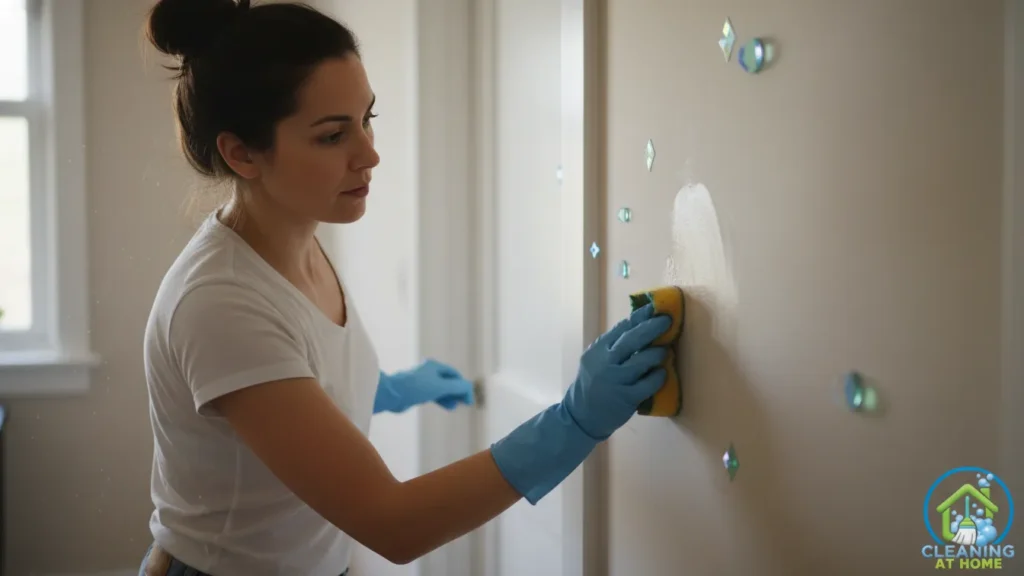
Next, pay attention to walls at hand and shoulder height. Entryways and hallways are narrow, which means walls are touched more often than in other rooms. Fingerprints, scuff marks, and smudges quietly build up and make the space look worn. You don’t need to scrub walls every time, but visible marks should be wiped regularly.
Doors and door frames are another high-impact area. Front doors, closet doors, and door frames get touched daily. Dirt around handles and along edges is very noticeable in these passage areas and contributes to a “dirty” first impression if ignored.
Light switches also play a bigger role than people realize. Because they’re used constantly, they collect oils and grime that stand out in narrow spaces. A quick wipe makes a surprising difference.
Then there’s clutter at ground level. Shoes, bags, and dropped items on the floor disrupt the flow of the space and make it feel smaller and messier than it is. Clearing the floor restores visual order immediately.
What doesn’t need constant attention? Decorative items, high shelves, and rarely touched surfaces. These can be handled occasionally without affecting daily cleanliness.
When you focus on floors, walls, doors, switches, and clear pathways, entryways and hallways stay clean with minimal effort. In the next section, you’ll learn the best order to clean these areas so everything comes together quickly and efficiently.
A Simple Step-by-Step Cleaning Order for Entryways and Hallways
When cleaning entryways and hallways, the order you follow can either save time or create extra work. Because these areas are narrow and heavily used, a clear sequence helps you move quickly without redoing tasks or feeling overwhelmed.
Start by clearing the pathway. Pick up anything on the floor that doesn’t belong there—shoes, bags, packages, or loose items. This instantly opens up the space and makes everything else easier to clean. A clear floor also prevents you from stepping over clutter while working.
Next, move to upper-touch areas. Wipe light switches, door handles, and visible wall marks first. These areas are used constantly and sit at eye level, which means cleaning them early delivers fast visual improvement. A quick wipe is usually enough—no scrubbing required.
After that, focus on doors and door frames. Front doors, closet doors, and nearby frames collect fingerprints and smudges that are very noticeable in entryways and hallways. Cleaning these surfaces before the floor prevents dirt from falling onto already-clean areas.
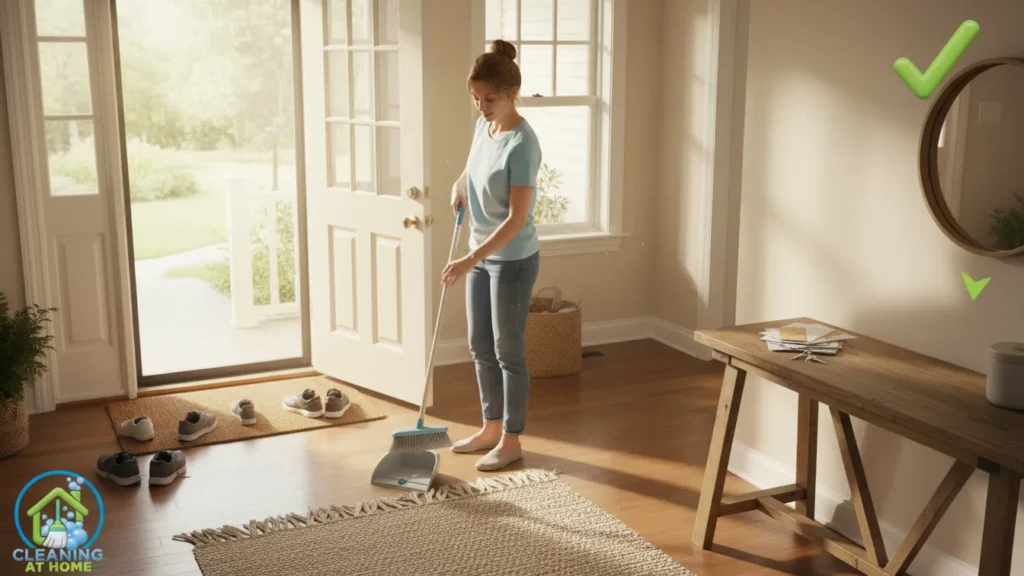
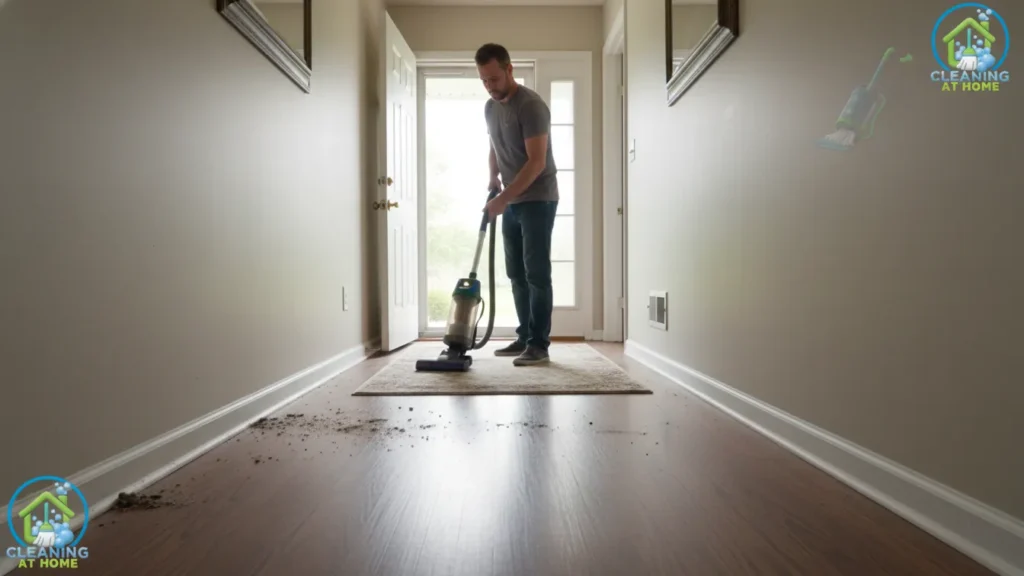
Then, clean the floor last. Sweep or vacuum to remove dirt brought in from outside, paying extra attention to corners and edges where debris collects. If needed, do a light mop or spot clean. Floors should always be last so everything above can be cleaned without creating extra mess.
Finish with a quick reset. Put shoes back in their place, straighten mats or runners, and make sure the pathway is clear. This final step takes less than a minute but ties the entire space together.
Following this order keeps cleaning efficient and repeatable. Once it becomes familiar, you can clean entryways and hallways quickly—often in just a few minutes—without turning it into a bigger chore than necessary.
👉 How to Clean a Bathroom Step by Step
How to Handle Shoes, Bags, and Daily Drop Zones
Shoes, bags, and everyday items are the main reason entryways and hallways feel messy again so quickly. These areas naturally become drop zones because they’re convenient, but without simple rules, clutter spreads fast. The goal isn’t to eliminate drop zones—it’s to control them.
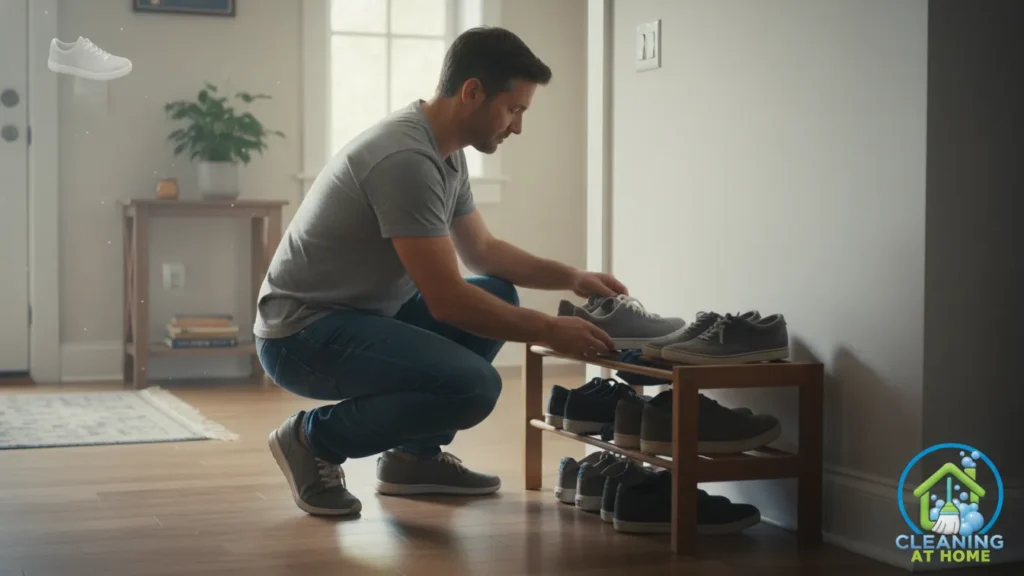
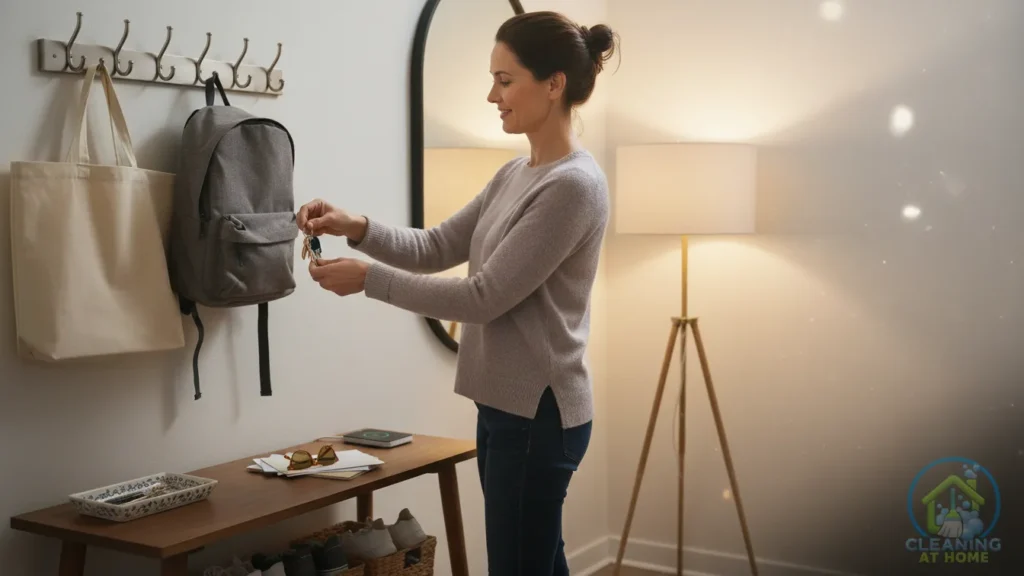
Start by accepting that people will always remove shoes and set things down near the door. Fighting that habit usually fails. Instead, create clear, limited spaces for these items. Shoes should have one designated area—whether that’s a rack, tray, basket, or a small section of the floor. When shoes have a clear boundary, they’re less likely to spread across the hallway.
Bags, backpacks, and purses also need an obvious home. Hooks, a small bench, or a single shelf work well because they keep items off the floor. Hanging items vertically reduces visual clutter and keeps passageways clear, which is especially important in narrow hallways.
Mail, keys, and small daily items often cause hidden clutter. To manage this, use one simple landing spot—a tray, bowl, or small surface near the entry. The key is limitation. When the space is full, it’s a signal to clear it, not to expand it.
Avoid turning hallways into storage areas. If items don’t belong there long-term, they should move on quickly. Entryways work best when they support arrival and departure—not when they hold unfinished decisions.
Finally, build a habit of resetting drop zones daily. At the end of the day, return shoes to their spot, hang bags, and clear the landing area. This reset takes only a minute but prevents clutter from becoming part of the space.
When drop zones are simple and controlled, entryways and hallways stay functional, open, and calm—without requiring constant cleaning or strict rules.
How to Clean Floors in High-Traffic Passage Areas
Floors in entryways and hallways take more abuse than almost any other surface in the home. Every step brings in dirt from outside, and because these areas are narrow, even a small amount of debris becomes very noticeable. The key to cleaning these floors is frequency and focus, not deep cleaning every time.
Start by identifying where dirt actually collects. In most homes, this is right inside the door, along the main walking path, and near corners or baseboards. You don’t need to clean the entire floor evenly—targeting these zones delivers the biggest visual improvement in the least time.
For daily or frequent maintenance, sweeping or vacuuming is usually enough. A quick pass removes dust, grit, and debris before it spreads into other rooms. This is especially important if you have pets or live in an area where shoes bring in sand or dirt.
Mopping should be occasional, not constant. High-traffic areas don’t need to be wet-cleaned every day. Too much moisture can damage flooring and make cleaning feel heavier than it needs to be. Save mopping for when floors look dull, sticky, or visibly dirty.
Pay attention to edges and corners, where dirt naturally settles. These spots are often skipped, but cleaning them makes the entire hallway look more finished. A vacuum attachment or quick swipe with a cloth can handle them easily.
If you use mats or runners, shake them out or vacuum them regularly. They catch a lot of dirt, but if they’re ignored, they simply redistribute debris back onto the floor.
The goal isn’t spotless floors—it’s controlled dirt. When passageway floors are cleaned lightly and often, they stay presentable, protect the rest of the house, and require far less effort over time.
👉 How to Clean a Bedroom Without Getting Overwhelmed
Cleaning Walls, Doors, and Light Switches the Right Way
Walls, doors, and light switches in entryways and hallways get touched far more than people realize. Hands, shoulders, bags, and even shoes brush against them daily. Because these areas are narrow, marks and smudges are more noticeable—and they can make the space feel dirty even when the floor is clean.
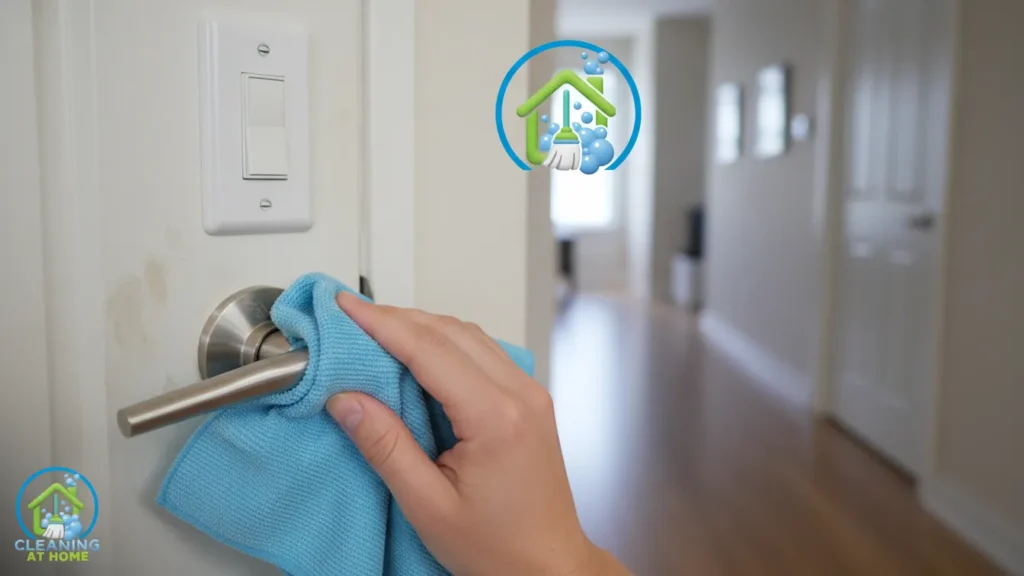
Start with light switches and door handles. These are high-touch spots that collect oils from hands. A quick wipe with a slightly damp cloth is usually enough. You don’t need strong cleaners for daily or weekly maintenance—gentle cleaning keeps surfaces looking fresh without damaging finishes.
Next, move to doors and door frames. Focus on the areas around handles and along the edges where fingers naturally land. These spots often show fingerprints and dark marks that blend in over time. Wiping them regularly prevents buildup and keeps doors looking cleaner longer.
For walls, target only what’s visible. Scuff marks, fingerprints, and smudges at hand or shoulder height are the priority. You don’t need to wash entire walls. A soft cloth or sponge lightly dampened with water can remove most marks without leaving streaks.
Always work top to bottom. Clean switches and door frames before wiping walls, and save the floor for last. This prevents dirt from falling onto areas you’ve already cleaned.
Be gentle and test first, especially on painted surfaces. Scrubbing too hard can damage paint and create shiny spots. Light, regular cleaning is more effective and safer than aggressive scrubbing.
When walls, doors, and switches are kept clean, entryways and hallways feel brighter and more welcoming. These small details have a big impact—and they take only minutes to maintain.
What to Do With Rugs, Mats, and Runners
Rugs, mats, and runners play an important role in entryways and hallways. They’re designed to catch dirt, moisture, and debris before it spreads through the house—but only if they’re maintained properly. When these items are ignored, they stop protecting the space and start contributing to the mess.
The first step is shaking them out regularly. Entry mats and small rugs trap a surprising amount of dirt. Shaking them outside or over a trash can removes loose debris quickly and prevents it from being ground into the fibers.
Vacuuming is the next priority. High-traffic rugs should be vacuumed more often than rugs in other rooms because they collect dirt faster. Focus on the areas where people step most, especially near doors and hallway centers.
If mats or runners become damp from rain or snow, it’s important to let them dry completely. Moist rugs can develop odors and transfer moisture back onto the floor. Hanging them to dry or placing them in a well-ventilated area prevents musty smells and damage.
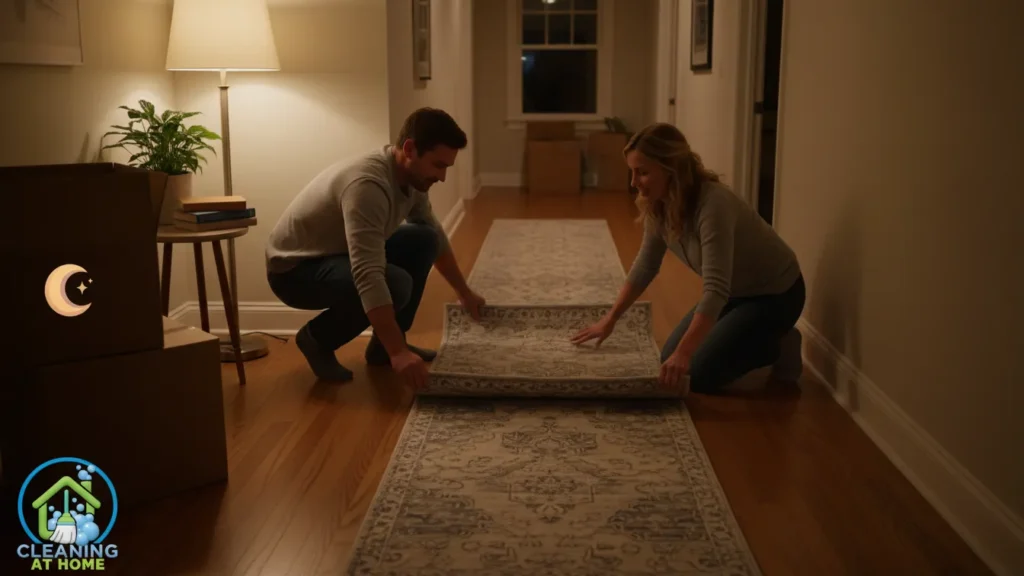
Pay attention to what’s underneath. Dirt often slips past rugs and collects beneath them. Occasionally lifting mats and cleaning the floor underneath helps prevent grit buildup and protects flooring from scratches.
Avoid overusing rugs in narrow spaces. Too many layers can make hallways feel crowded and harder to clean. One well-placed runner or mat is usually enough to manage dirt and maintain flow.
When rugs, mats, and runners are maintained regularly, they work as intended—protecting your floors, improving cleanliness, and supporting a strong first impression instead of hiding dirt in plain sight.
How Long Cleaning Entryways and Hallways Should Take
Cleaning entryways and hallways should never feel like a big task. Because these areas are small and narrow, a proper reset takes far less time than most people expect. When cleaning is done regularly and with intention, it fits easily into even the busiest schedules.
For daily or frequent maintenance, cleaning these areas can take as little as 5 to 10 minutes. This includes picking up shoes and bags, wiping visible marks, and doing a quick sweep or vacuum. These short sessions are enough to keep first-impression areas under control.
A more thorough clean, such as wiping walls, cleaning doors, and checking rugs, usually takes 15 to 20 minutes. This doesn’t need to happen every day—once a week or as needed is enough to prevent buildup.
The reason cleaning stays quick is that entryways and hallways don’t require deep cleaning to look good. Most mess is surface-level and easy to remove when it’s fresh. Waiting too long is what turns a five-minute reset into a longer job.
Setting a clear time limit before you start helps keep cleaning efficient. Decide how long you’ll spend—five, ten, or fifteen minutes—and stop when that time is up. Even partial progress improves the space and counts as success.
When you know cleaning won’t take long, it becomes easier to start. These small, predictable time investments keep first-impression areas clean, welcoming, and stress-free without adding more work to your day.
Small Habits That Keep First Impression Areas Clean Longer
Entryways and hallways don’t stay clean because of big cleaning sessions—they stay clean because of small habits that prevent mess from settling in. These habits work best when they’re simple, quick, and tied to daily routines instead of special effort.
One of the most effective habits is clearing the entryway at the end of the day. Taking one minute to put shoes back in place, hang bags, and return items to their rooms prevents clutter from becoming permanent. This short reset protects the space overnight.
Another helpful habit is removing shoes consistently. Whether your household is shoes-on or shoes-off, being intentional matters. Using mats, trays, or racks keeps dirt contained near the door instead of spread through hallways.
Handling mail and packages immediately also makes a big difference. Letting them sit in the entryway turns passage areas into storage. Opening, recycling, or relocating items right away keeps surfaces clear and prevents buildup.
Regular spot-cleaning of walls and switches helps maintain a clean look. Wiping fingerprints as soon as they appear prevents marks from becoming noticeable stains that require more effort later.
Finally, pay attention to flow. Entryways and hallways should stay open and easy to move through. When something blocks the path, it’s usually a sign that clutter is creeping in and needs to be addressed.
These habits don’t feel like cleaning, but over time they protect the first impression of your home. With just a few small actions repeated daily, entryways and hallways stay welcoming, organized, and easy to maintain.
How Clean Passage Areas Change the Feel of the Entire Home
Clean entryways and hallways have a bigger impact on your home than most people realize. Because these spaces connect every room, their condition affects how the entire house feels—both visually and emotionally.
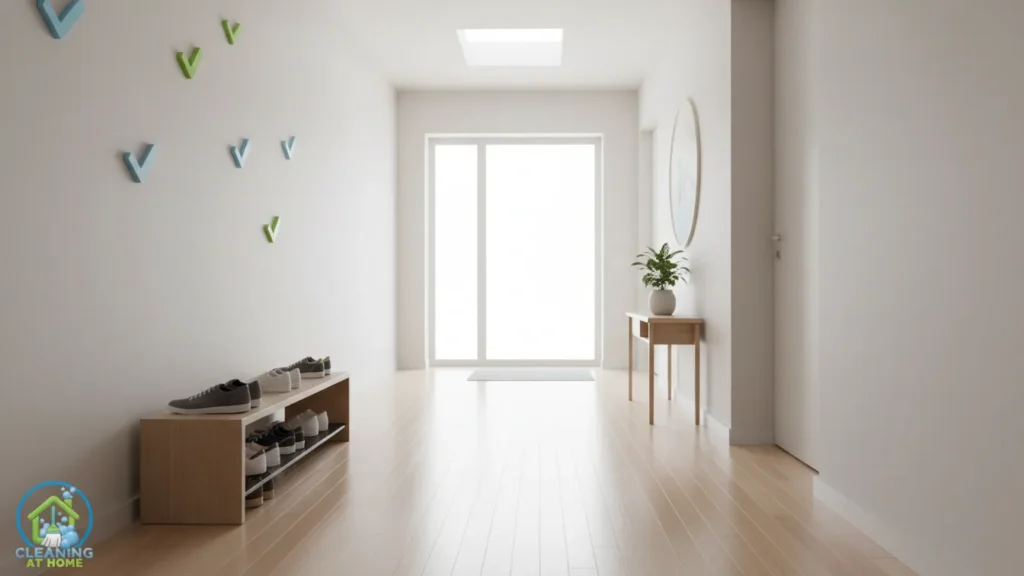
When passage areas are clean and clear, the home immediately feels more organized and intentional. Even if other rooms aren’t perfect, clean hallways create a sense of flow and calm. The house feels easier to move through, lighter, and more put together without any extra effort elsewhere.
There’s also a strong emotional shift. Walking into a clean entryway after a long day creates relief instead of stress. Instead of being greeted by clutter and unfinished tasks, you’re welcomed by order. That first moment at home sets the tone for the rest of the evening.
Clean passage areas also improve perceived cleanliness. Guests often judge the state of a home within seconds of entering. When entryways and hallways are tidy, the entire house feels cleaner—even if they never see every room. These areas quietly shape impressions more than deep-cleaned spaces hidden farther inside.
Functionally, clean hallways reduce friction. Shoes are easier to find, bags aren’t in the way, and daily movement feels smoother. Less clutter means fewer small frustrations, which adds up over time.
Perhaps most importantly, maintaining clean passage areas creates a positive cleaning ripple effect. When the first and connecting spaces feel under control, it becomes easier to keep other rooms tidy. Cleaning feels manageable instead of overwhelming.
Entryways and hallways don’t demand perfection. They need consistency. With small habits and light attention, these often-ignored spaces transform how your home looks, feels, and functions—making everything beyond them feel calmer by default.