
Fast Daily Cleaning Routines That Actually Work for Busy Homes
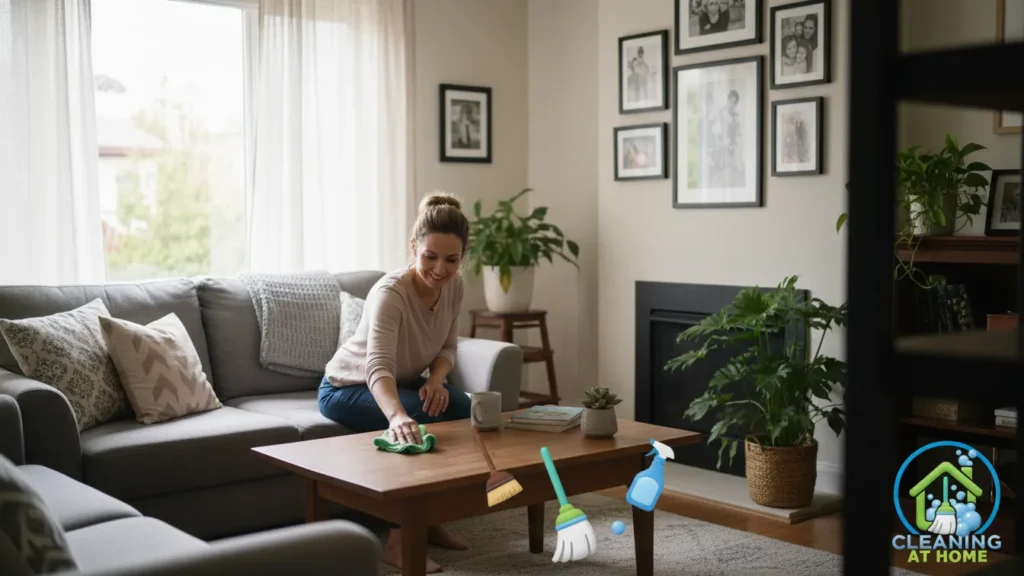
When people hear “daily cleaning routine,” they often imagine something long, rigid, and exhausting. That assumption is exactly why many routines fail. Busy homes don’t need more structure — they need less friction. A fast daily cleaning routine only works when it fits naturally into real life, not when it competes with it.
The biggest mistake people make is trying to copy routines that weren’t designed for busy schedules. Long checklists, room-by-room perfection, or unrealistic expectations quickly turn daily cleaning into something that feels optional — and then ignorable. What actually works is a routine built around maintenance, not transformation.
Fast daily cleaning routines are not about cleaning everything. They are about keeping things from getting out of control.

In busy homes, mess doesn’t come from neglect — it comes from activity. Cooking, eating, working, kids, pets, and everyday movement create constant, small disruptions. A good daily routine doesn’t fight that reality. It works with it by focusing on what changes every day and letting the rest wait.
What makes a daily routine “fast” isn’t speed — it’s clarity. Knowing what truly matters today eliminates hesitation and wasted effort. When decisions are reduced, cleaning takes less time automatically. You’re not wondering where to start or what to clean. You already know.
Another reason fast routines work better is consistency. A routine that takes 10–20 minutes is far easier to repeat than one that takes an hour. When something is easy to maintain, it actually gets done — even on tired days. That consistency prevents buildup, which is what usually causes cleaning to feel overwhelming.
Fast routines also remove pressure. Instead of aiming for “perfect,” they aim for “reset.” The goal is to bring the home back to a functional, comfortable state — not to make it spotless. This mindset shift alone makes daily cleaning feel lighter and more achievable.
Busy homes benefit most from routines that:
- Focus on visible, high-use areas
- Reduce clutter before cleaning
- Limit the number of steps
- End with a clear stopping point
When daily cleaning has boundaries, it stops bleeding into the rest of the day. You clean, you finish, and you move on.
Most importantly, fast daily routines respect energy. They don’t assume motivation will always be high. They work even when energy is low, time is short, and the day didn’t go as planned. That’s what makes them sustainable.
In the sections ahead, we’ll break down exactly how these routines work — what to include, what to skip, and how to structure daily cleaning so it supports your home instead of draining you. The goal isn’t to clean more. It’s to clean just enough, consistently, so your home stays under control without taking over your life.
Why Short Daily Cleaning Routines Are More Effective
Short daily cleaning routines work better because they respect how people actually live. When cleaning tasks are small and contained, they feel manageable instead of overwhelming. This makes them easier to start, easier to finish, and far more likely to become a consistent habit.
Long routines often fail not because people are lazy, but because they demand too much time and energy. On busy days, an hour-long cleaning plan quickly gets postponed. Once skipped, it’s harder to restart, and mess begins to build. Short routines avoid this cycle by lowering the barrier to action. When something only takes a few minutes, it feels doable even on the most exhausting days.
Another reason short routines are effective is focus. With limited time, attention naturally goes to what matters most. Instead of cleaning everything, you clean the areas that change daily — counters, sinks, floors in high-use spaces, and visible clutter. This targeted approach delivers noticeable results without unnecessary effort.
Short routines also reduce decision fatigue. When a routine is simple and familiar, there’s no need to think through every step. You know what to do, you do it, and you stop. This clarity saves time and mental energy, which is especially important in busy households.
Consistency is the biggest advantage of short routines. Ten to twenty minutes done every day prevents buildup. Small messes don’t turn into big ones, and the home never reaches a point where it feels out of control. Over time, this consistency reduces the need for long cleaning sessions altogether.
Short routines also feel more forgiving. Missing a day doesn’t create chaos, because the routine is designed to recover quickly. You’re not “behind” — you simply pick up where you left off.
In daily cleaning, effectiveness isn’t about duration. It’s about repeatability. Short routines work because they fit real life, protect energy, and keep the home stable without demanding more time than most people can realistically give.
The 10-Minute Daily Reset That Keeps Your Home Under Control
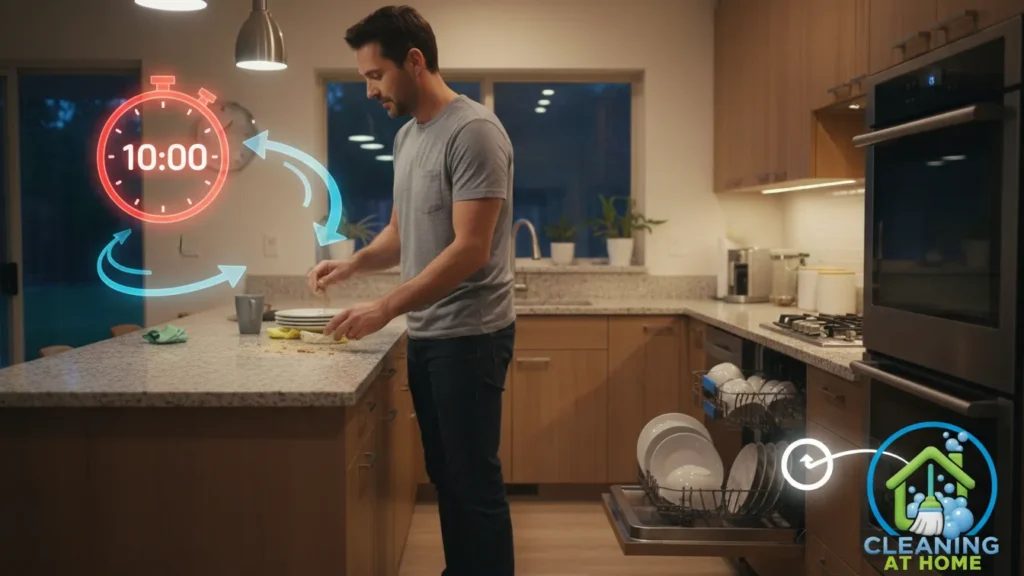
A 10-minute daily reset is one of the most effective tools for keeping a home under control without spending large blocks of time cleaning. It works because it focuses on restoring order, not deep cleaning. In busy homes, this small daily habit prevents mess from piling up and turning into something overwhelming.
The idea behind a daily reset is simple: you return the most-used areas of your home to a functional baseline. This usually includes clearing visible clutter, wiping key surfaces, and doing a quick check of high-traffic spots. Because the reset is short, it feels achievable — even at the end of a long day.
What makes the 10-minute reset so powerful is timing. Instead of reacting to mess throughout the day, you contain cleaning into a defined moment. That boundary helps cleaning stop bleeding into everything else. You reset, you finish, and you move on.
A daily reset also reduces mental clutter. Walking into a space that feels reasonably tidy lowers stress and makes the next day easier to start. Mornings feel calmer when counters are clear, sinks are empty, and floors are mostly free of debris. That emotional payoff is a big reason people stick with this habit.
The reset works best when it’s consistent and predictable. Many people choose the evening, when the day naturally winds down. Others prefer a quick reset after dinner or before relaxing. The exact timing matters less than doing it at roughly the same time each day.
Importantly, a daily reset is not about perfection. Some things will still be out of place, and that’s fine. The goal is control, not spotless rooms. By keeping the scope small, you avoid overthinking and overcleaning.
When done daily, this 10-minute habit replaces long, exhausting cleaning sessions. It keeps mess from growing, saves time across the week, and creates a home that feels easier to manage — even when life is busy and unpredictable.
👉 Time-Saving & Simple Cleaning

What to Clean Every Day (And What to Skip)
One of the biggest reasons daily cleaning feels overwhelming is the belief that everything needs attention every day. In reality, only a small portion of your home actually changes from one day to the next. Knowing what to clean daily — and what to skip — is one of the most effective ways to save time.
Daily cleaning should focus on use, not on the entire house.
What usually needs daily attention are high-use, high-visibility areas. These are the places where mess shows up quickly and affects how the home feels. Kitchen counters, the sink, the stove surface, dining tables, and frequently used floors tend to change every day. Bathrooms benefit from quick daily upkeep around sinks and visible surfaces, especially in shared homes. These small resets keep spaces functional and prevent buildup.
Clutter is another daily priority. Items left out from daily life — bags, shoes, dishes, papers — create visual noise even if the home isn’t dirty. A quick pickup often makes a bigger difference than scrubbing anything.
On the other hand, many areas do not need daily cleaning. Bedrooms that haven’t been used much, shelves without dust, decorative surfaces, windows, baseboards, and low-traffic floors can usually be skipped. Cleaning them every day adds time without improving how the home looks or feels.
Skipping doesn’t mean neglecting. It means choosing the right frequency. Some tasks work better weekly or even less often. When those tasks are removed from daily routines, cleaning becomes faster and far more sustainable.
The key is observation. A short look around tells you what actually changed that day. If it wasn’t used, touched, or visibly affected, it likely doesn’t need attention right now.
When daily cleaning is limited to what truly matters, routines shrink naturally. You spend less time cleaning, see better results, and stop feeling like cleaning never ends. Knowing what to skip is just as important as knowing what to clean — and that clarity is what makes fast daily routines actually work.
A Simple Daily Cleaning Order That Saves Time
One of the easiest ways to make daily cleaning faster is following a simple, repeatable order. Without an order, cleaning becomes scattered. You move back and forth, redo tasks, and waste time fixing things that could have been avoided. A clear sequence removes that friction.
A time-saving daily cleaning order doesn’t need to be strict or complicated. It just needs to follow logic.
The most effective approach is to clean from top to bottom and from clutter to surfaces. Starting with clutter clears space and prevents you from cleaning around objects that will be moved anyway. Putting items back where they belong first instantly makes rooms feel calmer and easier to clean.
After clutter is handled, focus on surfaces that are used daily. Wiping counters, tables, and sinks before floors prevents crumbs and dust from falling onto freshly cleaned areas. This simple shift alone eliminates the need to redo work.
Floors should usually come last in a daily routine. Sweeping or vacuuming after surfaces are done ensures you only clean them once. Doing floors too early almost guarantees they’ll need attention again later in the day.
Another important part of a time-saving order is finishing one area before moving on. Completing a room creates a clear stopping point and prevents half-finished tasks. Even if the routine is short, finishing spaces fully saves time in the long run.
A simple daily order might look like this:
- Pick up clutter in high-use areas
- Wipe daily-use surfaces
- Quick sink and bathroom reset if needed
- Floors in the most used spaces
This order stays flexible. Some days you may skip steps, and that’s fine. The value is in having a default flow that removes decision-making.
When cleaning follows the same basic order each day, routines become automatic and faster. You stop guessing, stop backtracking, and stop repeating tasks. A simple order turns daily cleaning into a smooth process that saves time without adding effort.
👉 Simple Cleaning Habits That Save Time
How to Keep Your Kitchen Clean in Just a Few Minutes a Day
The kitchen is usually the hardest-working space in the home, which is why it often feels like it needs constant attention. The good news is that keeping the kitchen clean daily doesn’t require a long routine. A few focused minutes are usually enough when the right actions are prioritized.
The key to a fast daily kitchen routine is resetting, not deep cleaning. Most daily kitchen mess comes from food prep, eating, and quick use — not from heavy buildup. Addressing those small changes consistently prevents the need for long cleanups later.
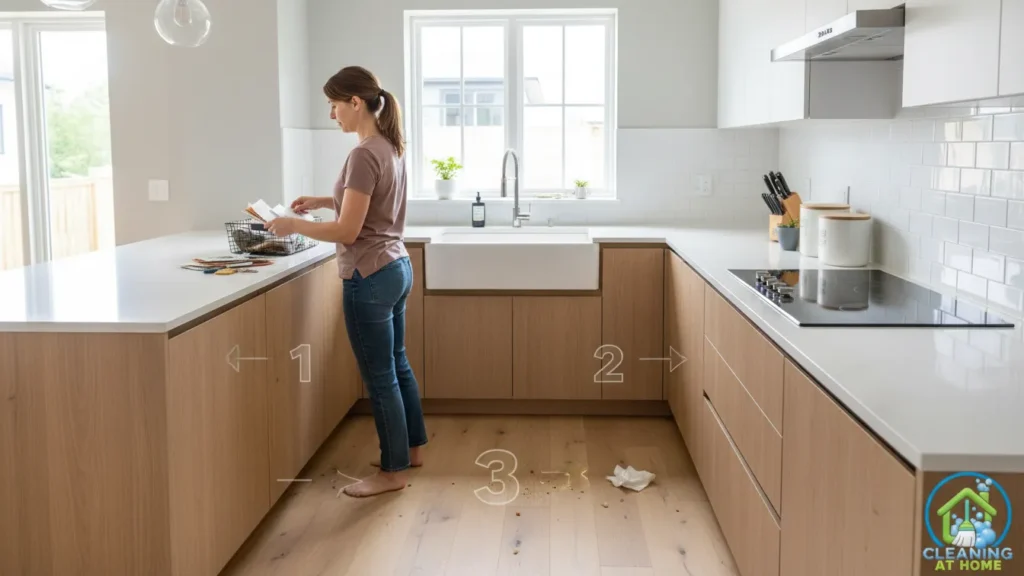
A quick daily kitchen reset usually starts with dishes. Clearing the sink and loading the dishwasher immediately creates instant visual order. An empty or nearly empty sink makes the entire kitchen feel cleaner, even before anything else is done.
Next, focus on the most-used surfaces. Wiping counters and the stove top removes crumbs, splashes, and grease before they harden. This step takes very little time when done daily and prevents residue from building up. There’s no need to scrub — a quick wipe is usually enough.
Trash and clutter are another priority. Throwing away food packaging, putting items back in cabinets, and clearing the counter of non-kitchen items restores function quickly. A clutter-free counter is easier to clean and stays clean longer.
Floors come last and only when needed. In many homes, a quick sweep of visible crumbs in high-traffic areas is enough. Full floor cleaning can wait for another day if there’s no visible mess.
What makes this routine work is restraint. You don’t need to clean appliances, cabinets, or every surface daily. By limiting the routine to what actually changes each day, the kitchen stays under control without demanding much time.
When done consistently, this simple approach keeps the kitchen functional, calm, and ready to use — all in just a few minutes a day.
Quick Daily Bathroom Cleaning Without Scrubbing
Daily bathroom cleaning doesn’t need to involve scrubbing, long routines, or heavy effort. In fact, the fastest way to keep a bathroom clean is to prevent buildup, not fight it later. When small actions are done consistently, scrubbing becomes the exception instead of the rule.
Most daily bathroom mess comes from regular use — water splashes, toothpaste marks, fingerprints, and light residue around the sink. These are easy to remove when they’re fresh. A quick wipe takes seconds, while waiting turns the same mess into something that needs real effort.
A fast daily bathroom routine starts with the sink area. Wiping the faucet, counter, and sink bowl removes visible residue and instantly improves how the space looks. This doesn’t require product every time — often a damp cloth is enough when done daily.
Next, a quick check of high-touch areas makes a big difference. Light switches, toilet handles, and door handles collect marks quickly but are easy to wipe. Addressing them regularly keeps the bathroom feeling fresh without adding time.
The mirror usually doesn’t need daily attention unless it’s visibly marked. Spot-cleaning fingerprints instead of fully cleaning the mirror saves time and avoids unnecessary work. Floors can also be skipped most days unless there’s visible dirt.
One of the biggest time-savers is resetting after use. A quick rinse of the sink, wiping water from surfaces, and straightening items prevents mess from settling. These small habits take moments and eliminate the need for scrubbing later.
The goal of daily bathroom cleaning is maintenance, not perfection. By keeping the routine short and focused, the bathroom stays under control with minimal effort. When daily care is light and consistent, deeper cleaning becomes faster, easier, and far less frequent.
👉 How to Clean Faster Without Rushing
The Power of a Nightly Reset for Faster Mornings
A nightly reset is one of the simplest habits that can dramatically improve how fast and calm your mornings feel. It doesn’t involve deep cleaning or extra effort. Instead, it’s about setting your home up so the next day starts smoothly instead of chaotically.
When mess is left overnight, it becomes the first thing you face in the morning. Cluttered counters, dishes in the sink, and items left out create instant stress and slow everything down. Even if the mess is small, it adds friction to an already busy part of the day.
A nightly reset focuses on removing obstacles, not making things perfect.
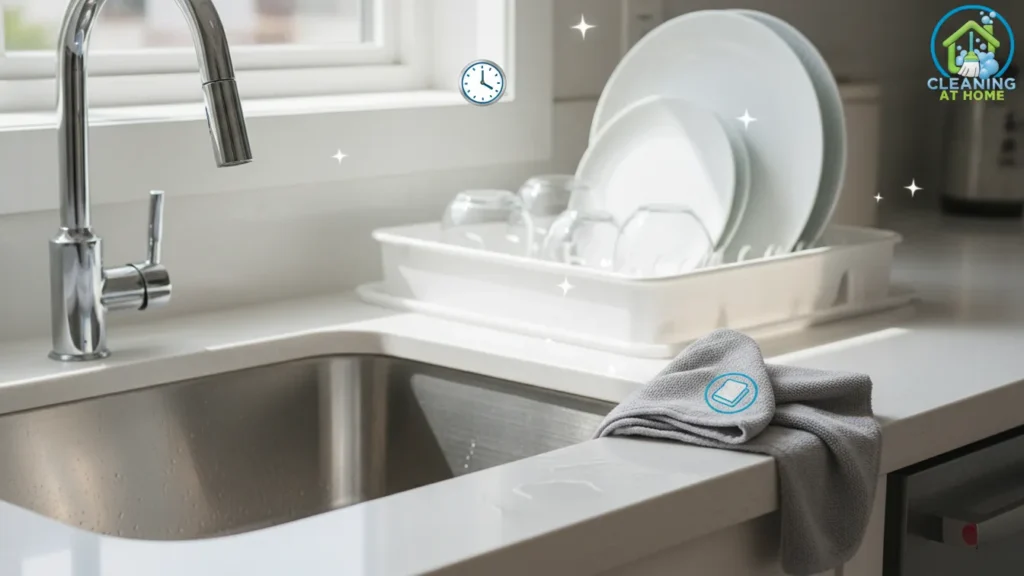
This usually means clearing the main surfaces you’ll use in the morning. Putting dishes away, wiping the kitchen counter, straightening the living area, and doing a quick pickup of visible clutter are often enough. These actions take just a few minutes but have a big impact on how the home feels the next day.
One of the biggest benefits of a nightly reset is decision reduction. When things are already in place, mornings require fewer choices. You’re not deciding where to put items, what to clean first, or what needs fixing. Everything is ready, which saves both time and mental energy.
A reset at night also shifts cleaning out of the morning rush. Instead of reacting to mess when time is tight, you handle it when the day is winding down. This makes cleaning feel calmer and more controlled, rather than rushed and stressful.
Importantly, a nightly reset has clear limits. It’s not about cleaning every room or doing “one more thing.” It’s about reaching a comfortable baseline and stopping. When the reset has boundaries, it stays sustainable.
Over time, this habit creates a powerful rhythm. Even busy mornings feel lighter because the home is already working with you. A few minutes at night often save much more time the next day — and that’s what makes the nightly reset one of the most effective parts of a fast daily cleaning routine.
How to Clean Daily Without Feeling Like You’re Always Cleaning
One of the biggest frustrations with daily cleaning is the feeling that it never stops. Even when tasks are small, cleaning can feel constant — as if you’re always doing something and never fully done. This usually happens when cleaning lacks clear boundaries.
The key to avoiding this feeling is containment.
Daily cleaning should happen inside a defined window, not scattered throughout the day. When small tasks are done randomly whenever mess appears, cleaning blends into everything else. There’s no clear start or finish, which makes it feel endless even if the total time spent isn’t that high.
Containing cleaning into a short, intentional routine changes that completely. When you decide, “This is my daily cleaning time,” cleaning becomes an activity — not a background burden. You start, you do what matters most, and you stop.
Another important factor is scope. Feeling like you’re always cleaning often means you’re trying to maintain perfection instead of function. When expectations are too high, nothing ever feels finished. Shifting the goal to “good enough for today” creates relief. The home feels under control without demanding constant attention.
Letting go of micro-fixing also helps. Straightening the same item over and over, wiping already clean surfaces, or responding to every tiny imperfection pulls you back into cleaning mode repeatedly. Skipping those actions protects your time and mental space.
Daily cleaning works best when it supports life instead of interrupting it. That means:
- One short routine instead of many small ones
- A clear stopping point
- Permission to leave some things for later
When cleaning has boundaries, it stops following you around all day. You clean with intention, then move on — and that’s what makes daily cleaning feel manageable instead of endless.

Tools and Supplies That Make Daily Cleaning Faster
Daily cleaning becomes much faster when the right tools and supplies are easy to access and simple to use. The goal isn’t to have more products — it’s to remove friction. When tools are convenient, clean, and ready, cleaning takes less time and feels far less demanding.
One of the biggest time-savers is keeping daily tools within reach. When basic supplies are stored close to where they’re used, you eliminate unnecessary trips back and forth. A cloth under the sink, a small spray in the kitchen, or a broom nearby makes quick cleaning possible without setup time.
Another important factor is tool simplicity. Daily cleaning works best with tools that don’t require assembly, special steps, or decisions. A few reliable cloths, a simple cleaner, and a basic broom or vacuum are often all that’s needed. Complicated tools slow routines down and discourage consistency.
Clean tools also matter. A dirty cloth or worn-out sponge doesn’t clean efficiently and often forces you to redo tasks. Rotating cloths regularly and keeping tools in usable condition saves time by improving results the first time.
Multi-purpose supplies are especially helpful for daily routines. Using one cleaner for most surfaces reduces decision-making and keeps routines moving. Daily cleaning isn’t the time for switching products constantly — it’s about speed and ease.
Another overlooked time-saver is preparation. Starting cleaning with everything you need already available prevents interruptions. Even a quick check to make sure cloths are clean and supplies are full helps the routine flow smoothly from start to finish.
The fastest daily cleaning routines aren’t powered by fancy tools. They’re supported by accessible, simple, and reliable supplies. When tools work with you instead of slowing you down, daily cleaning feels lighter, faster, and far easier to maintain.
How to Stay Consistent With Fast Daily Cleaning Routines
Consistency is what turns a fast daily cleaning routine into something that actually works long term. Without consistency, even the best routine falls apart. The good news is that staying consistent doesn’t require discipline or motivation — it requires simplicity.
Most people struggle with consistency because their routines are too demanding. When a routine feels heavy, it’s easy to skip it on tired or busy days. Once skipped, it becomes harder to restart. Fast daily routines avoid this problem by being small enough to do even when energy is low.
One of the most effective ways to stay consistent is tying cleaning to an existing habit. Instead of treating cleaning as a separate task, connect it to something you already do every day. Cleaning right after dinner, before relaxing in the evening, or before heading to bed creates a natural trigger that removes the need to decide when to clean.
Another key factor is flexibility. A consistent routine doesn’t look the same every day. Some days you’ll do the full routine. Other days you’ll do the bare minimum — and that still counts. Consistency comes from showing up regularly, not from doing everything perfectly.
Clear limits also help. Knowing exactly when cleaning starts and when it ends makes it easier to commit. When a routine has no boundaries, it feels endless. When it has a clear stopping point, it feels manageable and repeatable.
It’s also important to adjust expectations. A fast daily routine is meant to maintain control, not create perfection. Letting go of unrealistic standards removes pressure and makes it easier to keep going day after day.
Consistency grows naturally when a routine feels doable. When daily cleaning fits your life instead of competing with it, it stops feeling like a chore and starts feeling like a simple habit — one that supports your home without demanding more time or energy than you can give.

How a Simple Daily Routine Saves Time All Week Long
A simple daily cleaning routine doesn’t just save a few minutes each day — it saves time across the entire week. The real benefit comes from prevention. When mess is managed consistently, it never has the chance to grow into something that demands long, exhausting cleaning sessions.
Daily routines reduce buildup. Crumbs don’t spread through the house, counters don’t become sticky, and clutter doesn’t take over surfaces. Because the home stays close to a functional baseline, cleaning tasks remain small and predictable. This stability is what turns cleaning from a recurring problem into a manageable habit.
Another way daily routines save time is by reducing decision-making. When you already know what gets done each day, there’s no need to plan, rethink, or debate what to clean. That clarity removes hesitation and helps cleaning happen quickly and efficiently. Less thinking means less time spent overall.
Simple routines also make weekly and monthly cleaning easier. When daily maintenance is consistent, deeper tasks take less effort. There’s less scrubbing, less sorting, and fewer surprises. What might have taken hours now takes a fraction of the time because the foundation is already in place.
Perhaps the biggest time-saving benefit is mental. A home that stays under control requires less attention. You’re not constantly noticing mess, feeling behind, or planning when to clean next. That mental freedom allows you to focus on other parts of life without cleaning lingering in the background.
A simple daily routine works because it’s sustainable. It doesn’t rely on motivation or perfect timing. It fits into real life and adapts to busy days. Over a week, those small daily efforts add up to significant time savings — and a home that feels easier to live in.
When cleaning is simple and consistent, time stops being lost to catch-up sessions. Instead, it’s protected, week after week, by a routine that quietly does its job without demanding more than it should.