
Why Cleaning Order Matters More Than You Think
Most people approach weekly cleaning by focusing on tasks—what needs to be wiped, vacuumed, or scrubbed—without thinking about sequence. This seems harmless, but the order you clean in has a much bigger impact than most people realize. In fact, cleaning order often determines whether your effort feels effective or exhausting.
When cleaning is done in a random order, it creates hidden inefficiencies. You end up moving through the same spaces multiple times, re-dirtying areas you already cleaned, or undoing your own work without noticing. For example, cleaning floors before dusting spreads debris back onto clean surfaces. Wiping counters before clearing clutter forces you to clean the same spot twice. These small mistakes don’t feel dramatic in the moment, but they quietly add time, effort, and frustration to every cleaning session.
Cleaning order also affects how dirt and mess behave in your home. Dust naturally falls downward. Crumbs travel from one room to another. Wet cleaning spreads moisture that can undo dry tasks if it’s done too early. A good cleaning order works with these realities instead of fighting them. When the sequence makes sense, each step supports the next instead of creating extra work.

There’s also a psychological side to cleaning order. When tasks are done in a logical flow, progress becomes visible faster. Rooms start to feel cleaner earlier in the process, which builds motivation and momentum. When cleaning feels endless or ineffective, it’s often not because you’re doing too little—but because the order prevents you from seeing results.
Weekly cleaning is meant to maintain control, not drain energy. A smart cleaning order reduces decision-making, limits backtracking, and helps you move through your home with purpose. Instead of bouncing between tasks, you follow a clear path that feels intentional and efficient.
Understanding why cleaning order matters is the foundation of a smoother weekly routine. Once the sequence is right, cleaning stops feeling like a struggle and starts feeling manageable—even on busy weeks.
The Biggest Mistake People Make When Cleaning Weekly
The biggest mistake people make during weekly cleaning isn’t laziness or lack of time—it’s starting in the wrong place. Most people begin cleaning wherever the mess feels most visible or annoying, usually the kitchen or bathroom. While this feels productive in the moment, it often leads to extra work and wasted effort later.
When you start cleaning without a clear sequence, you end up working against yourself. For example, cleaning the kitchen first may seem logical, but if you haven’t dealt with clutter in other rooms yet, items will eventually migrate back into the kitchen. Similarly, vacuuming early in the process often means re-vacuuming after dusting or tidying other spaces. These small inefficiencies add up and make weekly cleaning feel longer than it needs to be.
Another common mistake is mixing tasks that require different conditions. People often jump between decluttering, dusting, vacuuming, and mopping without finishing one category first. This creates a stop-and-start rhythm that breaks focus and slows progress. Cleaning works best when similar tasks are grouped and completed in a logical order.
Many people also underestimate how much mess moves during cleaning. Dust falls, crumbs travel, and foot traffic spreads dirt from room to room. Starting with detailed or wet cleaning too early often means undoing that work as you move through the house. This isn’t poor cleaning—it’s poor sequencing.
There’s also a mental cost to cleaning in the wrong order. When effort doesn’t produce visible results quickly, motivation drops. People feel like they’re “cleaning all day” without seeing progress, which leads to frustration and avoidance the following week.
Weekly cleaning becomes far easier when the order is intentional. By avoiding this common mistake—starting without a clear sequence—you reduce rework, protect your energy, and make each step of cleaning support the next instead of competing with it.
The Logic Behind an Efficient Cleaning Order
An efficient cleaning order is not about personal preference or habit—it’s based on how dirt behaves and how homes are used. When the sequence follows a clear logic, cleaning becomes faster, smoother, and far less repetitive. When it doesn’t, even simple routines can feel unnecessarily tiring.
The core logic starts with understanding movement. During cleaning, you move through rooms, touch surfaces, shift objects, and walk across floors. Each movement has the potential to spread dust, crumbs, and dirt. An efficient order minimizes this spread by handling tasks in a way that prevents clean areas from being disturbed later.
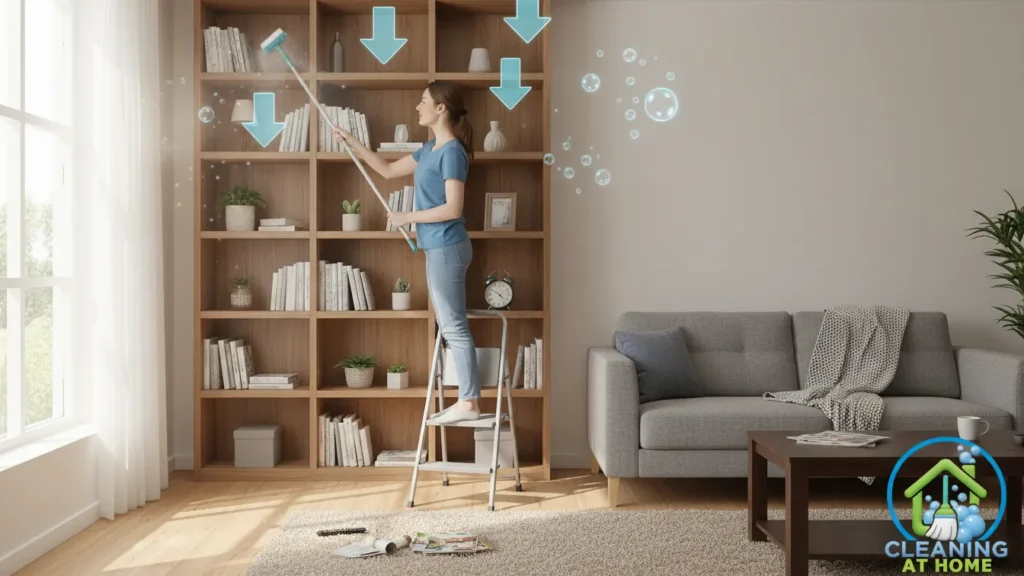
Another important principle is gravity. Dust and debris fall downward. If you clean lower surfaces or floors before higher ones, you’re likely to undo your own work. Efficient cleaning sequences always account for this by handling higher surfaces first and finishing with floors. This single adjustment can eliminate a surprising amount of rework.
There’s also a logic related to task type. Some tasks create mess while others remove it. Decluttering creates movement and disruption. Dusting releases particles into the air. Vacuuming and mopping collect what’s left behind. When these task types are mixed randomly, cleaning feels chaotic. When they’re grouped and ordered correctly, each step prepares the space for the next.
Efficiency also comes from reducing decision-making. When you follow a logical order, you don’t have to constantly ask yourself, “What should I do next?” The sequence guides you forward. This lowers mental fatigue and makes it easier to keep going, especially during weekly cleaning when energy may already be limited.
An efficient cleaning order doesn’t aim to make your home perfect. It aims to make your effort count. By working with gravity, movement, and task flow, the order turns cleaning into a process where each step builds on the last—saving time, energy, and frustration week after week.
Start With Decluttering, Not Cleaning
One of the most important steps in an efficient weekly cleaning order happens before any actual cleaning begins. Decluttering comes first—not because it makes your home look neater, but because it removes obstacles that slow everything else down. Skipping this step is one of the fastest ways to double your cleaning time.
When surfaces are covered with items, cleaning becomes fragmented. You wipe around objects instead of cleaning thoroughly, move things from place to place, or clean the same surface multiple times. Decluttering first creates clear, open spaces, which allows cleaning tasks to be faster, more effective, and less frustrating.
Starting with decluttering also reduces decision fatigue later in the process. When items are already in their proper place, you don’t have to stop mid-cleaning to decide where something belongs. This keeps your momentum going and prevents cleaning from turning into a series of interruptions.
It’s important to understand that weekly decluttering is not the same as organizing. You’re not sorting drawers, rearranging shelves, or making long-term decisions. Weekly decluttering is quick and functional. It simply means returning items to where they belong, throwing away obvious trash, and clearing surfaces so they can be cleaned properly.
Another reason decluttering comes first is movement. As you move items around, dust and debris are often disturbed. Doing this before dusting or vacuuming prevents you from redoing work later. Decluttering sets the stage for the rest of the cleaning process instead of interfering with it.
When decluttering is done at the start, cleaning flows more smoothly from room to room. Surfaces stay clean longer, tasks take less time, and the entire process feels more controlled. Starting with decluttering isn’t about making your home perfect—it’s about making cleaning efficient.
👉 Deep Cleaning vs Regular Cleaning
Clean From Top to Bottom (How This Saves Time)
Cleaning from top to bottom is one of the simplest rules to follow—and one of the easiest to ignore. Many people clean based on what looks dirtiest first, not realizing that gravity quietly undoes their effort. When you clean higher areas after lower ones, dust and debris fall onto surfaces you’ve already cleaned, forcing you to redo work without noticing why cleaning feels endless.
The logic is straightforward: dust, crumbs, and particles fall downward. When you dust shelves, wipe cabinets, or clean light fixtures, debris doesn’t disappear—it drops. If floors, countertops, or furniture are cleaned first, they become landing zones for that debris. Cleaning from top to bottom ensures that every task supports the next instead of creating extra work.
This approach also creates a clear, repeatable flow. Starting with higher surfaces—like shelves, cabinet tops, wall décor, vents, and light fixtures—allows you to move downward naturally. Once those areas are done, you can clean mid-level surfaces such as countertops, tables, and furniture. Floors always come last, collecting everything that fell during the earlier steps. This sequence eliminates backtracking and saves time every single week.
Another benefit is focus. When you follow a top-to-bottom order, you don’t have to constantly decide what to clean next. The structure guides you through the space, reducing mental effort and keeping momentum going. This is especially helpful during weekly cleaning, when energy and time are often limited.
Cleaning top to bottom also protects results. Floors stay cleaner longer, surfaces look better with less effort, and you avoid the frustration of seeing dust reappear shortly after cleaning. Over time, this method trains you to clean with intention instead of reacting to visible mess.
Top-to-bottom cleaning doesn’t require more effort—it requires better sequencing. Once it becomes a habit, weekly cleaning feels smoother, faster, and far more effective, because every step works with gravity instead of against it.
Dry Tasks First, Wet Tasks Last
One of the most practical rules in an efficient weekly cleaning order is separating dry tasks from wet tasks—and doing them in the right sequence. Ignoring this rule is a common reason cleaning feels messy, repetitive, or never quite finished.
Dry tasks are anything that loosens, moves, or releases dirt and debris without using water. This includes decluttering, dusting, wiping dry surfaces, vacuuming upholstery, and sweeping. These tasks disturb dust and crumbs, sending them into the air or onto the floor. Wet tasks, on the other hand, are designed to collect what’s left behind. Mopping, wiping with sprays, scrubbing sinks, and cleaning bathrooms all fall into this category.
When wet tasks are done too early, they work against you. For example, mopping floors before dusting shelves almost guarantees you’ll need to mop again. Cleaning bathroom surfaces before dust settles can leave streaks or residue. Wet cleaning locks in effort—but only if the loose dirt has already been dealt with.
Doing dry tasks first creates a clean slate. Dusting and sweeping allow debris to fall where it belongs: onto the floor. Once everything loose has settled, wet tasks can do their job properly. This makes wet cleaning faster, more effective, and longer-lasting.
There’s also an efficiency benefit. Dry tasks are usually quicker and require less setup. They help you move through rooms with momentum. Wet tasks tend to be slower and more physically demanding. Saving them for the end means you’re not switching back and forth between tools, products, and methods, which reduces fatigue and wasted time.
Separating dry and wet tasks also improves results. Floors dry cleaner, surfaces stay streak-free, and you avoid that frustrating feeling of cleaning something twice in the same session. Each task has a clear purpose and a clear place in the sequence.
Following the “dry first, wet last” rule turns weekly cleaning into a smooth flow instead of a stop-and-start process. It’s a small adjustment that makes a noticeable difference—saving time, energy, and effort every single week.
👉 Weekly Cleaning Routine (Simple Plan)

Why the Kitchen Should Not Be Your Starting Point
For many people, the kitchen feels like the most logical place to start cleaning. It’s often the messiest room, the most used, and the one that causes the most stress when it’s dirty. However, starting your weekly cleaning in the kitchen is one of the most common sequencing mistakes—and it often leads to extra work later.
The main issue is traffic. The kitchen is a central hub where people pass through constantly while cleaning other rooms. When you clean it first, it’s likely to get used again before the rest of the house is finished. Foot traffic brings in crumbs, dirt, and spills, undoing the work you just completed.
Another problem is task overlap. Kitchen cleaning often involves wet tasks like wiping counters, cleaning sinks, and mopping floors. If these are done too early, they can be affected by dusting, decluttering, and movement happening in other rooms afterward. This is especially true for floors, which can quickly collect debris from the rest of the house.
The kitchen is also where clutter tends to migrate. Items from other rooms often end up on kitchen counters during cleaning. If you clean the kitchen before decluttering the rest of the house, you’ll likely need to clear and re-clean surfaces later, which adds unnecessary repetition.
From an efficiency standpoint, the kitchen works best as a mid-to-late step in the cleaning order. By the time you reach it, other rooms are decluttered, dust has settled, and foot traffic is reduced. This allows kitchen cleaning to be more thorough and longer-lasting.
Starting somewhere quieter—like bedrooms or less-used areas—builds momentum without constant interruption. Saving the kitchen for later ensures that when you clean it, the results actually stick. This small shift in order can make weekly cleaning feel far more efficient and far less frustrating.
The Ideal Weekly Cleaning Order (Step-by-Step)
An ideal weekly cleaning order isn’t about rushing through tasks—it’s about following a sequence where each step makes the next one easier. When the order is clear, cleaning feels more controlled, progress is visible faster, and you avoid repeating work. This step-by-step flow is designed specifically for weekly cleaning, not deep cleaning or one-time resets.
The first step is a whole-house declutter pass. Walk through your home and return items to their proper places, clear obvious clutter, and throw away trash. This step should be quick and practical. You’re not organizing drawers or closets—just removing obstacles so surfaces are clear and rooms are ready to be cleaned.
Next comes dusting and dry surface cleaning, starting with higher areas. Dust shelves, light fixtures, vents, and decorative items. Then move to mid-level surfaces like tables, counters, and furniture. This allows dust and debris to fall naturally to the floor, where it can be dealt with later instead of reappearing on clean surfaces.
After dusting, focus on bedrooms and low-traffic rooms. These spaces are easier to clean without interruption and don’t get messy again quickly. Making beds, wiping surfaces, and doing light tidying here builds early momentum and creates visible progress without constant foot traffic.
Once quieter rooms are done, move to bathrooms. Clean sinks, toilets, mirrors, and showers or tubs. Bathrooms benefit from being cleaned after dusting but before floors, since they often involve wet tasks that should not be disturbed later.
The kitchen comes next. At this point, clutter from other rooms has already been handled, and movement through the house is reduced. Clean counters, sinks, appliances, and any remaining surfaces. Because the rest of the house is already in order, kitchen cleaning lasts longer and feels more satisfying.
The final step is floors. Vacuum or sweep all rooms, then mop where needed. Floors always come last because they collect everything that fell during the earlier steps. Ending with floors creates a clear finish point and makes the entire home feel complete.
This step-by-step order works because it follows logic, not impulse. Each task prepares the space for the next one, reducing friction and saving time. When you follow this sequence consistently, weekly cleaning becomes smoother, more predictable, and far easier to maintain.
How This Order Fits Into a Weekly Cleaning Schedule
A good cleaning order only becomes truly useful when it fits naturally into a weekly cleaning schedule. The goal isn’t to follow a perfect sequence once—it’s to use that order in a way that supports your routine week after week, even when time is limited.
The ideal cleaning order works because it can be split across the week, not just followed in one long session. Decluttering and dusting can be done in short blocks on lighter days, while bathrooms, the kitchen, and floors can be assigned to days when you have a bit more time or energy. The sequence stays the same, but the timing becomes flexible.
For example, you might declutter and dust bedrooms early in the week, handle bathrooms midweek, and save the kitchen and floors for later. Because the order is logical, each day’s work still supports the next step, even if the tasks are spread out. You’re not undoing progress—you’re building on it.
This order also reduces decision fatigue when following a schedule. Instead of wondering what to clean next, the sequence gives you direction. Your weekly schedule doesn’t need long task lists; it simply needs to tell you which step of the order you’re on that day. This makes planning easier and execution faster.
Another benefit is consistency. When the same order is repeated weekly, cleaning becomes more automatic. You spend less mental energy planning and more energy actually cleaning. Over time, this consistency makes weekly cleaning feel lighter, because you’re no longer figuring things out as you go.
Most importantly, this order respects real life. If a week gets disrupted, you can pause and resume without chaos. You know where you left off and what comes next. When cleaning order and weekly scheduling work together, cleaning stops feeling random and starts feeling controlled—without becoming rigid or overwhelming.

Adjusting the Cleaning Order for Small or Busy Homes
Small or busy homes need the same logical cleaning order as any other space—but with fewer steps and tighter timing. The key adjustment isn’t changing the sequence itself, but compressing it so it fits limited space, time, and energy without creating extra work.
In smaller homes, tasks naturally overlap because rooms are close together. Decluttering, for example, may take only a few minutes per room. In this case, a whole-house declutter pass can be done quickly at the start, followed immediately by dusting and surface cleaning. The order stays the same, but the time between steps is shorter, making the process feel faster and more fluid.
Busy homes benefit from breaking the order into micro-sessions. Instead of completing the full sequence in one day, each step can be assigned to a different day. For example, one day might cover decluttering and dusting, another day bathrooms, another the kitchen, and the final day floors. Because the order is logical, splitting it up doesn’t undo progress—it preserves it.
High-traffic homes, especially those with kids or pets, should also adjust when certain steps happen. Floors may need to be done more frequently, while dusting higher surfaces can happen less often. The order still applies: dry tasks before wet tasks, and floors last within each session, even if floors are cleaned more than once per week.
Another helpful adjustment is focusing on zones instead of rooms. In very busy weeks, you might apply the full cleaning order only to the most-used areas of the house and do a lighter version elsewhere. This keeps the home functional without trying to clean everything equally.
The most important thing to remember is that the cleaning order is a framework, not a rulebook. Small or busy homes don’t need more cleaning—they need smarter sequencing. When the order is flexible and scaled to your reality, weekly cleaning stays manageable instead of overwhelming.
Common Mistakes That Break the Cleaning Flow
Even with a good cleaning order, small mistakes can quietly disrupt the flow and make weekly cleaning feel harder than it needs to be. These mistakes usually aren’t obvious in the moment, but over time they create extra steps, repeated work, and unnecessary frustration.
One common mistake is jumping ahead in the sequence. For example, starting wet cleaning tasks before finishing all dry tasks often leads to rework. Mopping before dusting or cleaning counters before decluttering means you’ll likely need to redo those areas later. This breaks momentum and makes cleaning feel longer than expected.
Another frequent issue is switching between rooms too often. Moving back and forth without completing a step in one area increases foot traffic and spreads dirt. Cleaning works best when you finish a task type—like dusting or wiping surfaces—before moving on to the next, even if that means touching multiple rooms in one pass.
Stopping mid-flow is another problem. Long breaks between steps can allow dust to resettle or clutter to return, especially in busy homes. While breaks are sometimes necessary, restarting the same step multiple times interrupts rhythm and increases mental fatigue.
Using too many tools or products at once also breaks flow. Carrying different sprays, cloths, and tools for each task slows progress and creates distractions. A simple, consistent set of supplies helps you move smoothly through the cleaning order.
Finally, expecting perfection can disrupt the flow more than any other mistake. Weekly cleaning is about maintenance, not deep restoration. When you stop to fix every small detail, the process stalls. Staying within the scope of weekly cleaning keeps the flow intact and the routine sustainable.
Avoiding these common mistakes helps the cleaning order do its job. When the flow stays uninterrupted, weekly cleaning feels lighter, faster, and far more effective.
How the Right Order Makes Weekly Cleaning Feel Easier
The right cleaning order doesn’t just save time—it changes how weekly cleaning feels. When tasks are done in a logical sequence, effort turns into visible progress instead of frustration. Cleaning stops feeling like a cycle of catching up and starts feeling like a controlled, predictable process.
One of the biggest benefits is reduced rework. When each step supports the next, you’re no longer undoing your own progress. Floors stay clean after you finish them. Surfaces don’t need to be wiped twice. Rooms feel “done” instead of temporarily improved. This alone makes weekly cleaning feel lighter, because every task counts.
The right order also reduces mental load. You don’t have to constantly decide what to clean next or second-guess your choices. The sequence guides you forward. This lowers decision fatigue, which is a major source of exhaustion during cleaning—especially after a long workday or busy week.
Momentum is another key factor. When cleaning follows a clear flow, results appear faster. Seeing rooms improve early in the process creates motivation to keep going. Instead of feeling stuck in endless tasks, you experience steady progress, which makes weekly cleaning easier to start and easier to finish.
Emotionally, the right order removes the sense of chaos. Cleaning feels calmer and more intentional. You’re moving through your home with purpose instead of reacting to mess. Over time, this shifts cleaning from something you dread into something manageable—even routine.
Most importantly, a good cleaning order makes consistency possible. When weekly cleaning feels easier, you’re more likely to stick with it. And consistency—not intensity—is what keeps a home under control long term.
The right order doesn’t require more effort or better tools. It simply aligns your actions with how dirt moves and how homes function. Once that alignment is in place, weekly cleaning stops feeling hard and starts feeling doable—even on busy weeks.