How to Clean Faster Without Rushing or Getting Tired
Many people believe that cleaning faster means moving quicker, skipping steps, or pushing through tasks with more energy. That belief is exactly what leads to exhaustion, frustration, and poor results. Cleaning faster without rushing is not about speed — it’s about method.
Rushing creates chaos. When you hurry, you jump between tasks, forget steps, clean things out of order, and often end up redoing the same area more than once. This not only wastes time but also drains your energy. By the end, you feel tired without feeling truly finished.
Cleaning faster without getting tired starts with slowing down mentally, not physically. When you know what to do first, what to skip, and when to stop, your body works less even though you finish sooner. The time savings come from fewer mistakes and less repetition, not from moving faster.

A method-based approach keeps cleaning smooth and continuous. Instead of reacting to whatever you see next, you follow a simple flow. You move forward through the space instead of bouncing back and forth. This steady rhythm reduces physical strain and prevents mental overload.
Another reason method beats speed is decision-making. Rushing forces constant decisions: “Should I clean this now?” “Did I already do that?” “Where do I go next?” Each decision slows you down and adds fatigue. When the method is clear, those decisions disappear. You already know the next step.
Cleaning faster without rushing also protects motivation. When cleaning feels controlled and predictable, it’s easier to start and easier to finish. You don’t dread the process, and you don’t feel wiped out afterward. That makes consistency possible, which is where real efficiency comes from.
The goal of this article is not to make you clean aggressively or push harder. It’s to help you clean smarter. In the next sections, we’ll break down how order, flow, and simple decisions allow you to clean faster — calmly, efficiently, and without wearing yourself out.
Why Cleaning Faster Doesn’t Mean Cleaning in a Hurry
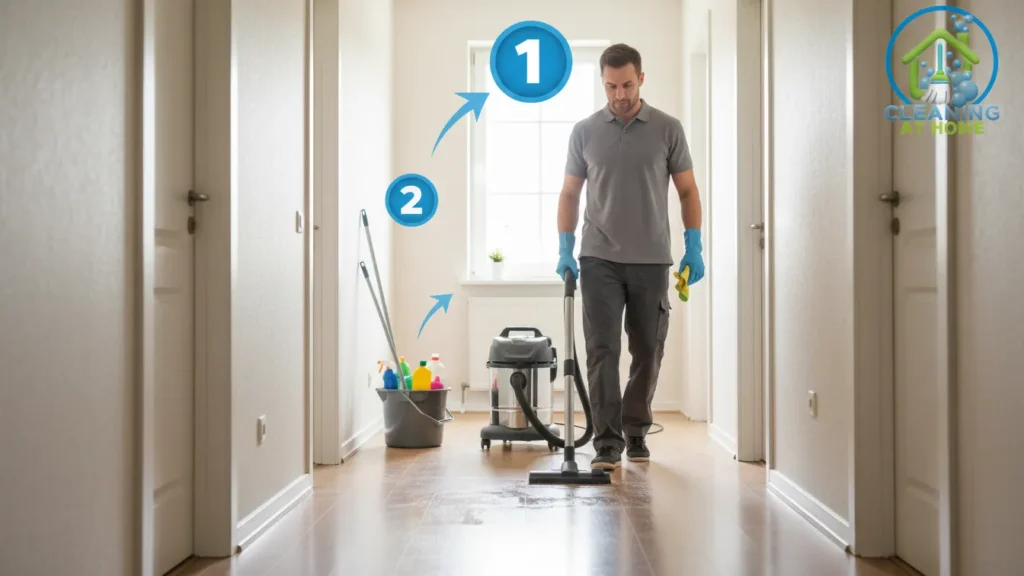
One of the most common misunderstandings about cleaning efficiently is thinking that faster cleaning requires moving in a hurry. In reality, rushing through cleaning tasks is one of the main reasons people feel exhausted and still don’t get the results they want. Speed without method usually creates more work, not less.
When cleaning is done in a hurry, actions become reactive. You clean what catches your eye first, jump between rooms, and switch tools repeatedly. This scattered approach breaks flow and increases repetition. You may wipe the same surface more than once, walk back and forth unnecessarily, or miss steps that need to be fixed later.
Rushing also leads to poor sequencing. Floors get cleaned before counters, only to be dirtied again. Clutter is wiped around instead of being cleared first. These mistakes don’t happen because of lack of effort — they happen because speed replaced planning.
Cleaning faster is about reducing friction, not increasing pace. When the order is right and decisions are made once, movement becomes smoother. You spend less time stopping, restarting, or correcting mistakes. Even at a calm pace, the total time is shorter because there’s no rework.
Another problem with cleaning in a hurry is physical strain. Fast, tense movements tire the body quickly. Bending, lifting, and scrubbing under pressure drains energy much faster than steady, controlled motion. Over time, this makes cleaning feel heavier than it needs to be.
Cleaning with intention feels different. There’s a clear start, a logical sequence, and a defined finish. You’re not racing against time — you’re moving through tasks with purpose. That mental calm translates into physical efficiency.
The biggest shift is understanding that calm cleaning is faster cleaning. When you stop rushing and start following a method, cleaning takes less time overall and leaves you with more energy at the end.
How a Simple Cleaning Method Saves More Time Than Speed
Cleaning faster doesn’t come from moving quickly — it comes from using a simple method that prevents wasted effort. When there’s no method, speed actually works against you. You move faster, but you repeat tasks, miss steps, and burn energy fixing mistakes. A simple method eliminates those problems before they happen.
A cleaning method is not a strict system or a long checklist. It’s a basic structure that answers three questions before you start:
Where do I begin? What comes next? When do I stop?
When those answers are clear, cleaning naturally becomes faster.
Without a method, cleaning decisions are made on the fly. You react to whatever looks dirty first. That leads to backtracking, switching tools, and cleaning the same area more than once. Each interruption slows you down, even if your movements feel fast.
A simple method creates flow. You move through your home in one direction, complete areas fully, and avoid unnecessary stops. Because tasks are grouped logically, you don’t waste time resetting your focus or your tools. The work feels smoother and more controlled.
Method also reduces mental effort. Speed requires constant attention: “Did I already clean this?” “Should I do that now?” Those small decisions add up and cause fatigue. A method removes that decision-making. You follow the process instead of thinking through every step.
Another time-saving benefit is consistency. When you clean the same way each time, your body learns the rhythm. Movements become more efficient, and tasks take less time without feeling rushed. You’re not forcing speed — it happens naturally.
Most importantly, a simple method protects your energy. When cleaning is organized, you don’t overwork certain muscles, rush movements, or push through unnecessary steps. You finish sooner because you did less unnecessary work, not because you moved faster.
In cleaning, speed is unreliable. Method is dependable. When the process is simple and repeatable, cleaning becomes faster by default — calm, efficient, and far less tiring.
👉 Time-Saving & Simple Cleaning
The Importance of Cleaning in the Right Order
Cleaning in the wrong order is one of the biggest reasons cleaning takes longer and feels more exhausting than it should. Even when effort is high, poor order leads to repeated work, backtracking, and unnecessary movement. Cleaning faster without rushing depends heavily on doing things in the right sequence.
When the order is wrong, time is lost fixing avoidable mistakes. Floors get cleaned before counters, only to be dirtied again. Surfaces are wiped while clutter is still in the way. One room is started, abandoned halfway, and revisited later. Each of these moments adds friction and steals time.
The right order reduces repetition.
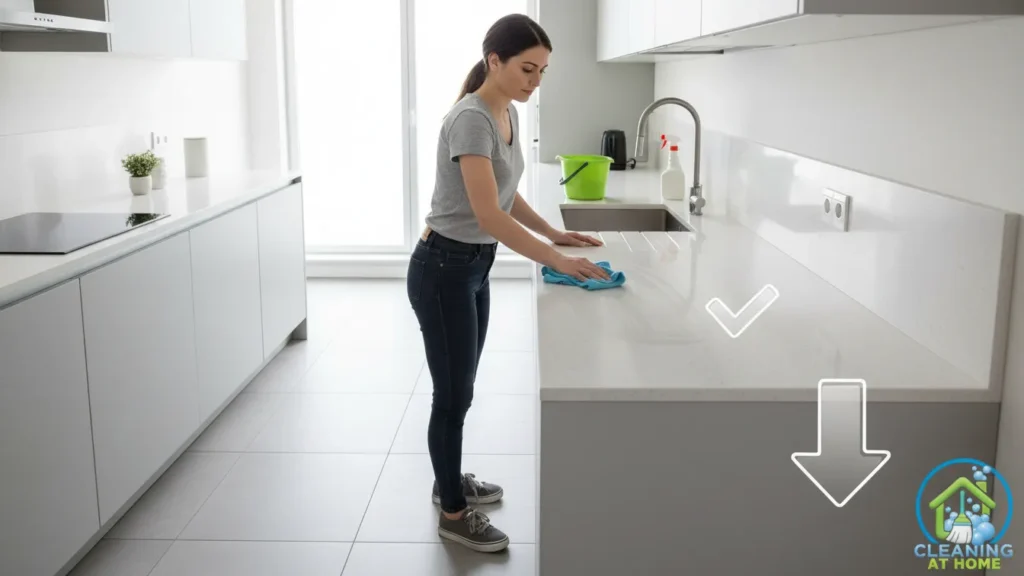
A logical cleaning order usually follows a few simple principles:
- Clear clutter before cleaning surfaces
- Clean top to bottom so dirt doesn’t fall on finished areas
- Finish one area before moving to the next
- Leave floors for last
This order works because it supports flow. You move forward instead of circling back. Tasks connect naturally instead of interrupting each other. Even at a calm pace, the total cleaning time drops because nothing needs to be redone.
Cleaning in the right order also reduces physical strain. When you’re not constantly bending, lifting, or walking back and forth, your body uses less energy. Movements become smoother, and fatigue builds more slowly. That’s why cleaning can feel easier even when it’s faster.
Another benefit is mental clarity. When the order is clear, you’re not constantly deciding what comes next. You don’t stop to rethink the process. That lack of hesitation keeps momentum steady and prevents the mental exhaustion that often comes with cleaning.
The right order doesn’t need to be perfect or rigid. It just needs to be consistent and logical. Once your body and mind recognize the sequence, cleaning becomes automatic. You stop fighting the process and start moving through it efficiently.
Cleaning faster without rushing isn’t about doing more in less time. It’s about doing things once, in the right order, and moving on. That single adjustment alone can save significant time and energy in every cleaning session.
How Planning Before You Start Makes Cleaning Faster
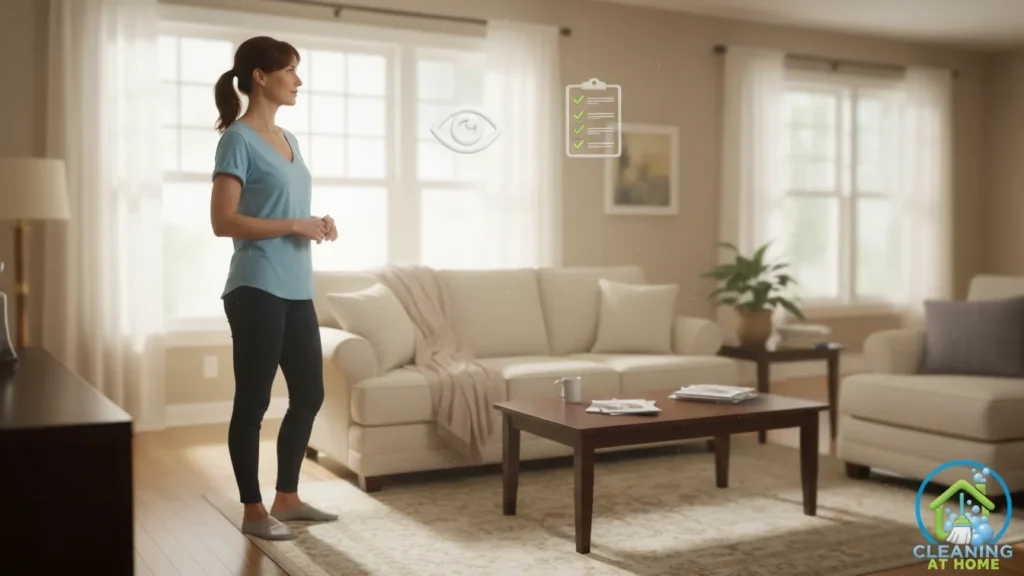
One of the simplest ways to clean faster without rushing is planning before you begin. This doesn’t mean making a long checklist or overthinking the process. It means taking a short moment to decide what you’re going to do, in what order, and when you’ll stop. That brief pause saves more time than it costs.
When cleaning starts without a plan, actions become reactive. You clean what you see first, switch rooms randomly, and grab tools as you remember them. This leads to unnecessary movement, repeated tasks, and frequent interruptions. Even if you’re moving quickly, the overall process slows down.
A small amount of planning creates direction. Knowing which rooms you’ll clean, which tasks matter most today, and which ones you’ll skip keeps cleaning focused. You move with intention instead of guessing, and that alone reduces wasted time.
Planning also helps with tool use. When you know what you’ll be cleaning, you gather what you need once instead of stopping to search for supplies later. Fewer interruptions mean a smoother flow and less mental fatigue.
Another advantage is decision reduction. Without a plan, every step requires a choice: “Should I clean this now?” “Do I move on or keep going?” Planning answers those questions ahead of time. When decisions are made once, cleaning moves faster and feels lighter.
This habit also protects energy. Starting with clarity prevents the common pattern of doing too much early and running out of steam halfway through. When the scope is defined, you pace yourself naturally and finish without feeling drained.
Planning before you start doesn’t need more than a minute. A quick look around and a clear intention are enough. That small adjustment turns cleaning from a scattered effort into a focused process — one that finishes faster, with less effort and far less stress.
👉 Fast Daily Cleaning Routines
Avoiding Rework: How to Stop Cleaning the Same Area Twice
One of the biggest time-wasters in cleaning is rework — cleaning the same area more than once during a single session. This usually doesn’t happen because something got dirty again. It happens because tasks were done out of order or without a clear method.
Rework often looks like this: you wipe a counter, then later have to wipe it again because clutter was moved. You vacuum a floor, then walk over it while cleaning another area. You clean one room, leave it unfinished, and return later to fix what was missed. Each return adds time and drains energy.
The fastest way to avoid rework is to finish tasks fully before moving on. That means clearing clutter first, then cleaning the surface, and only then leaving the area. When steps are completed in the right sequence, there’s no need to come back.
Another important factor is grouping tasks. Cleaning similar tasks together — like wiping all surfaces before moving to floors — prevents you from switching tools and repeating actions. When tools stay in your hand longer and movements stay consistent, cleaning flows faster.
Rework also happens when cleaning is interrupted. Stopping mid-task to handle something else breaks momentum and increases the chance that steps will be repeated later. Creating a short, focused cleaning window helps protect the flow and reduces unnecessary backtracking.
Avoiding rework doesn’t require moving faster. It requires doing things once, correctly. When order, planning, and flow are in place, cleaning becomes more efficient automatically. You save time not by rushing, but by eliminating the need to fix or repeat work you already did.
When each area is handled properly the first time, cleaning sessions become shorter, calmer, and far less tiring.
How to Move Through Your Home With a Smooth Cleaning Flow
A smooth cleaning flow is what allows you to clean faster without feeling rushed or exhausted. When cleaning lacks flow, movement becomes scattered. You jump between rooms, switch directions, and interrupt tasks mid-way. Even with effort, this fragmented movement wastes time and drains energy.
Cleaning flow is about continuity. It means moving through your home in a way that feels natural and uninterrupted, instead of reacting to every mess you notice along the way. When flow is present, cleaning feels calmer, more controlled, and noticeably faster.
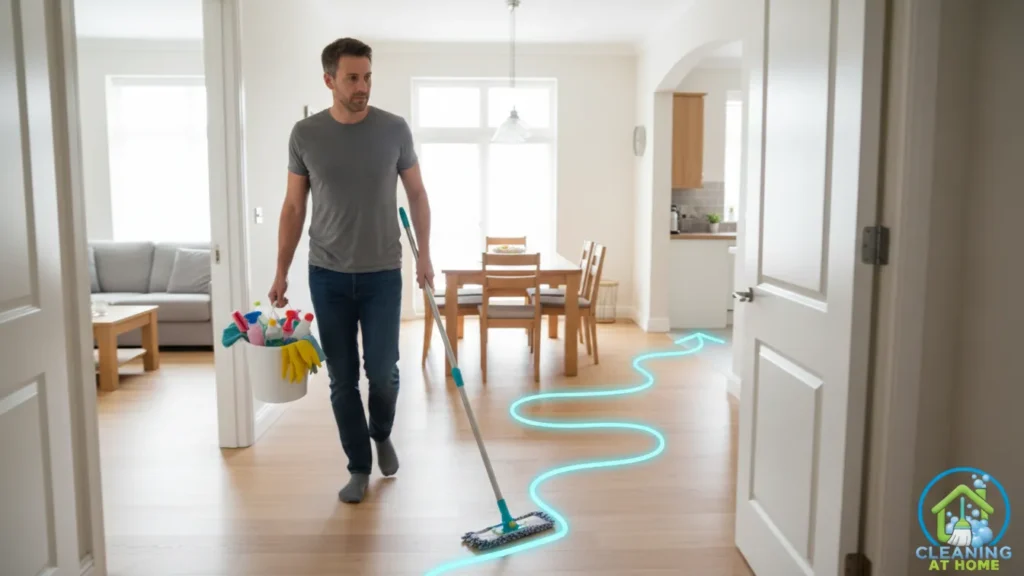
One of the biggest flow breakers is bouncing between spaces. Starting a task in one room, moving to another, then returning later creates backtracking. Each return costs time and focus. A smoother approach is choosing a direction — room by room or zone by zone — and finishing each space before moving on.
Another important element of flow is minimizing stops. Searching for tools, switching products, or deciding what to do next interrupts momentum. When tools are ready and decisions are made ahead of time, movement stays steady. You keep going instead of restarting repeatedly.
Flow also depends on keeping tasks grouped. Doing similar actions together — like picking up clutter throughout one area or wiping all surfaces before moving to floors — keeps movements efficient. Your body stays in a rhythm, which reduces fatigue and increases speed without effort.
Moving with flow doesn’t mean rushing. In fact, rushing usually destroys flow. Smooth cleaning is calm and deliberate. Each action leads naturally to the next, without hesitation or correction. That steady pace is what allows you to finish sooner while feeling less tired.
When cleaning follows a smooth flow, time savings happen automatically. There’s less walking, less rework, and fewer interruptions. You move forward through your home once, with purpose, and you’re done.
Developing cleaning flow takes practice, but it doesn’t require complexity. With a clear direction, grouped tasks, and fewer interruptions, cleaning becomes faster, lighter, and far less stressful — exactly as it should be.
👉 Minimalist Cleaning for Busy Homes
Making Fewer Decisions While Cleaning to Save Energy
One of the biggest reasons cleaning feels slow and tiring is decision fatigue. Every time you stop to decide what to clean next, which tool to use, or whether something is “worth doing now,” you lose momentum. Cleaning faster without rushing depends heavily on reducing decisions, not increasing effort.
When cleaning is unstructured, decisions multiply. You walk into a room and scan for what looks dirty. You pause to choose between tasks. You switch tools because you’re unsure what comes next. Each pause may feel small, but together they slow the process and drain mental energy.
Making fewer decisions starts before cleaning begins. When the order is already defined and the scope is clear, there’s no need to evaluate each task in real time. You follow the plan instead of thinking through every step. This keeps your mind calm and your movements steady.
Decision reduction also comes from simplification. Using fewer tools, fewer products, and fewer steps means fewer choices. When cleaning options are limited, action becomes automatic. You stop negotiating with yourself and simply move forward.
Another important factor is avoiding “maybe tasks.” Deciding in advance what you are not going to clean prevents hesitation. When something isn’t part of today’s plan, you skip it without guilt or second-guessing. That clarity protects both time and energy.
Reducing decisions also helps maintain flow. When your mind isn’t constantly switching focus, your body works more efficiently. Movements become smoother, and cleaning feels less exhausting even as you finish sooner.
Cleaning faster without rushing is as much a mental skill as a physical one. By making decisions once and removing unnecessary choices, you conserve energy, protect focus, and allow cleaning to move forward effortlessly.
How to Clean Faster by Focusing on High-Impact Tasks
Cleaning faster without rushing depends on what you choose to clean, not how much you try to do. When time and energy are limited, focusing on high-impact tasks makes the biggest difference. These are the actions that immediately improve how your home looks and functions.
High-impact tasks are usually visible and tied to daily use. Clearing clutter from main surfaces, wiping kitchen counters, resetting the sink, and doing a quick floor pass in high-traffic areas often change how the entire space feels. These tasks create instant improvement, which makes cleaning feel effective instead of endless.
Low-impact tasks, on the other hand, consume time without changing much. Cleaning areas that aren’t used daily, over-detailing surfaces, or fixing minor imperfections may feel productive, but they don’t significantly improve the overall state of the home. Spending time there slows you down without real payoff.
Focusing on impact requires intentional choice. Before starting, it helps to ask: What will make the biggest difference today? That question naturally directs attention to tasks that matter most right now instead of everything that could be done.
Another benefit of focusing on high-impact tasks is momentum. When you see clear results quickly, motivation increases and cleaning feels lighter. You’re less likely to overclean or get stuck perfecting one small area.
Cleaning faster isn’t about skipping important work — it’s about prioritizing the work that matters most. When effort is spent where it creates real results, cleaning sessions become shorter, more satisfying, and far less tiring.
When to Slow Down to Actually Finish Faster
Slowing down may seem counterintuitive when your goal is to clean faster, but in practice, it’s often the key to finishing sooner. Many cleaning delays don’t come from moving too slowly — they come from moving too fast in the wrong moments.
When you rush through tasks that require a bit of attention, mistakes happen. You miss spots, knock things out of place, or clean in the wrong order. Those mistakes force you to stop, correct, and repeat work. What felt like speed at the beginning turns into extra time spent fixing what could have been done calmly the first time.
Slowing down is especially important at transition points. Taking a moment to fully finish one area before moving on prevents backtracking. Clearing clutter properly, placing items where they belong, and wiping surfaces thoroughly — without scrubbing — reduces the chance that you’ll need to return later.
Another moment to slow down is when deciding what to skip. Rushing often leads to overcleaning low-impact areas just because they’re visible. Pausing to ask, “Does this really need to be done now?” helps you avoid wasting time on tasks that don’t improve results.
Slowing down also protects your energy. Controlled movements use less effort than tense, hurried ones. When your body stays relaxed, you maintain a steady pace longer and avoid the fatigue that usually slows you down halfway through cleaning.
This doesn’t mean dragging out tasks or over-detailing. It means being intentional. Calm, deliberate actions done once are faster than rushed actions done twice.
Cleaning faster without rushing is about knowing when speed helps — and when it hurts. By slowing down at key moments, you eliminate errors, reduce repetition, and reach the finish line sooner, with more energy left at the end.
How to Keep a Steady Pace Without Feeling Exhausted
Keeping a steady pace is one of the most important elements of cleaning faster without rushing. When cleaning turns into bursts of intense effort followed by fatigue, time is lost and energy drains quickly. A steady, controlled pace allows you to move efficiently from start to finish without burning out.
Exhaustion often comes from uneven effort. Rushing at the beginning, scrubbing too hard, or trying to do everything at once forces your body to work harder than necessary. That early intensity leads to slower movement later, frequent breaks, or unfinished tasks. Cleaning feels long not because it is, but because energy was used poorly.
A steady pace starts with realistic expectations. You don’t need to move fast to clean fast. Calm, continuous motion is more efficient than short bursts of speed. When movements are controlled, your body stays relaxed, and tasks take less effort to complete.
Another key factor is rhythm. Repeating similar actions in sequence — picking up items, wiping surfaces, moving room by room — helps your body settle into a natural flow. This rhythm reduces strain and keeps momentum going without conscious effort.
Taking intentional pauses also matters. Brief pauses to switch tasks or reposition tools are different from stopping due to exhaustion. When cleaning is methodical, pauses are minimal and purposeful, not forced by fatigue.
Protecting your pace also means knowing when to stop. Cleaning past your planned endpoint often leads to unnecessary effort and burnout. Finishing at the right time keeps cleaning from feeling overwhelming and makes it easier to stay consistent in the future.
A steady pace turns cleaning into a manageable process instead of a physical challenge. By staying calm, moving with intention, and respecting your energy, you finish faster — not because you rushed, but because you worked efficiently from start to end.

How Cleaning With Method Saves Time and Energy Every Day
Cleaning with method changes the entire experience of cleaning. Instead of relying on speed, pressure, or effort, method creates efficiency by removing wasted actions. When cleaning follows a clear structure, time is saved naturally — and energy is preserved instead of drained.
The biggest advantage of cleaning with method is consistency. When the same order, flow, and decisions are used every time, cleaning becomes predictable. You don’t hesitate, you don’t backtrack, and you don’t repeat tasks. Each area is handled once, properly, and then you move on.
Method also protects your body. Calm, intentional movements use less energy than rushed, tense ones. When cleaning isn’t a race, muscles don’t tire as quickly, and you’re less likely to feel exhausted halfway through. Finishing sooner with energy left is a direct result of working smarter, not harder.
Another benefit is mental relief. A method removes uncertainty. You’re not constantly deciding what to do next or wondering if you missed something. That clarity keeps your focus steady and prevents the mental fatigue that often makes cleaning feel heavier than it really is.
Over time, method-based cleaning creates momentum. Each session reinforces the process, making future cleanings faster and easier. What once felt chaotic becomes controlled. What once took effort becomes automatic.
Most importantly, cleaning with method fits real life. It adapts to busy days, low energy, and limited time. You don’t need motivation or speed — you need a clear approach. When the process is simple and repeatable, cleaning stops being a source of stress and starts being a manageable part of daily life.
Cleaning faster without rushing isn’t about pushing yourself. It’s about letting method do the work for you. When structure replaces speed, cleaning saves time and energy every single day.