
Simple Cleaning Habits That Save Time Every Single Day
Saving time with cleaning doesn’t start with better routines or faster techniques. It starts with habits. Simple daily habits quietly determine how much cleaning your home will need later. When the right habits are in place, mess doesn’t build up — and cleaning stops feeling like a constant chore.
Many people spend hours cleaning each week not because their home gets unusually dirty, but because small actions are delayed. Items are left out “for later,” spills sit longer than necessary, and clutter slowly spreads across surfaces. Each delay feels minor in the moment, but together they create extra cleaning work that didn’t need to exist.
Simple cleaning habits work because they focus on prevention. Instead of fixing mess after it grows, they stop it from forming in the first place. This doesn’t require discipline or strict rules. It requires small, repeatable actions that fit naturally into daily life.
What makes these habits so effective is how little time they take. Putting something away right after using it takes seconds. Wiping a surface immediately is faster than scrubbing it later. Dealing with a small mess now avoids a bigger one later. These moments are easy to overlook, but they save far more time than they cost.
Another benefit of simple habits is consistency. Because they’re easy, they happen more often. There’s no need to schedule them or build motivation. They become part of how you move through your home, not an extra task added to your day.
These habits also reduce mental load. When mess is handled as it happens, you stop noticing unfinished tasks piling up in the background. The home feels calmer, and cleaning feels lighter because there’s less to catch up on.
This article focuses on habits that don’t require extra time — they give time back. Each one is small on its own, but together they create a home that stays under control with less effort. The goal isn’t to clean constantly. It’s to build habits that make cleaning easier by needing less of it in the first place.
In the next sections, we’ll look at specific simple habits that save time every single day — habits that prevent buildup, reduce effort, and keep cleaning from taking over your schedule.

Putting Things Away Immediately Instead of “Later”
One of the simplest habits that saves the most time is putting things away immediately instead of telling yourself you’ll do it later. That small delay is one of the main reasons clutter builds up and cleaning takes longer than it should.
“Later” often means items sit out longer than planned. A bag stays on a chair, mail piles up on the counter, shoes remain by the door, and dishes linger in the sink. Each item on its own doesn’t feel like a problem, but together they create visual clutter and extra work that eventually needs a dedicated cleaning session.
Putting things away right after use takes very little time — usually just a few seconds. Those seconds are far less than the time required to deal with accumulated clutter later. When items already belong somewhere, returning them immediately prevents surfaces from becoming crowded and rooms from feeling messy.
This habit also reduces decision-making. When you put something away immediately, you don’t have to remember it later or decide where it should go again. The task is finished in one step instead of turning into a postponed obligation that competes for attention later in the day.
Another benefit is momentum. When items are consistently returned to their place, cleaning becomes faster because there’s less to move before wiping or vacuuming. Surfaces stay clearer, which makes quick cleaning possible instead of overwhelming.
Putting things away immediately doesn’t require perfection. It doesn’t mean stopping everything to organize. It simply means completing the task while it’s already in your hands. That small shift removes clutter before it starts and saves time without adding effort.
Over time, this habit quietly changes how your home feels. Less buildup means fewer catch-up sessions, faster daily resets, and a cleaning routine that stays light instead of growing heavier as the week goes on.
Cleaning As You Go to Avoid Buildup
Cleaning as you go is one of the most effective habits for saving time because it stops mess from turning into a bigger job later. Instead of letting dirt, spills, or clutter accumulate, you handle small tasks while you’re already using the space. This approach keeps cleaning light and prevents the need for long catch-up sessions.
Most buildup happens during everyday activities. Cooking leaves crumbs and splashes, getting ready creates bathroom residue, and daily life spreads items across surfaces. When these small messes are ignored, they harden, spread, or pile up. What could have been handled in seconds later requires real effort and time.
Cleaning as you go doesn’t mean constantly stopping what you’re doing. It means using natural pauses. While food is cooking, you wipe the counter. After brushing your teeth, you rinse and wipe the sink. When you finish using something, you return it to its place. These moments already exist in your day — you’re just using them more intentionally.
This habit works because it keeps mess temporary. Dirt doesn’t get a chance to settle, clutter doesn’t spread, and surfaces stay easier to maintain. As a result, daily cleaning routines become shorter because there’s simply less to clean.
Another benefit is mental. When mess is handled in real time, you don’t carry unfinished tasks in the back of your mind. The home feels calmer because nothing is waiting to be dealt with later. That sense of control makes cleaning feel lighter instead of stressful.
Cleaning as you go is especially helpful in high-use areas like the kitchen and bathroom. These spaces change quickly, but they also reset quickly when small actions are taken consistently. Over time, you’ll notice that deep cleaning becomes easier because buildup never reaches an overwhelming level.
This habit isn’t about perfection or constant effort. It’s about timing. By addressing small messes at the right moment, you protect your time, reduce future work, and keep your home under control with very little extra energy.
👉 Time-Saving & Simple Cleaning

Dealing With Small Messes Before They Grow
Small messes are easy to ignore, which is exactly why they turn into bigger cleaning problems later. A few crumbs on the counter, a small spill on the floor, or items left slightly out of place don’t seem urgent. But when these small messes are left unattended, they combine and create extra work that takes much longer to fix.
The key habit here is immediate response. Dealing with a mess while it’s still small almost always takes less than a minute. Wiping a fresh spill, picking up dropped items, or clearing a small area right away prevents dirt from spreading or settling. Once a mess dries, hardens, or attracts more clutter, cleaning becomes more time-consuming.
Small messes also multiply quickly. Crumbs get tracked to other rooms, spills collect dust, and one item left out encourages more items to join it. What started as a minor issue quietly grows into something that feels overwhelming later in the day or week.
Handling small messes early also protects your routine. When buildup is prevented, daily cleaning stays short and predictable. You’re not forced to stop what you’re doing later to deal with something that could have been handled easily at the start.
Another benefit is mental clarity. When small messes are resolved immediately, they don’t linger in the background of your mind. The home feels calmer, and cleaning feels less urgent because nothing is waiting to be dealt with.
This habit doesn’t require constant vigilance. It simply means responding when you notice something small instead of postponing it. Those quick actions save far more time than they take.
By dealing with small messes before they grow, you prevent extra work, protect your energy, and keep cleaning from turning into a bigger task than it needs to be.
Keeping Daily-Use Surfaces Mostly Clear
One of the simplest habits that saves time every day is keeping daily-use surfaces mostly clear. Counters, tables, desks, and bathroom vanities tend to collect items quickly, and when these surfaces are crowded, cleaning takes longer and feels more frustrating.
When surfaces are covered with objects, every cleaning task becomes a two-step process. First, you have to move items out of the way. Then you can clean. After that, everything needs to be put back. This extra handling adds time and increases the chance that cleaning gets postponed altogether.
Keeping surfaces mostly clear doesn’t mean making them empty or perfectly styled. It simply means limiting them to the items that are truly used there on a daily basis. The fewer objects on a surface, the faster it is to wipe down and the easier it is to keep clean.
This habit also prevents clutter from spreading. When surfaces are already crowded, new items tend to pile on top. Clearer surfaces create a natural stopping point — there’s nowhere to drop things casually, so items are more likely to be put away properly.
Another time-saving benefit is visual calm. Clearer surfaces make rooms feel cleaner even before any actual cleaning happens. This reduces the urge to overclean or constantly “fix” the same areas throughout the day.
Maintaining clear surfaces works best when paired with simple habits like putting items away immediately and having designated places for everyday objects. Together, these habits remove clutter before it becomes a cleaning task.
By keeping daily-use surfaces mostly clear, cleaning becomes faster and easier. Wiping takes seconds instead of minutes, routines stay light, and your home feels more manageable without extra effort.
👉 Fast Daily Cleaning Routines
Having a Fixed Place for Everyday Items
One of the most effective habits for saving cleaning time is giving everyday items a fixed place. When objects don’t have a clear home, they tend to land wherever is convenient at the moment — counters, tables, chairs, and floors. Over time, this creates clutter that needs to be gathered, sorted, and cleaned around.
When everyday items have a defined place, putting them away becomes automatic. There’s no hesitation, no decision-making, and no temporary piles. Keys go in the same spot. Bags are placed in the same location. Shoes, mail, chargers, and frequently used items all return to where they belong without effort. This consistency prevents clutter before it forms.
A fixed place also shortens cleaning routines. When items are already where they should be, surfaces stay clearer and faster to clean. You don’t need to move objects out of the way before wiping or vacuuming. Cleaning becomes a single-step task instead of a process that starts with tidying.
This habit saves time mentally as well. When items have no designated spot, the brain keeps track of unfinished decisions: “I’ll deal with this later.” That mental clutter adds stress and makes cleaning feel heavier. Fixed places remove that burden. The task is finished as soon as the item is put down.
Importantly, fixed places should be convenient, not perfect. The best spot for an item is where you naturally use it or drop it. If a place is inconvenient, the habit won’t stick. Simple, accessible storage works better than elaborate organization.
Having fixed places doesn’t require organizing your entire home at once. It can be built gradually, one item or category at a time. Each fixed place reduces daily clutter and saves small amounts of time that add up quickly.
When everyday items always return to the same spot, cleaning becomes easier because there’s less to manage. Surfaces stay clearer, routines stay lighter, and the home stays under control with far less effort.
Doing Quick Micro-Resets Throughout the Day
Quick micro-resets are small moments of tidying that keep mess from spreading and save significant cleaning time later. They’re not full cleaning sessions and they don’t require planning. They’re brief, intentional resets that bring a space back to a neutral state before mess grows.
A micro-reset usually takes one to three minutes. It might be clearing a table after a meal, straightening cushions after sitting down, or putting items back in place before leaving a room. These actions are small, but they interrupt clutter before it turns into something that needs real cleaning.
What makes micro-resets so effective is timing. They happen at natural transitions — before leaving the house, after eating, when switching activities, or before going to bed. Because they fit into moments that already exist, they don’t feel like extra work.
Micro-resets also protect your main cleaning routine. When clutter is managed throughout the day, daily cleaning stays short and predictable. You’re not starting from chaos, which reduces effort and decision-making when it’s time to clean.
Another benefit is visual calm. Resetting small areas keeps rooms from feeling messy, even if the day is busy. This reduces the urge to overclean or fix things repeatedly just to feel better. The home stays balanced without constant attention.
Micro-resets work best when expectations are realistic. You’re not trying to fix everything — just restoring order to what was just used. That boundary keeps the habit light and sustainable.
Over time, these small resets add up. They prevent buildup, shorten cleaning sessions, and keep your home under control with minimal effort. Micro-resets don’t replace cleaning — they make cleaning easier by ensuring there’s less to deal with when the routine begins.
👉 Minimalist Cleaning for Busy Homes
Wiping Surfaces Right After Use
Wiping surfaces right after use is one of the simplest habits that saves a surprising amount of cleaning time. It works because it deals with mess while it’s still easy, instead of letting it dry, spread, or harden into something that needs real effort later.
Most daily mess happens in predictable places. Kitchen counters after food prep, sinks after brushing teeth, bathroom counters after getting ready, and tables after meals all collect light residue. When these surfaces are wiped immediately, cleaning takes seconds. When they’re left for later, the same mess often turns sticky, dull, or harder to remove.
This habit is effective because it removes the need for scrubbing. Fresh spills, water spots, crumbs, and fingerprints don’t require products or force when handled right away. A quick wipe with a cloth is usually enough. That single action prevents buildup that would otherwise demand more time and energy later.
Wiping surfaces right after use also keeps daily routines short. When surfaces are already mostly clean, your regular cleaning session becomes a light reset instead of a catch-up job. You’re maintaining, not fixing. That difference is what keeps cleaning from feeling overwhelming.
Another benefit is visual calm. Clean surfaces make a space feel orderly, even if other parts of the room aren’t perfect. This reduces the urge to overclean or constantly adjust things throughout the day just to feel comfortable in the space.
This habit works best when tools are nearby. Having a cloth within reach makes it easy to wipe quickly without turning the action into a “task.” The easier it is, the more often it happens.
Wiping surfaces right after use doesn’t add time to your day — it removes time from future cleaning. By handling mess at the easiest moment, you protect your energy, shorten routines, and keep your home under control with minimal effort.
Not Letting Dishes and Trash Pile Up
Letting dishes and trash pile up is one of the fastest ways to create extra cleaning work. What starts as a few plates in the sink or a full trash bag quickly turns into a bigger task that feels heavier and takes much longer to deal with.
When dishes are left to accumulate, they become harder to handle. Food dries, odors develop, and the sink becomes unusable. At that point, cleaning is no longer a quick action — it’s a chore that requires time, effort, and mental energy. The same happens with trash. Once it overflows, it creates mess, smells, and extra cleanup around the area.
This habit wastes time because it turns many small actions into one large one. Loading a few dishes into the dishwasher takes minutes. Handling a full sink can take much longer and feels far more exhausting. Taking out the trash when it’s nearly full is quick. Waiting until it’s overflowing adds extra steps and frustration.
Another issue is visual clutter. Piled dishes and trash make a space feel messy even if the rest of the room is clean. That visual noise often leads to stress and the feeling that cleaning is never finished, which can trigger more time spent “catching up” later.
Stopping this habit doesn’t require constant attention. Simple boundaries help. Clearing dishes after meals, loading the dishwasher before relaxing, and taking out the trash before it’s completely full keep these tasks small and manageable.
When dishes and trash are handled consistently, daily cleaning becomes lighter. The kitchen resets faster, routines stay short, and cleaning feels less intimidating. Small actions done at the right moment prevent buildup and save significant time over the course of the week.

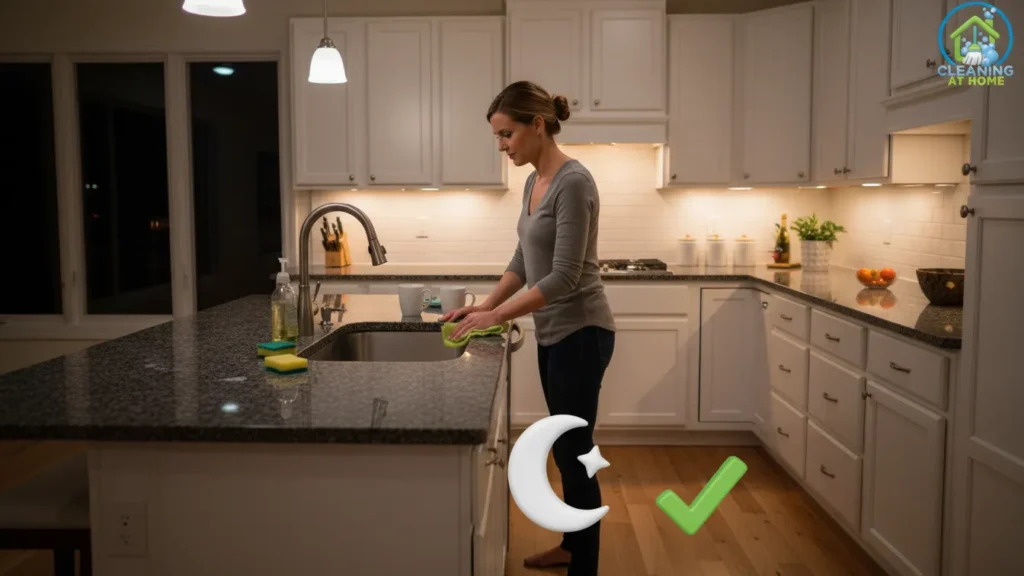
Making the Last Use of the Day the Cleanest One
One of the most effective time-saving cleaning habits is making the last use of the day the cleanest one. This habit shifts cleaning from reaction to prevention and sets your home up to be easier to manage the next day.
The idea is simple: whatever space you use last gets a light reset before you leave it for the night. This is especially powerful in high-use areas like the kitchen, bathroom, and living room. Instead of waking up to yesterday’s mess, you start the day with a space that’s already under control.
This habit works because it aligns with natural closure. At the end of the day, activities slow down. Using that moment to reset prevents mess from carrying over into the next day. A few minutes of light cleaning in the evening often save much more time in the morning.
Making the last use the cleanest one doesn’t mean deep cleaning. It means handling the basics: dishes are cleared, counters are wiped, trash is taken out if needed, and visible clutter is put away. These actions are fast when done immediately and much harder if postponed.
Another benefit is mental clarity. Ending the day with clean surfaces reduces stress and removes the feeling of unfinished tasks. The home feels settled, which makes it easier to relax at night and start fresh the next day.
This habit also protects your daily routine. When spaces are already reset, your regular cleaning session stays short. You’re maintaining order instead of fixing yesterday’s buildup. That consistency is what keeps cleaning from turning into long catch-up sessions.
Making the last use of the day the cleanest one is a small shift with a big payoff. It saves time, reduces effort, and creates smoother mornings — all without adding extra steps to your routine.
How Simple Habits Reduce Weekend Cleaning
Weekend cleaning often feels long and exhausting because it’s usually spent fixing everything that built up during the week. Simple daily habits change that completely. When small actions are done consistently, weekends stop being about catching up and start feeling lighter and more manageable.
The biggest difference simple habits make is less buildup. When items are put away daily, surfaces are wiped after use, and small messes are handled immediately, dirt and clutter don’t accumulate. That means there’s far less to deal with when the weekend arrives. Cleaning shifts from heavy work to light maintenance.
Simple habits also protect your energy. Instead of spending hours cleaning on one or two days, effort is spread gently across the week. This prevents burnout and makes cleaning feel less disruptive to your free time. Weekends become a time for rest or enjoyment, not recovery from cleaning fatigue.
Another benefit is shorter task lists. When daily habits keep the home under control, weekend cleaning no longer needs to cover everything. Many tasks can be skipped entirely, while others take far less time. What once required a full day may shrink to an hour or less.
These habits also improve consistency. When the home is never far from a clean baseline, cleaning decisions become easier. You’re not overwhelmed by where to start or how much needs to be done. That clarity saves both time and mental energy.
Simple habits don’t eliminate weekend cleaning — they transform it. Instead of fixing neglect, you’re maintaining progress. The work is lighter, faster, and less stressful because most of it was already handled in small moments throughout the week.
By relying on simple daily habits, weekends stop being about cleaning marathons. They become a natural continuation of an already manageable routine — one that protects your time and keeps your home under control without demanding extra effort.
How Small Daily Habits Save Hours Over Time
Small daily cleaning habits may feel insignificant in the moment, but over time they create one of the biggest time savings in your routine. The real impact isn’t seen in a single day — it shows up across weeks and months as cleaning becomes easier, faster, and far less demanding.
Each habit on its own saves only a few minutes. Putting something away immediately, wiping a surface after use, or handling a small mess right away doesn’t feel like a major win. But when these actions are repeated consistently, they prevent the buildup that usually leads to long cleaning sessions. What you don’t have to clean later is where the real time savings come from.
Small habits also reduce repetition. When mess is handled early, tasks are done once instead of multiple times. Surfaces stay cleaner longer, floors need less attention, and clutter doesn’t require constant sorting. This efficiency quietly shortens both daily and weekly cleaning routines.
Another important benefit is predictability. When habits are consistent, cleaning stops being reactive. You’re no longer surprised by how much needs to be done. Routines stay short because mess never reaches a breaking point. That stability protects your time and energy, especially on busy days.
Over time, these habits change how cleaning fits into your life. Instead of planning around long cleaning blocks, you rely on small, steady actions that keep things under control. Cleaning becomes something that happens naturally, not something that takes over your schedule.
The biggest shift is mental. When cleaning no longer piles up, it stops occupying your thoughts. You’re not constantly noticing what needs to be done or worrying about when you’ll have time to clean. That mental freedom is just as valuable as the time saved.
Small daily habits don’t just save minutes — they save hours by preventing problems before they exist. By keeping cleaning light and consistent, you create a routine that works quietly in the background, supporting your home without demanding more time than it should.