
Common Cleaning Myths That Most People Still Believe at Home
Cleaning myths are everywhere, and most people follow them without ever questioning where they came from. Many of these ideas were passed down through families, learned from neighbors, or picked up from quick tips online. Because they’ve been repeated for years, they feel true — even when they no longer make sense for modern homes.
The reason cleaning myths are so powerful is familiarity. When something is done the same way for a long time, it stops being a choice and becomes a habit. People rarely ask, “Does this actually work?” Instead, they assume that if everyone does it, it must be right. Over time, these assumptions shape daily and weekly cleaning routines without much thought.
Another reason myths stick is that they often contain a small piece of truth. For example, some natural products do clean certain surfaces, strong smells can make a home feel fresh, and scrubbing can remove visible dirt. The problem is when these ideas are taken too far or applied to every situation. What works sometimes becomes a rule that’s followed all the time — even when it’s ineffective or unnecessary.
Cleaning myths also survive because their negative effects aren’t immediate. Using the wrong method doesn’t always cause visible damage right away. Overusing products, cleaning too often, or relying on the wrong solutions may seem fine in the moment. The real cost shows up later as wasted time, extra effort, worn surfaces, or frustration when cleaning doesn’t last.
Many people blame themselves when cleaning feels exhausting or ineffective. They assume they’re not trying hard enough or not using the right products. In reality, the issue is often the belief behind the habit, not the effort itself. Following outdated or incorrect ideas can make even the most consistent routine feel like a struggle.
This article isn’t about saying everything you’ve learned is wrong. Most people have believed at least one of these myths at some point. The goal is simply to bring awareness. When you understand which ideas no longer serve you, cleaning becomes easier, lighter, and more logical.
In the next sections, we’ll break down common cleaning myths one by one. Each one will be explained clearly, without judgment, so you can decide what’s actually worth keeping — and what’s quietly making cleaning harder than it needs to be.
Vinegar Cleans Everything Around the House
One of the most common cleaning myths is the belief that vinegar can clean everything in the house. This idea has been passed around for years and reinforced by countless tips online. Because vinegar is affordable, natural, and familiar, many people assume it’s a universal solution for all cleaning tasks.
The truth is that vinegar does clean some things well, but not everything. Its effectiveness depends entirely on the surface and the type of dirt involved. Vinegar works best on light mineral buildup, some grease, and mild odors. That limited success is what helped turn it into a “miracle cleaner” in people’s minds.
The problem begins when vinegar is used everywhere without consideration. Many surfaces don’t respond well to acidic cleaners. Natural stone, certain countertops, sealed finishes, and delicate materials can become dull or damaged over time. Because this damage happens slowly, it’s rarely connected back to daily vinegar use.
Another issue is unrealistic expectations. Vinegar doesn’t disinfect the way many people think it does, and it doesn’t cut through heavy grime on its own. When it fails, people often scrub harder or clean the same area repeatedly, wasting time and effort while assuming the issue is technique rather than the product itself.
This myth also contributes to overuse. Because vinegar feels “safe,” it’s often applied more frequently than necessary. Surfaces are wiped again and again, even when they don’t need it, simply because vinegar is seen as harmless and universally helpful.
A more effective approach is understanding where vinegar actually works and where it doesn’t. Used intentionally, it can be a helpful tool. Used as a one-size-fits-all solution, it creates frustration, repeated cleaning, and unnecessary wear.
Letting go of the idea that vinegar cleans everything doesn’t mean abandoning it entirely. It means using it where it makes sense — and choosing better options when it doesn’t. This small shift alone can save time and make cleaning far more effective.
The More Cleaning Product You Use, the Better It Works
A very common cleaning myth is the idea that using more product automatically leads to better results. Many people believe that extra spray, extra soap, or extra cleaner means deeper cleaning. This belief feels logical, but in practice, it often creates the opposite effect.
Cleaning products are designed to work in specific amounts. When too much is used, surfaces don’t get cleaner — they get coated. Excess product leaves behind residue that attracts dust, fingerprints, and grime more quickly. Instead of staying clean, surfaces start looking dirty again in a short time, leading people to clean the same areas repeatedly.
This myth also wastes time during the cleaning process itself. Overuse usually means extra wiping, extra rinsing, and extra effort to remove streaks or stickiness. What could have been a quick task turns into a longer one, simply because too much product was applied at the start.
Another problem is habit. Many people spray automatically, without checking whether the surface actually needs product. Light dust or minor messes often require nothing more than a dry or slightly damp cloth. Reaching for cleaner every time becomes routine, not necessity, reinforcing the belief that more product equals better cleaning.
Over time, this myth can also affect how surfaces age. Floors may lose shine, countertops may feel dull, and glass may never look fully clear. Because these changes happen gradually, people often blame the surface itself rather than the daily habit causing the buildup.
Effective cleaning isn’t about quantity — it’s about intention. Using the right amount of product, only when it’s truly needed, leads to better results with less effort. Letting go of the “more is better” mindset reduces wasted time, prevents residue, and helps cleaning routines feel simpler and more efficient.
Strong Smells Mean a Home Is Truly Clean
A very common cleaning myth is the belief that a strong smell means a home is clean. Many people associate powerful scents with effectiveness, assuming that if a room smells strongly of a product, it must be freshly cleaned. In reality, smell and cleanliness are not the same thing.
Strong fragrances often mask odors instead of removing dirt. A surface can smell “clean” while still holding grease, residue, or buildup. Because scent gives an immediate sensory signal, the brain registers the job as done, even if the actual cleaning was incomplete. This creates a false sense of success and encourages habits that don’t truly improve results.
This myth also leads to overuse of products. People spray more than necessary, use multiple scented cleaners in the same space, or reapply product simply to refresh the smell. Not only does this waste time, but it can also leave sticky residue that attracts dust and makes surfaces look dirty again faster.
Another issue is dependency. When scent becomes the main indicator of cleanliness, cleaning decisions stop being based on observation. Instead of checking whether a surface is actually dirty, people rely on smell to feel reassured. This often results in cleaning areas that don’t need attention while missing spots that do.
A truly clean home doesn’t need to smell strong. In many cases, a neutral or barely noticeable scent is a better sign that surfaces are clean and free of buildup. Cleanliness is about removal, not fragrance.
Letting go of this myth helps simplify routines. When you stop chasing strong smells, cleaning becomes more intentional and efficient. You focus on what needs to be cleaned, use fewer products, and spend less time repeating tasks — all while achieving better, longer-lasting results.

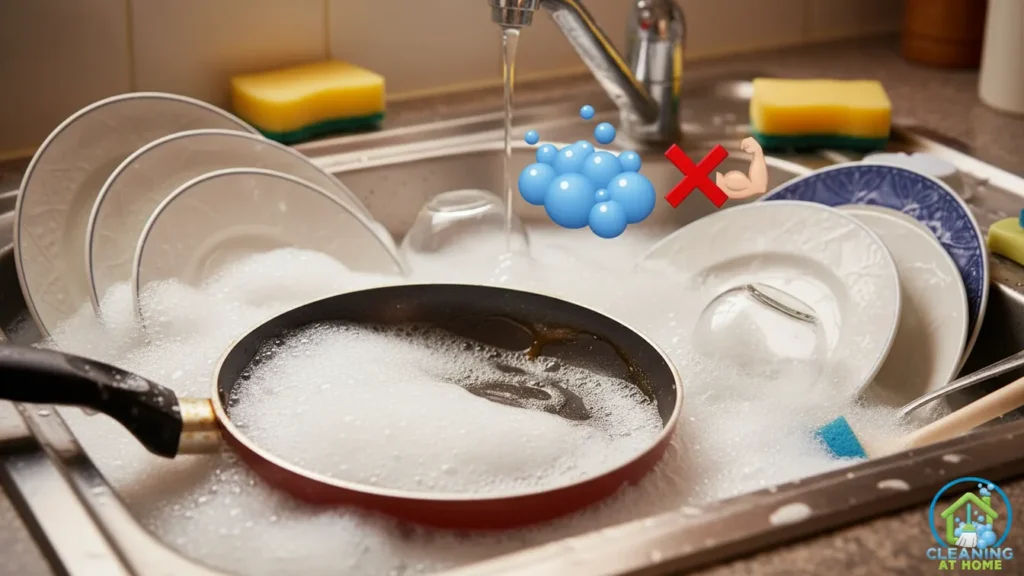
Foam and Bubbles Always Mean Better Cleaning
Many people believe that foam and bubbles are signs that a cleaner is working properly. The more bubbles they see, the more effective they assume the product must be. This belief is deeply ingrained and often reinforced by advertising, but in reality, bubbles are not a reliable indicator of cleaning power.
Foam is mainly a visual cue, not a measure of effectiveness. Some products are formulated to create lots of suds because people associate that with cleanliness. However, bubbles don’t necessarily break down dirt, grease, or buildup any better than low-foam or no-foam products. In many cases, they simply make the process look more satisfying.
This myth often leads to overuse. When people don’t see enough foam, they add more product, thinking the surface isn’t clean yet. That extra product usually needs extra rinsing or wiping, which adds time and effort to the task. Instead of cleaning faster, the routine becomes longer and more tiring.
Foam-heavy products can also create residue problems. Leftover suds that aren’t fully removed attract dust and grime, causing surfaces to look dirty again sooner. This creates a cycle where the same areas are cleaned repeatedly, reinforcing the belief that more foam is needed, when it’s actually part of the problem.
Another issue is misplaced focus. When attention is on bubbles, less attention is paid to technique — whether the surface was wiped properly, whether dirt was actually removed, or whether the area even needed that level of cleaning. Visual feedback replaces observation.
Effective cleaning is about removal, not appearance. Many efficient cleaners work quietly, with little or no foam, while still doing the job well. Letting go of the bubble-equals-clean myth helps reduce overuse, saves time, and makes routines more practical and less messy.
👉 Bad Cleaning Habits That Waste Time
Hot Water Is Always Better for Cleaning
A common cleaning myth many people believe is that hot water is always the best choice. When something looks dirty, the instinct is to turn the tap as hot as possible, assuming heat automatically improves cleaning power. While hot water can be helpful in some situations, it’s not a universal solution.
Hot water works well for breaking down certain types of grease and oily residue, which is why this belief became so popular. The problem is that not all dirt responds better to heat. Some messes, stains, and residues actually become harder to remove when hot water is used. Instead of lifting dirt, heat can cause it to set into surfaces or fabrics, creating more work later.
Another issue is surface compatibility. Not all materials handle heat well. Hot water can damage finishes, warp surfaces, or weaken sealants over time. Because this damage happens gradually, it’s easy to miss the connection between daily habits and long-term wear.
Relying on hot water for everything can also waste time and energy. Waiting for water to heat up, dealing with steam, or needing extra rinses because residue spreads differently with heat all slow the process. In some cases, lukewarm or even cool water is just as effective — and sometimes more efficient.
This myth also encourages less attention to technique. When people believe hot water will “do the work,” they may rush through tasks or use less effective methods, assuming the temperature will make up for it. Cleaning becomes less intentional and more automatic.
Effective cleaning depends on matching the method to the situation. Hot water has its place, but it’s not always the answer. Understanding when heat helps — and when it doesn’t — saves time, protects surfaces, and makes cleaning routines simpler and more reliable.
Natural Cleaning Products Work Better Than Anything Else
A popular cleaning myth is the belief that natural cleaning products always work better than other options. Because they sound safer, simpler, and more environmentally friendly, many people assume natural solutions are automatically more effective for every cleaning task. While natural products can be useful, this belief often leads to disappointment and wasted effort.
Natural cleaners do work well in certain situations. They can handle light dirt, mild grease, and basic maintenance when used correctly. This success is what helps the myth grow. Over time, people begin using the same natural solutions for every surface and every type of mess, expecting consistent results.
The problem appears when natural products are pushed beyond their limits. Heavy buildup, sticky residue, or deeply embedded dirt often require a different approach. When natural solutions don’t perform as expected, people tend to scrub harder, clean the same area multiple times, or repeat the task later — all of which wastes time and energy.
This myth also creates unrealistic expectations. When a product is labeled “natural,” people expect it to be gentle and powerful at the same time. When results fall short, frustration sets in, and cleaning feels harder than it should. The issue isn’t the product itself, but the belief that one solution fits every situation.
Another downside is overuse. Because natural products feel harmless, they’re often applied more frequently than necessary. Surfaces get wiped repeatedly even when they don’t need it, simply because the product feels safe to use at any time.
Effective cleaning is about choosing the right tool for the job, not labeling one type of product as superior in every case. Natural cleaners can absolutely be part of a smart routine, but relying on them for everything can slow you down. Understanding their strengths — and their limits — helps cleaning become more efficient and far less frustrating.
👉Things You Should Stop Doing When Cleaning
You Need to Clean Everything Every Single Day
A very common cleaning myth is the belief that everything in the house needs to be cleaned every single day. Many people feel that skipping a day means falling behind, so they try to reset the entire home daily. While this mindset sounds responsible, it often creates unnecessary work and wastes a lot of time.
Not all areas of a home get dirty at the same rate. High-use spaces like kitchens and bathrooms usually need frequent attention, but low-traffic rooms, decorative surfaces, and unused areas don’t change much from one day to the next. Treating every space the same ignores how the home is actually used.
This myth leads to overcleaning. Time is spent wiping, vacuuming, or dusting areas that are already clean, simply because they’re part of a daily routine. Meanwhile, the cleaning session gets longer and more exhausting without delivering better results. The house may look the same afterward, even though much more effort was applied.
Cleaning everything every day also increases burnout. When routines are overloaded, they become harder to maintain consistently. People rush, multitask, or skip steps, which often leads to repeated cleaning later. Ironically, trying to do too much daily can make cleaning feel never-ending.
Effective cleaning is based on frequency, not pressure. Some tasks belong in daily routines, others work better weekly or even less often. Allowing certain areas to rest doesn’t lower cleanliness — it improves efficiency.
Letting go of the idea that everything must be cleaned every day creates a more balanced routine. You save time, reduce effort, and focus energy where it actually matters, making cleaning easier to sustain in the long run.
Scrubbing Harder Means Surfaces Get Cleaner
A very common cleaning myth is the idea that scrubbing harder automatically leads to better results. When dirt doesn’t come off right away, many people respond by applying more pressure, assuming force is the missing ingredient. While this can remove visible grime in some cases, it often creates more problems than solutions.
Scrubbing harder doesn’t always remove dirt more effectively — it often spreads it around or pushes it deeper into surfaces. Instead of lifting residue away, excessive force can smear grease, grind particles into finishes, or damage protective coatings. The surface may look clean at first, but it often gets dirty again faster.
This myth also wastes time. Aggressive scrubbing is physically tiring and slows down the process. Tasks take longer, breaks are needed, and energy runs out more quickly. What could have been a simple wipe becomes a drawn-out effort that leaves you frustrated and exhausted.
Another issue is surface damage. Repeated hard scrubbing can dull finishes, scratch materials, and wear down surfaces over time. Once a surface is damaged, it becomes harder to keep clean, which leads to even more frequent cleaning and even more scrubbing — creating a cycle that steals both time and effort.
Believing that force equals effectiveness also takes attention away from better solutions. Often, the real fix is letting a product sit briefly, using the right tool, or choosing a more suitable method. These approaches work with the surface instead of against it.
Effective cleaning is about technique, not strength. When you stop relying on force and start focusing on method, cleaning becomes faster, easier, and far more sustainable — without the extra wear, wasted time, or physical strain.
Expensive Cleaning Products Always Work Better
A common cleaning myth is the belief that more expensive cleaning products automatically deliver better results. Many people assume that a higher price means stronger performance, better cleanliness, and less effort. While premium products can have advantages in certain situations, price alone is not a guarantee of effectiveness.
This myth often leads to misplaced expectations. When a product costs more, people expect it to solve problems quickly. When results don’t match those expectations, they tend to use more product, scrub harder, or clean the same area again — all of which wastes time and effort. The issue isn’t always the product, but the belief attached to it.
Another problem is overreliance. Trusting that an expensive cleaner will “do all the work” can reduce attention to method. Technique, timing, and proper use matter far more than price. A basic product used correctly often outperforms a premium one used without intention.
Expensive products can also complicate routines. Some require multiple steps, longer wait times, or specific conditions to work properly. When used for everyday cleaning, these extra steps slow things down and make routines feel heavier than necessary.
This myth can also discourage flexibility. People may feel stuck using a costly product for everything to justify the purchase, even when simpler options would work just as well. That leads to unnecessary repetition and frustration when results aren’t consistent.
Effective cleaning isn’t about how much a product costs — it’s about choosing something appropriate for the task and using it well. Letting go of the “expensive equals better” belief saves time, reduces overuse, and helps routines stay simple, efficient, and realistic.
Disinfecting and Cleaning Are the Same Thing
A very common cleaning myth is the belief that disinfecting and cleaning are the same thing. Many people use these terms interchangeably and assume that spraying a disinfectant automatically means a surface is clean. In reality, cleaning and disinfecting serve different purposes, and confusing the two often leads to wasted time and ineffective routines.
Cleaning is about removing dirt, grease, and residue from surfaces. Disinfecting is about reducing germs. When disinfecting is done without proper cleaning first, dirt and buildup can block the product from working effectively. The surface may smell clean or look treated, but the underlying mess is still there.
This myth often causes people to skip basic cleaning steps. Instead of wiping and removing grime, they jump straight to disinfecting sprays, expecting them to handle everything at once. When results don’t last, they repeat the process multiple times, unknowingly creating extra work and frustration.
Another issue is unnecessary overuse. Disinfecting products are often used far more frequently than needed, even on low-risk or low-use surfaces. This adds extra steps to daily routines without improving cleanliness, making cleaning feel longer and more complicated than it needs to be.
Confusing cleaning with disinfecting also shifts focus away from what most homes actually need on a daily basis. For everyday maintenance, proper cleaning is usually enough. Disinfecting has its place, but it doesn’t need to be part of every single task.
Understanding the difference helps streamline routines. When you clean first and disinfect only when appropriate, tasks become simpler, faster, and more effective. Letting go of this myth reduces unnecessary steps and helps daily cleaning focus on what truly matters.
How Letting Go of Cleaning Myths Makes Cleaning Easier
Letting go of common cleaning myths can completely change how cleaning feels on a daily basis. When routines are built on beliefs that don’t actually work, cleaning becomes heavier, longer, and more frustrating than it needs to be. Once those beliefs are questioned and adjusted, everything starts to feel simpler.
One of the biggest improvements is clarity. When you stop following myths like “everything needs daily cleaning” or “more product means better results,” decisions become easier. You’re no longer guessing or overdoing tasks. You clean what needs attention, when it needs it, and move on without second-guessing yourself.
Another benefit is time savings. Many myths encourage repetition, overcleaning, or unnecessary steps. Removing those habits shortens routines naturally. Cleaning sessions become more focused, with fewer do-overs and less wasted effort. Instead of cleaning all the time, you clean with purpose.
There’s also less physical and mental strain. Scrubbing harder than necessary, chasing strong smells, or constantly disinfecting adds stress without improving results. When those pressures are gone, cleaning feels calmer and more manageable. You use less energy while getting better outcomes.
Letting go of myths also builds confidence. When you understand why certain habits don’t work, you stop blaming yourself for feeling behind. You realize the issue wasn’t effort — it was misinformation. That awareness creates a sense of control and makes routines easier to maintain over time.
Cleaning doesn’t have to be complicated or exhausting. By releasing outdated ideas and focusing on what actually works, cleaning becomes lighter, more efficient, and far less demanding. A myth-free routine supports your home without taking more time or energy than it should — and that’s what truly makes cleaning easier.