

Why Monthly Cleaning Matters More Than You Think
Many people focus on daily and weekly cleaning routines and assume that’s enough to keep a home under control. While those routines are essential, monthly cleaning plays a different and equally important role. It addresses areas and tasks that don’t need constant attention but quietly build up over time if ignored.
A monthly cleaning checklist helps reset your home at a deeper level. Dust settles on surfaces you don’t touch every day, grime forms in overlooked corners, and small maintenance issues often go unnoticed. Monthly cleaning is what prevents these small problems from turning into overwhelming messes later on.
Another reason monthly cleaning matters is mental clarity. When your home is only “surface clean,” clutter and dirt still linger in the background. Monthly tasks—like wiping baseboards, cleaning inside appliances, or refreshing rarely used rooms—create a noticeable difference in how calm and manageable your space feels. Many people find that their weekly cleaning feels faster and easier after a solid monthly reset.
Monthly cleaning also protects your home long term. Appliances last longer, surfaces stay in better condition, and you avoid heavy deep-cleaning marathons that drain time and energy. Instead of reacting to messes, you stay ahead of them with simple, scheduled tasks.
Most importantly, monthly cleaning is realistic. You’re not expected to do everything at once or make your home perfect. The goal is consistency, not intensity. By spreading these tasks across the month, you create a sustainable rhythm that supports your daily and weekly routines—without stress or burnout.
In the sections ahead, you’ll see exactly what monthly cleaning includes and how to use a checklist that makes the process simple and manageable.

What Makes Monthly Cleaning Different From Weekly Tasks
At first glance, monthly cleaning can seem like just an extension of weekly cleaning—but the purpose is actually very different. Weekly cleaning is about maintenance, while monthly cleaning is about prevention. Understanding this difference helps you use your time more effectively and avoid doing unnecessary work.
Weekly tasks focus on what gets dirty fast. Floors, bathrooms, kitchen surfaces, trash, and laundry all need regular attention because they’re used daily. These tasks keep your home functional and hygienic week to week. Monthly cleaning, on the other hand, targets areas that don’t show dirt immediately but still collect dust, residue, and wear over time.
Monthly tasks often include things like cleaning inside appliances, wiping baseboards, washing shower curtains, dusting vents, or organizing a neglected drawer. These aren’t tasks you need—or want—to do every week. Doing them too often can lead to burnout, while skipping them completely causes buildup that’s much harder to deal with later.
Another key difference is pacing. Weekly cleaning usually follows a routine that repeats the same steps. Monthly cleaning is more flexible. You might focus on one room or category at a time, spreading tasks across the month instead of tackling everything in one day. This makes monthly cleaning feel lighter and more manageable.
Monthly cleaning also supports your weekly routine. When deeper tasks are handled regularly, weekly cleaning becomes faster and more efficient. Surfaces stay cleaner longer, clutter stays under control, and there’s less scrubbing involved overall.
In short, weekly cleaning keeps your home running. Monthly cleaning keeps it from falling behind. When both work together, your home stays consistently clean without feeling overwhelming.
How to Use a Monthly Cleaning Checklist the Right Way
A monthly cleaning checklist is only helpful if it’s used the right way. Many people look at a checklist and try to complete everything in one day, which quickly turns a helpful tool into a source of stress. The purpose of a monthly checklist is not speed—it’s structure and clarity.
The first step is to treat the checklist as a menu, not a to-do list that must be finished all at once. Monthly cleaning works best when tasks are spread across the month. You might focus on one room per week or group similar tasks together, depending on your schedule. This approach keeps monthly cleaning realistic and sustainable.
Another important point is flexibility. A good monthly cleaning checklist supports your life instead of controlling it. If a task doesn’t apply to your home—such as cleaning a guest room you don’t use—you can skip it without guilt. The checklist exists to guide you, not to force unnecessary work.
It also helps to connect monthly cleaning with existing routines. For example, you might add one or two monthly tasks to a regular weekly cleaning day. This keeps monthly cleaning from feeling like an extra burden and makes it easier to remember over time.
Finally, use the checklist as a reference, not a rulebook. Over time, you’ll notice which tasks matter most in your home and which ones can be adjusted. When used correctly, a monthly cleaning checklist brings calm, consistency, and control—without overwhelming your routine.

Monthly Cleaning Tasks for the Kitchen
The kitchen benefits greatly from monthly cleaning because it’s a space that often looks clean on the surface while hiding buildup in less obvious places. Weekly routines take care of counters and floors, but monthly cleaning focuses on tasks that protect hygiene, reduce odors, and keep appliances working properly.
One of the most important monthly tasks is cleaning inside appliances. Wiping the microwave, checking refrigerator shelves, and removing expired food prevents lingering smells and keeps food storage safe. These tasks don’t need weekly attention, but ignoring them for too long quickly affects the entire kitchen.
Cabinets and drawers also deserve monthly attention. Crumbs, grease, and sticky residue slowly accumulate inside storage spaces. A simple empty-and-wipe routine keeps these areas clean without turning into a full reorganization project. This is also a good moment to remove items you no longer use, making daily cooking easier.
Other overlooked areas include trash cans, range hoods, backsplash grout, and light switches. These spots collect grease and bacteria over time, even if they look clean. Taking care of them monthly makes weekly cleaning faster and more effective.
Monthly kitchen cleaning isn’t about making everything spotless. It’s about restoring balance so your kitchen stays functional, fresh, and easier to maintain throughout the rest of the month.
Monthly Cleaning Tasks for the Bathroom
Bathrooms can look clean after a quick weekly wipe-down, but they’re one of the fastest places for hidden buildup. Monthly bathroom cleaning focuses on the areas that collect soap scum, hard water residue, and grime over time—especially the spots you don’t scrub every week.
Start with the shower and tub. Weekly cleaning may handle the basics, but monthly cleaning is when you focus on the details: corners, grout lines, the shower door track, and the area around fixtures where residue builds up. If you have a shower curtain or liner, this is also a good time to wash or replace it, depending on its condition.
Next, move to surfaces that are touched often but cleaned inconsistently. Light switches, cabinet handles, faucet handles, and toilet flush levers can hold more germs than people realize. A quick disinfecting wipe on these high-touch points once a month helps keep the bathroom fresher overall.
Don’t forget the less obvious areas. Wipe down baseboards, clean vents if they collect dust, and check behind the toilet where dust and hair tend to gather. If you use bath mats, monthly cleaning is a good moment to wash them and shake out any trapped debris underneath.
Finally, do a quick “reset” check: toss empty products, wipe sticky bottles, and organize what’s left so daily routines feel easier. Monthly bathroom cleaning isn’t about spending hours scrubbing—it’s about preventing buildup so weekly cleaning stays simple and your bathroom stays consistently comfortable to use.
👉 Deep Cleaning vs Regular Cleaning

Monthly Cleaning Tasks for Bedrooms
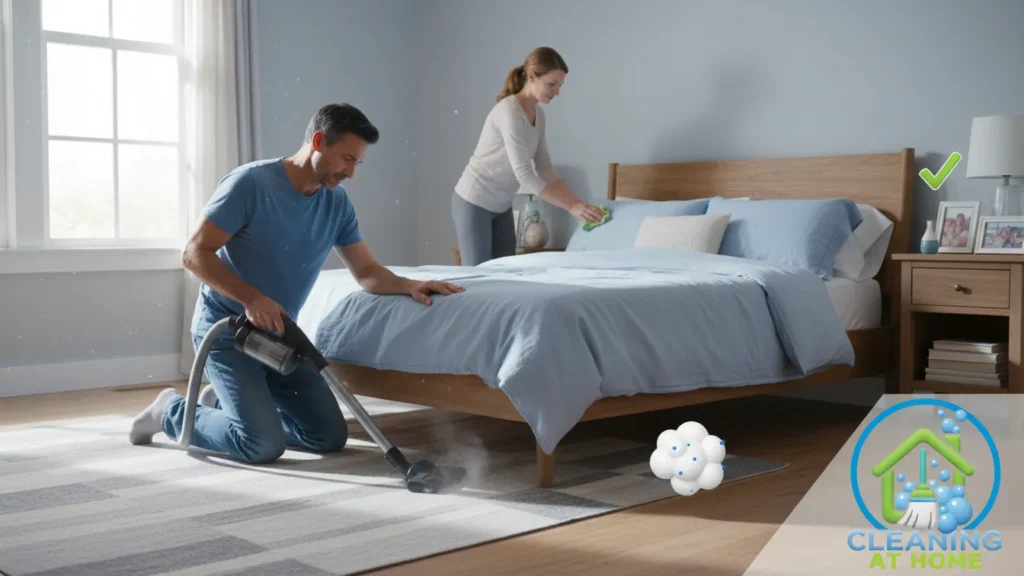
Bedrooms often feel clean because they don’t see the same daily mess as kitchens or bathrooms. However, dust, fabric fibers, and clutter quietly build up over time. Monthly bedroom cleaning focuses on these hidden issues, helping improve comfort, air quality, and overall restfulness.
Start with areas that are usually skipped during weekly cleaning. Dust baseboards, window sills, picture frames, and the tops of furniture. These surfaces collect dust steadily, even when the room looks tidy. Taking care of them monthly helps reduce allergens and keeps the room feeling fresher.
Bedding deserves special attention during monthly cleaning. While sheets are washed weekly, items like mattress protectors, pillow protectors, and comforters are often overlooked. Washing or airing them out monthly helps maintain hygiene and extends their lifespan. This is also a good time to rotate or vacuum the mattress to prevent uneven wear and dust buildup.
Closets and drawers benefit from a quick monthly reset. You don’t need to reorganize everything, but removing unused items, refolding messy stacks, and wiping drawer interiors makes daily routines smoother. Even five to ten minutes per bedroom can make a noticeable difference.
Don’t forget under the bed and behind furniture. These areas trap dust, hair, and lost items and are rarely cleaned during weekly routines. A quick vacuum or sweep once a month keeps dirt from spreading back into the room.
Monthly bedroom cleaning isn’t about perfection. It’s about maintaining a calm, comfortable space where daily tidying feels easier and rest feels more natural.
Monthly Cleaning Tasks for Living and Dining Areas
Living and dining areas are shared spaces, which means they collect a mix of dust, crumbs, fingerprints, and clutter throughout the month. Weekly cleaning usually focuses on visible surfaces and floors, but monthly cleaning goes a step further to refresh the room as a whole and keep it comfortable for everyday use.
Start with dusting areas that are often ignored during weekly routines. Shelves, décor items, lampshades, picture frames, and electronics tend to collect dust quickly. Wiping these surfaces monthly improves air quality and keeps dust from spreading back onto freshly cleaned floors and furniture.
Upholstered furniture benefits from regular monthly attention. Vacuum sofas, chairs, and cushions, including under the cushions where crumbs and debris collect. If your furniture allows, rotate cushions to help them wear evenly and maintain their shape. This simple step helps living areas feel cleaner and more inviting without deep cleaning.
Dining areas also need monthly care beyond wiping the table. Clean chair legs, table bases, and any fabric seat covers. If you use placemats or table runners, wash or shake them out monthly to remove trapped dust and food particles.
Pay attention to corners, baseboards, and areas behind furniture. These spots quietly collect dust and pet hair and are easy to miss during weekly cleaning. A quick vacuum or wipe once a month keeps buildup under control.
Finally, do a light declutter check. Remove items that don’t belong in the space and return them to their proper rooms. Monthly cleaning in living and dining areas isn’t about perfection—it’s about resetting the space so it stays welcoming, functional, and easy to maintain every week.
👉Best Order to Clean Your House Weekly
Monthly Cleaning Tasks for Laundry Areas
Laundry areas often get overlooked because they’re seen as functional rather than lived-in spaces. Even so, they quietly collect lint, detergent residue, dust, and clutter. Monthly cleaning helps keep this area efficient, safe, and easier to use.
Start with the washing machine and dryer. Wipe down the exterior of both appliances and clean the detergent drawer if your machine has one. Lint traps should be thoroughly cleaned, and it’s a good idea to check around and behind machines where lint and dust tend to gather. This simple habit helps appliances run more efficiently and reduces fire risk.
Shelves and storage areas also need monthly attention. Detergent bottles, baskets, and cleaning supplies can become sticky or dusty over time. Wipe shelves, rinse containers if needed, and remove products you no longer use. Keeping this area tidy makes laundry routines smoother and less frustrating.
Floors in laundry areas are another commonly missed spot. Spilled detergent, fabric softener residue, and lint can build up quickly. A quick sweep and mop once a month keeps the space clean and prevents buildup from spreading to other rooms.
If your laundry area includes a sink or countertop, wipe these surfaces thoroughly. Check for leaks, mildew, or residue around faucets and drains. Monthly cleaning gives you a chance to spot small issues before they turn into bigger problems.
Monthly laundry-area cleaning isn’t about making the space perfect. It’s about maintaining a clean, functional setup that supports your weekly laundry routine and keeps chores feeling manageable.
Monthly Cleaning Tasks for Entryways and Hallways
Entryways and hallways are high-traffic areas, even though people often overlook them during regular cleaning. Dirt from shoes, dust from outside, fingerprints on walls, and clutter tend to build up quietly. Monthly cleaning helps reset these spaces so they stay welcoming and easier to maintain day to day.
Start with floors and mats. Entryway rugs and doormats trap a surprising amount of dirt and debris. Shake them out, vacuum thoroughly, or wash them if possible. This single task reduces the amount of dirt that gets tracked into the rest of the house and makes weekly floor cleaning more effective.
Walls, doors, and trim also benefit from monthly attention. Scuff marks, fingerprints, and dust often appear along hallways where people brush past. Wipe walls where needed, clean door frames, and dust or wipe baseboards. These details make a big visual difference, even if the space is small.
Next, focus on storage areas. Shoe racks, coat hooks, baskets, and console tables tend to collect clutter quickly. Take a few minutes to remove items that don’t belong there, wipe surfaces, and reorganize what remains. Monthly cleaning is a good time to discard broken umbrellas, worn shoes, or items no longer in use.
Light fixtures, switches, and vents are another common problem area. These spots collect dust but are rarely cleaned weekly. A quick wipe or dusting once a month improves cleanliness and keeps hallways looking brighter.
Monthly cleaning in entryways and hallways isn’t about deep scrubbing. It’s about clearing buildup in spaces that connect your home. When these areas stay clean and organized, the entire house feels more put together and easier to manage.

How Long Monthly Cleaning Really Takes
One of the biggest reasons people avoid monthly cleaning is the assumption that it takes hours—or even an entire weekend. In reality, monthly cleaning usually takes far less time than expected, especially when tasks are spread out instead of done all at once.
For most homes, monthly cleaning tasks can be completed in short sessions of 15 to 30 minutes at a time. When you break the checklist down by room or category, you may only need one or two small blocks of time per week to stay on track. This makes monthly cleaning far more manageable than a single long cleaning day.
The actual time depends on the size of your home, how many people live there, and how consistent your weekly routines are. Homes with regular weekly cleaning often spend less time on monthly tasks because buildup is minimal. When weekly cleaning is skipped frequently, monthly cleaning naturally takes longer.
Another factor is focus. Monthly cleaning works best when you stick to the checklist instead of drifting into deep cleaning or reorganizing everything. The goal is maintenance, not perfection. Staying focused keeps tasks short and prevents burnout.
Many people also find that monthly cleaning saves time in the long run. When deeper tasks are handled regularly, weekly cleaning becomes faster and easier. Surfaces stay cleaner longer, and there’s less scrubbing involved overall.
In short, monthly cleaning doesn’t require a major time commitment. With a realistic checklist and a steady pace, it fits easily into real life—and keeps your home consistently under control without stress.
Common Monthly Cleaning Tasks People Forget
Many monthly cleaning checklists fail because they overlook small but important tasks. These forgotten areas don’t always look dirty at first, but over time they affect cleanliness, comfort, and even how long things last in your home. Including them in your monthly routine can make a noticeable difference with very little extra effort.
One commonly forgotten task is cleaning light fixtures and ceiling fans. Dust builds up slowly and often goes unnoticed because these areas are above eye level. A quick monthly dusting prevents that buildup from falling onto clean surfaces and improves overall air quality.
Another area people skip is vents and air returns. Even when they don’t look dirty, they collect dust that circulates through the house. Wiping or vacuuming vents once a month helps reduce dust and keeps heating and cooling systems working more efficiently.
Trash cans are also easy to forget. Even with liners, residue and odors can build up inside. Rinsing and wiping trash cans monthly—especially in kitchens and bathrooms—helps control smells and bacteria.
Doors, door frames, and cabinet fronts often get touched daily but rarely cleaned thoroughly. Fingerprints and grime accumulate over time, making spaces feel dull. A quick wipe once a month keeps these surfaces looking fresh without much effort.
Finally, think about items that don’t fit neatly into weekly routines, such as remote controls, wall switches, and small storage bins. Adding these to your monthly checklist fills the gaps that daily and weekly cleaning leave behind, helping your home feel truly reset instead of just surface clean.

How Monthly Cleaning Keeps Your Home Under Control Long Term
Monthly cleaning is what connects daily habits and weekly routines into a system that actually lasts. Without it, small problems slowly build up—dust settles in forgotten areas, clutter creeps back in, and weekly cleaning starts to feel harder than it should. Over time, this creates the sense that your home is never fully under control.
When monthly cleaning is done consistently, it acts as a reset point. It clears the buildup that daily and weekly routines can’t reach and restores balance throughout the home. Surfaces stay cleaner for longer, storage areas remain usable, and there’s less need for exhausting deep-cleaning sessions.
Another long-term benefit is reduced stress. Many people don’t realize how much background tension comes from knowing there are areas of the house being ignored. Monthly cleaning removes that mental clutter. You’re no longer reacting to messes—you’re staying ahead of them with simple, predictable tasks.
Monthly cleaning also protects your home and belongings. Appliances run better, furniture wears more evenly, and materials last longer when they’re cared for regularly. Small issues are noticed earlier, which helps prevent bigger problems that cost time, energy, or money later on.
Most importantly, monthly cleaning supports a realistic lifestyle. It doesn’t demand perfection or endless effort. Instead, it creates a sustainable rhythm that fits real life. Over time, this consistency is what keeps your home feeling clean, calm, and manageable—not just for a week, but for the long term.