What Room-by-Room Cleaning Really Means in Real Life
Room-by-room cleaning is often misunderstood as a strict or time-consuming method, but in real life, it is simply a way to bring clarity and order to the cleaning process. Instead of jumping from task to task or reacting only when mess becomes overwhelming, this approach focuses on one space at a time, with intention and limits.
Room by room cleaning is a practical way to bring structure to home care without making cleaning feel overwhelming. Instead of reacting to mess as it appears, room by room cleaning allows you to focus on one space at a time, creating clearer results and a stronger sense of completion throughout the home.
One of the biggest benefits of this approach is mental simplicity. When cleaning is organized by room, it becomes easier to know where to start and when to stop. You are not trying to clean the entire house at once, which often leads to frustration and unfinished tasks. Instead, each room has a beginning, a middle, and an end.
Room-by-room cleaning also respects real-life limitations. Homes are lived in, schedules are busy, and energy levels vary. This method allows you to clean in smaller, more manageable segments without feeling like everything must be done in one session. You can clean one room and feel a sense of completion, even if the rest of the house still needs attention later.
Most importantly, room-by-room cleaning is flexible. It adapts to different home sizes, lifestyles, and priorities. It is not about rigid rules or ideal standards. It is about creating a system that helps you maintain your home in a realistic way, without overwhelm or burnout.
When understood this way, room-by-room cleaning becomes a supportive framework rather than a demanding chore. It brings structure to cleaning while leaving room for real life to happen.
Why Cleaning by Room Feels More Manageable Than Random Cleaning
Cleaning by room feels more manageable because it brings structure to an activity that often feels endless. Random cleaning usually starts with good intentions but quickly turns into moving from one task to another without clear progress. This lack of direction can make cleaning feel tiring and unproductive, even when effort is being made.
When cleaning is organized by room, your focus narrows. Instead of thinking about everything that needs to be done in the entire house, you concentrate on a single space. This reduces mental overload and helps you stay present with the task at hand. Knowing exactly what you are working on makes it easier to begin and easier to finish.
Another reason room-by-room cleaning works well is the sense of completion it provides. Finishing one room creates a clear stopping point. You can see the result of your effort, which builds motivation and confidence. Even if you only clean one room in a day, it still feels like meaningful progress.
Random cleaning often leads to unfinished tasks. You might start in the kitchen, get distracted by something in the living room, and end up with multiple areas partially cleaned. This can feel discouraging because nothing feels truly done. Room-by-room cleaning avoids this by encouraging you to complete one space before moving on.
This approach also supports better time management. It allows you to match cleaning tasks to the time and energy you have available. If you have a short window, you can choose a smaller room. If you have more time, you can tackle a larger space. This flexibility makes cleaning easier to fit into daily life.
By creating clear boundaries and focus, room-by-room cleaning turns a scattered process into a manageable routine. It helps cleaning feel more organized, achievable, and far less overwhelming over time.
How Room-by-Room Cleaning Fits Into Daily and Weekly Routines
Room-by-room cleaning works best when it complements daily and weekly routines instead of replacing them. Each level of cleaning has a different purpose, and understanding how they fit together helps create a system that feels organized rather than overwhelming. When these routines are aligned, cleaning becomes more predictable and easier to maintain.
Daily cleaning focuses on immediate needs. These are small actions that keep the home functional, such as tidying surfaces, washing dishes, or doing quick resets. Room-by-room cleaning does not interfere with these habits. Instead, it builds on them by giving each space focused attention beyond what daily tasks can realistically cover.
Weekly routines act as a bridge between daily habits and room-by-room cleaning. While weekly cleaning often targets recurring tasks across the home, room-by-room cleaning allows you to go slightly deeper in one specific area. For example, daily routines may keep a room usable, and weekly cleaning may refresh it, but room-by-room cleaning helps restore order when a space starts to feel neglected.
This approach also supports better planning. Instead of trying to clean the entire house every week, you can rotate rooms over time. One room might receive focused attention this week, while another is addressed later. This prevents burnout and helps distribute effort more evenly.
Another benefit is flexibility. Room-by-room cleaning adapts easily to busy schedules. If a week feels overwhelming, daily and weekly routines keep things under control, while room-focused cleaning can be postponed or simplified. When time allows, you can return to it without feeling behind.
By fitting naturally into daily and weekly routines, room-by-room cleaning becomes part of a balanced system. It enhances what you already do, fills in the gaps, and keeps your home feeling manageable without adding unnecessary pressure.
👉 How to Clean a Bathroom Step by Step
The Order of Cleaning Rooms That Makes the Most Sense
The order in which rooms are cleaned can make a noticeable difference in how manageable the process feels. When cleaning happens without a clear sequence, it often leads to unnecessary backtracking, wasted effort, and fatigue. A thoughtful order helps reduce friction and makes room-by-room cleaning more efficient.
In real life, the most effective order usually follows logic rather than rigid rules. Starting with rooms that influence the rest of the house tends to create momentum. When key spaces are cleaned early, the entire home feels more organized, even if not every room is finished yet. This sense of progress can make it easier to continue.
One of the reasons room by room cleaning works so well is that it reduces unnecessary movement and repeated effort. When rooms are cleaned with intention and in a logical order, room by room cleaning helps save energy while making the process feel more organized and manageable.
Movement also matters. Cleaning rooms in a sequence that minimizes unnecessary walking or repeating tasks helps save time. When supplies, tools, or cleaning motions are reused efficiently, the process feels smoother and less exhausting. This is especially helpful in larger homes or when time is limited.
It’s also helpful to think about disruption. Some rooms are used constantly throughout the day, while others can remain undisturbed for longer periods. Choosing an order that respects how the home is used helps prevent having to redo work or clean around ongoing activity.
The goal of choosing a cleaning order is not perfection, but flow. A sensible sequence helps you move through your home with intention instead of reacting to mess. Over time, finding an order that works for your space and routine makes room-by-room cleaning feel more natural, efficient, and far less overwhelming.
Common Mistakes People Make When Cleaning Room by Room
Cleaning room by room can be very effective, but it often fails when small planning mistakes turn a simple system into a frustrating experience. These mistakes usually don’t come from lack of effort, but from unrealistic expectations or unclear boundaries.
One common mistake is trying to clean every room to the same standard. Not all spaces are used the same way, and treating them equally can waste time and energy. Some rooms need more frequent attention, while others only require light maintenance. When expectations aren’t adjusted, room-by-room cleaning can feel unnecessarily heavy.
Another frequent issue is overloading a single session. People often choose one room and then try to clean everything inside it at once. This turns room-by-room cleaning into a deep-cleaning project, which increases resistance and makes it harder to stay consistent. The goal is to restore order, not to achieve perfection.
Many people also make the mistake of ignoring time limits. Without a clear stopping point, cleaning can stretch longer than expected and disrupt the rest of the day. Room-by-room cleaning works best when it fits into real schedules, not when it takes over them.
Lack of flexibility is another problem. Some routines fail because they don’t allow adjustments. When life gets busy, people may abandon the system entirely instead of adapting it. A rigid approach often leads to guilt and burnout, which defeats the purpose of organizing cleaning by room.
Finally, comparing your routine to others can undermine progress. What works in one home may not work in another. Room-by-room cleaning should reflect how your space is used, not an idealized version of someone else’s routine.
Avoiding these common mistakes helps keep room-by-room cleaning practical, balanced, and sustainable. When the system stays flexible and realistic, it becomes a supportive tool rather than another source of stress.
👉Kitchen Cleaning Routine (Daily)
How to Adjust Room-by-Room Cleaning for Different Home Sizes
Room-by-room cleaning needs to adapt to the size of your home in order to remain practical and sustainable. A system that works well in a large house may feel overwhelming in a smaller space, while a routine designed for a compact home may feel insufficient in a larger one. Adjusting expectations based on size helps keep cleaning manageable.
In smaller homes or apartments, rooms often serve multiple purposes. Because of this, mess and clutter can become noticeable more quickly. Room-by-room cleaning in these spaces benefits from shorter, more frequent sessions. Instead of dedicating a long period to one room, focusing on quick resets helps maintain balance without taking over the day.
Larger homes usually require a different approach. With more rooms and less constant use in some areas, cleaning everything at once is rarely realistic. Room-by-room cleaning works best when spaces are rotated over time. This allows attention to be spread out without creating fatigue or pressure to keep every room in perfect condition.
Home size also affects movement and energy. In bigger spaces, minimizing unnecessary back-and-forth can make cleaning feel less exhausting. Grouping rooms by location or function can help streamline the process. In smaller homes, efficiency often comes from simplifying tasks and reducing clutter.
It’s also important to consider how many people live in the home. A small space shared by several people may require more frequent attention than a larger home with fewer occupants. Room-by-room cleaning should reflect these realities rather than follow rigid rules.
By adjusting the system to match your home’s size and use, room-by-room cleaning stays flexible and realistic. This approach prevents burnout and helps ensure that cleaning remains a supportive routine instead of an overwhelming task.
👉 How to Clean a Bedroom Without Getting Overwhelmed

Kitchen Cleaning: The Most Used Room in the House
The kitchen is often the most active room in the home, which is why it usually requires more frequent and intentional cleaning. It is a space where food is prepared, shared, and stored, making it naturally prone to mess, spills, and buildup. Room-by-room cleaning helps bring order to this high-use area without turning it into an exhausting daily project.
In real life, kitchen cleaning is less about making everything spotless and more about maintaining functionality and hygiene. Because the kitchen is used throughout the day, small messes can pile up quickly. Room-focused cleaning allows you to step back and address the space as a whole, rather than constantly reacting to individual problems.
A room-by-room approach helps define boundaries. Instead of cleaning the kitchen endlessly in small bursts, you give it focused attention at a specific time. This makes it easier to notice what actually needs care and what can wait. Over time, this clarity helps prevent frustration and reduces the feeling that the kitchen is never truly clean.
Another benefit of room-by-room kitchen cleaning is prioritization. Not every part of the kitchen needs the same level of attention every time. Some areas affect daily use more than others. Cleaning with intention helps you restore balance without trying to handle everything at once.
The kitchen also sets the tone for the rest of the home. When this room feels under control, the entire house often feels more manageable. This is why it is commonly addressed earlier in room-by-room cleaning rotations, especially in busy households.
By treating the kitchen as its own focused space within a larger system, cleaning becomes more efficient and less stressful. Room-by-room kitchen cleaning supports daily routines while preventing buildup, helping this essential space stay functional and comfortable over time.
Bathroom Cleaning: Keeping It Fresh Without Overdoing It
Bathrooms are one of the rooms that can quickly feel unpleasant when cleaning is neglected, but they are also one of the easiest spaces to overdo. Room-by-room cleaning helps create a balanced approach that keeps bathrooms fresh and functional without turning cleaning into a constant or exhausting task.
In real life, bathroom cleaning is less about perfection and more about maintaining comfort and hygiene. Because bathrooms are used daily, small signs of use appear quickly. Room-focused cleaning allows you to step back and address the space as a whole, instead of reacting to every small detail throughout the week.
A key benefit of cleaning bathrooms by room is clarity. When you approach the bathroom as one defined space, it becomes easier to focus on what actually impacts freshness. This prevents unnecessary effort and helps avoid spending time on tasks that don’t make a noticeable difference. The goal is to restore balance, not to create a spotless, hotel-like environment.
Room-by-room cleaning also helps manage expectations. Bathrooms don’t need the same level of attention every time. Some sessions are about light maintenance, while others address areas that have been overlooked. Having a flexible approach prevents burnout and makes it easier to stay consistent.
Another advantage is efficiency. When bathroom cleaning is planned as a single, focused task, it tends to be quicker and more effective. You’re not cleaning around daily activity or repeating the same actions multiple times. This makes the process feel more contained and less disruptive.
By keeping bathroom cleaning realistic and intentional, room-by-room routines help maintain freshness without excess effort. This approach supports daily habits, prevents buildup, and keeps one of the most important rooms in the home comfortable and manageable over time.
Bedroom Cleaning: Creating a Calm and Comfortable Space
The bedroom is a space meant for rest and recovery, which makes its cleanliness especially important. When a bedroom feels cluttered or neglected, it can affect comfort and make it harder to relax. Room-by-room cleaning helps restore calm to this space without turning it into a demanding project.
In real life, bedroom cleaning is not about making the room look perfect at all times. It is about creating an environment that feels peaceful and functional. A room-focused approach allows you to step back and address the space as a whole, rather than reacting to small messes every day.
One of the benefits of cleaning the bedroom by room is intentionality. Instead of quickly tidying surfaces and moving on, you take time to notice what actually affects comfort. This may include how the room feels, how easily you can move through it, and whether it supports rest. Focusing on these elements helps prioritize what matters most.
Room-by-room bedroom cleaning also supports better habits. When the bedroom is reset regularly, daily maintenance becomes easier. Small actions, like making the bed or putting items away, feel more natural when the room already feels balanced. This reduces the chance of clutter slowly building up.
Another advantage is emotional comfort. A calm bedroom can influence mood and help signal the end of the day. Cleaning the room as a defined space helps separate it from the rest of the home’s activity and noise. This distinction can make the bedroom feel more personal and restorative.
By approaching bedroom cleaning with realistic expectations, room-by-room routines help maintain a space that supports rest without unnecessary effort. The focus stays on comfort and consistency, making the bedroom a place that truly feels calm and inviting.
👉 Living Room Cleaning Checklist for Busy People
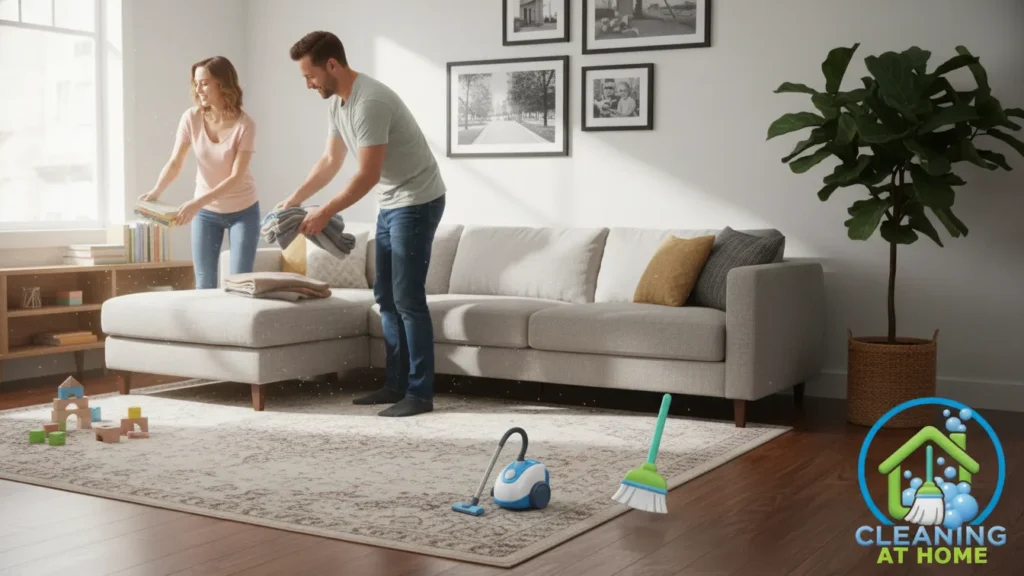
Living Room Cleaning: Maintaining a Tidy Shared Space
The living room is one of the most shared spaces in the home, which makes it both important and challenging to keep clean. It is often used for relaxing, socializing, working, and entertainment, all of which contribute to daily wear. Room-by-room cleaning helps maintain this space without turning it into a constant source of frustration.
In real life, living room cleaning is about balance. Because this room is used frequently, it rarely stays perfect for long. A room-focused approach allows you to reset the space intentionally instead of reacting to clutter throughout the day. This helps the room feel consistently tidy, even when it’s actively used.
One benefit of cleaning the living room by room is visibility. Since this space is often central to the home, small changes have a big impact. When the living room feels organized, the entire home often feels calmer and more put together. This visual effect can reduce stress and make daily life feel more manageable.
Room-by-room cleaning also helps define limits. Instead of trying to maintain the living room at all times, you choose specific moments to restore order. This prevents overcleaning and reduces the feeling that the room is never “done.” It also makes it easier to share responsibility in households with more than one person.
Another advantage is flexibility. Living rooms vary widely in size, layout, and function. Some double as play areas, others as workspaces. Cleaning this room as a defined unit allows you to adjust your approach based on how the space is actually used, rather than following a rigid standard.
By maintaining the living room through room-by-room cleaning, the space stays welcoming and functional without requiring constant effort. This approach supports shared living while respecting the realities of everyday use.
Dining Area Cleaning: Simple Maintenance for Everyday Use
The dining area is often one of the most overlooked spaces in the home. Because it is used regularly but usually for short periods, mess can quietly accumulate without drawing much attention. Room-by-room cleaning helps bring this area back into balance without requiring constant effort or detailed routines.
In everyday life, dining area cleaning is about maintaining comfort and usability rather than achieving a formal look. Crumbs, fingerprints, and clutter tend to appear gradually, especially in homes where the dining area is used for more than just meals. Treating this space as its own room allows you to reset it intentionally instead of only cleaning it when it feels noticeably messy.
One benefit of room-focused cleaning in the dining area is clarity. When the space is cleaned as a whole, it becomes easier to notice what actually affects daily use. Chairs, tables, and nearby surfaces play a role in how comfortable the area feels. Addressing these elements together creates a more consistent result than sporadic cleaning.
Another advantage is routine simplicity. Dining areas usually don’t need the same level of attention as kitchens, but they benefit from regular maintenance. Room-by-room cleaning helps establish realistic expectations, so the space stays pleasant without becoming another demanding task on your list.
The dining area often connects different parts of the home, which means it can quickly collect items that don’t belong there. Cleaning it as a defined space helps restore boundaries and prevents clutter from settling in permanently.
By including the dining area in a room-by-room cleaning system, you maintain a space that feels welcoming and functional. This simple approach keeps everyday use comfortable and prevents small issues from becoming long-term frustration.
Entryway and Hallway Cleaning: The First Impression Areas
Entryways and hallways are often treated as passing zones, but they play an important role in how a home feels. These areas create the first impression when entering the house and connect different rooms, which means they are used frequently but cleaned less intentionally. Room-by-room cleaning helps bring attention to these transitional spaces without turning them into a major project.
In real life, entryways and hallways tend to collect clutter quickly. Shoes, bags, coats, and random items often end up there because it feels convenient in the moment. When these areas are ignored, they can start to feel crowded and chaotic, even if the rest of the house is relatively tidy. Cleaning them as defined spaces helps restore flow and order.
One advantage of cleaning entryways and hallways by room is visibility. Because these areas are passed through multiple times a day, even small improvements are noticeable. A clearer entryway can make the entire home feel more organized and welcoming, which can positively affect mood and motivation.
Room-by-room cleaning also helps set boundaries. Instead of allowing these spaces to become storage zones, focused cleaning encourages intentional use. This doesn’t mean removing everything, but rather making sure items have a purpose and don’t overwhelm the space.
Another benefit is efficiency. Entryways and hallways are usually smaller than other rooms, which makes them ideal for quick, focused cleaning sessions. Addressing them regularly prevents clutter from spreading into nearby rooms and reduces the need for larger resets later.
By including entryways and hallways in a room-by-room cleaning system, you support smoother movement through the home. These first-impression areas stay functional and calm, helping the entire house feel more balanced and under control.
👉 Laundry Room Cleaning: What Most People Forget

Laundry Room Cleaning: Keeping Utility Spaces Under Control
The laundry room is a functional space, but it often becomes cluttered and overlooked. Because it is associated with chores rather than comfort, cleaning this room tends to be postponed until it feels out of control. Room-by-room cleaning helps keep the laundry room practical and organized without turning it into an overwhelming task.
In real life, laundry rooms serve multiple purposes. They store cleaning supplies, handle clothing care, and often act as temporary holding zones for items waiting to be washed, folded, or put away. When this space is ignored, it can quickly feel chaotic, making everyday tasks harder and more frustrating.
Cleaning the laundry room by room brings structure to this utility area. Instead of reacting to clutter whenever it becomes inconvenient, you give the space focused attention at specific times. This makes it easier to reset surfaces, restore order, and maintain a functional layout that supports daily routines.
One benefit of room-focused cleaning in the laundry room is efficiency. When the space is organized and clean, laundry tasks tend to move more smoothly. You spend less time searching for supplies or working around clutter, which can make an already repetitive chore feel lighter.
Another advantage is containment. Laundry-related mess often spreads into nearby rooms when the laundry space isn’t maintained. Cleaning this room as a defined area helps prevent that overflow and keeps the rest of the home more organized.
By including the laundry room in a room-by-room cleaning system, you maintain control over one of the home’s most practical spaces. This approach keeps the area functional, reduces frustration, and supports smoother daily routines without requiring constant attention.
Home Office Cleaning: Supporting Focus and Productivity
The home office is a space where cleanliness directly affects focus and productivity. When this area feels cluttered or neglected, it can become harder to concentrate and stay organized. Room-by-room cleaning helps maintain a supportive work environment without turning cleaning into a distraction from daily tasks.
In real life, home offices often serve more than one purpose. They may also function as storage areas, study spaces, or quiet corners of the home. Because of this, clutter can build up slowly and go unnoticed until it starts interfering with work. Cleaning the home office as a defined room allows you to reset the space intentionally.
One benefit of room-by-room cleaning in a home office is mental clarity. When surfaces are clear and items are organized, it becomes easier to focus on tasks at hand. A cleaner environment reduces visual noise, which can help support better concentration and reduce stress during the workday.
Room-focused cleaning also helps establish boundaries. By maintaining the home office as its own space, it becomes easier to separate work from the rest of the home. This distinction can be especially helpful for those working remotely, as it supports healthier routines and clearer transitions between work and personal time.
Another advantage is consistency. Regularly cleaning the home office prevents small issues, like paper buildup or misplaced items, from turning into larger problems. This keeps the space functional and reduces the need for disruptive, time-consuming resets.
By including the home office in a room-by-room cleaning system, you support productivity while keeping cleaning effort reasonable. This approach helps maintain a workspace that feels calm, organized, and ready for daily use.
👉 How to Clean Entryway and Hallways

Kids’ Rooms Cleaning: Balancing Cleanliness and Real Life
Cleaning kids’ rooms can be one of the most challenging parts of maintaining a home. These spaces are designed for play, creativity, and rest, which means mess is a natural part of how they are used. Room-by-room cleaning helps bring balance to kids’ rooms without expecting constant order or unrealistic standards.
In real life, kids’ rooms change quickly. Toys move, clothes pile up, and activities shift throughout the day. A room-by-room approach allows you to reset the space periodically instead of trying to keep it tidy at all times. This makes cleaning more manageable and reduces daily frustration for both adults and children.
One benefit of cleaning kids’ rooms by room is clarity. When the room is treated as a single space, it becomes easier to focus on what truly matters—safety, comfort, and usability. Not every item needs to be perfectly organized for the room to function well. Prioritizing clear floors, accessible storage, and comfortable sleeping areas often makes the biggest difference.
Room-focused cleaning also supports realistic expectations. Kids’ rooms don’t need to look perfect to be clean enough. Accepting a certain level of mess helps prevent power struggles and burnout. Cleaning becomes about restoring balance rather than enforcing strict rules that are hard to maintain.
Another advantage is involvement. Room-by-room cleaning creates natural opportunities to include children in age-appropriate ways. When cleaning is occasional and focused, it feels less overwhelming and more achievable for them. This can help build simple habits without pressure.
By approaching kids’ rooms with flexibility and understanding, room-by-room cleaning supports both cleanliness and real life. The space stays functional and comfortable while allowing children the freedom to use their rooms as intended.
Guest Room Cleaning: Keeping It Ready Without Daily Effort
Guest rooms are unique because they are not used every day, yet they often carry a sense of expectation. Many people feel pressure to keep this room perfectly clean “just in case,” which can lead to unnecessary effort and stress. Room-by-room cleaning offers a more realistic way to keep a guest room ready without treating it like an active living space.
In real life, guest rooms usually sit unused for long periods. Because of this, they don’t need daily attention. Cleaning this room by room allows you to check in periodically, reset the space, and then leave it alone until it’s needed again. This approach keeps the room functional without adding extra work to your routine.
One benefit of room-focused cleaning for guest rooms is efficiency. Since the room isn’t used regularly, mess doesn’t accumulate quickly. A focused cleaning session can restore order and freshness without taking much time. This makes it easier to maintain the space without feeling like it’s another obligation.
Room-by-room cleaning also helps set realistic standards. A guest room doesn’t need to look staged or unused. It simply needs to feel clean, comfortable, and welcoming. Letting go of perfection reduces pressure and makes upkeep much more manageable.
Another advantage is flexibility. Guest rooms often double as storage areas, home offices, or hobby spaces. Cleaning the room as a defined unit allows you to adapt its function while still keeping it presentable when needed. This balance supports real-life use without sacrificing readiness.
By including guest rooms in a room-by-room cleaning system, you keep them under control without daily effort. The space stays ready, functional, and stress-free, fitting naturally into your overall cleaning routine.
How Often Each Room Really Needs Cleaning
One of the most common questions about room-by-room cleaning is how often each space truly needs attention. Many people overclean some rooms while neglecting others, which leads to frustration and wasted effort. Understanding realistic cleaning frequency helps create balance and prevents cleaning from taking over daily life.
In real life, cleaning frequency should be guided by use, not by rigid rules. Rooms that are used heavily tend to need more frequent attention because mess and wear show up faster. Other rooms can go longer without focused cleaning and still feel comfortable and functional. Room-by-room cleaning helps make these differences clear.
Another important factor is visibility. Spaces that affect how clean the home feels at a glance often benefit from more regular resets. This doesn’t mean they need constant deep cleaning, but rather consistent, light maintenance. Rooms that are used less or are out of sight can usually be cleaned less often without negative impact.
Lifestyle also plays a major role. Homes with children, pets, or multiple occupants may experience faster buildup in certain rooms. In quieter households, the same spaces may stay manageable for longer periods. Cleaning frequency should reflect these realities rather than follow a one-size-fits-all schedule.
Room-by-room cleaning helps reduce guilt around frequency. When each room has its own rhythm, skipping or spacing out cleaning feels intentional instead of neglectful. You know that every space will be addressed in time, even if not all at once.
Ultimately, the goal is not to clean every room equally, but to clean each room appropriately. By aligning frequency with actual use, room-by-room cleaning stays practical, efficient, and sustainable—supporting a home that feels under control without demanding constant effort.
Building a Sustainable Room-by-Room Cleaning System
Building a sustainable system starts with understanding that room by room cleaning is about consistency, not perfection. When room by room cleaning is approached with flexibility, it becomes easier to adapt routines to real life while keeping the home functional and under control over time.
A sustainable system starts with realistic expectations. Not every room will look the same every day, and that’s normal. Room-by-room cleaning allows you to focus on progress rather than perfection. By giving each space attention when it needs it, you avoid the pressure of keeping the entire home in constant order.
Another key element is rhythm. A sustainable system doesn’t require cleaning every room on a fixed schedule. Instead, it allows rooms to rotate naturally based on use, priority, and available energy. Some rooms will need more frequent attention, while others can wait longer without causing problems. This balance prevents burnout and keeps cleaning manageable.
Simplicity also plays a major role. The fewer decisions you need to make, the easier it is to stay consistent. Room-by-room cleaning provides clear boundaries—one room at a time, with a clear start and finish. This structure reduces mental load and makes it easier to fit cleaning into busy days.
Adaptability is equally important. Life changes, schedules shift, and homes evolve. A sustainable system allows you to adjust without feeling like you’ve failed. Skipped sessions or changes in routine don’t break the system—they are part of it.
Ultimately, a sustainable room-by-room cleaning system supports long-term balance. It helps keep your home functional and comfortable without demanding constant effort. When cleaning feels manageable and realistic, it becomes a supportive habit that grows with you, rather than a task you constantly struggle to keep up with.